
Vandaag of morgen in huis

Kwaliteit gegarandeerd

Welkomstaanbiedingen ontgrendelen: GRATIS bezorging | Tot 80% korting | Gratis 30 dagen JoyPlus-proefperiode
Download de app
Buying a bike helmet seems simple, until you have to choose between a children’s bike helmet, a MIPS bike helmet, a road cycling helmet or a model with a light and visor. Marketing often highlights one standout feature, but fit, intended use and certification are just as important.
Look out for these three common pitfalls:
For everyday cycling, commuting and leisure rides, a model with a sturdy outer shell, shock-absorbing inner layer and adjustable fit is usually enough. If you also skateboard, ride BMX or use a scooter, consider a multi-sport model. Skateboard helmets often have a rounder shape and an ABS shell, as with the OutdoorMaster Oryx models.
Mountain biking calls for a few extra considerations. A mountain bike helmet with more coverage, a visor or chin protection is better suited to demanding trails than a lightweight road cycling helmet. A full-face model is designed for a different type of riding from a helmet for city cycling.
A ski helmet is designed for snow sports and has different features, such as a warm lining and compatibility with ski goggles. A motorcycle helmet is a separate category. If you ride a motorcycle, check the relevant European approval, such as ECE R 22.06, and don’t use an ordinary bike helmet as an alternative.
Measure your head with a flexible tape measure, just above your eyebrows and around the widest part of your head. Compare the measurement with the size chart for the specific product.
A well-fitting helmet:
A children’s bike helmet should allow room to grow, but it shouldn’t be bought too large. According to the product description, the OutdoorMaster Ibex Youth & Kids comes with two removable liners and an adjustable dial. It’s designed for children aged 5 and over. Remember to measure your child’s head circumference first.
Helmets often have an outer shell made from polycarbonate (PC) or ABS, combined with an inner layer of EPS. Some models use EPP, for example certain full-face mountain bike helmets. These materials have different properties in terms of construction, weight and shock absorption.
A MIPS bike helmet has an extra layer which, according to the product information, is designed to reduce the transfer of rotational forces in certain angled impacts. This doesn’t guarantee protection against injury, nor does it make a poor fit acceptable. Always check which standard or certification is shown on the product and packaging.
Be aware of the differences between standards:
According to the product descriptions, some models are CPSC- and ASTM-certified. Before buying, check the full product information and the marking that applies to your intended use in the Netherlands.
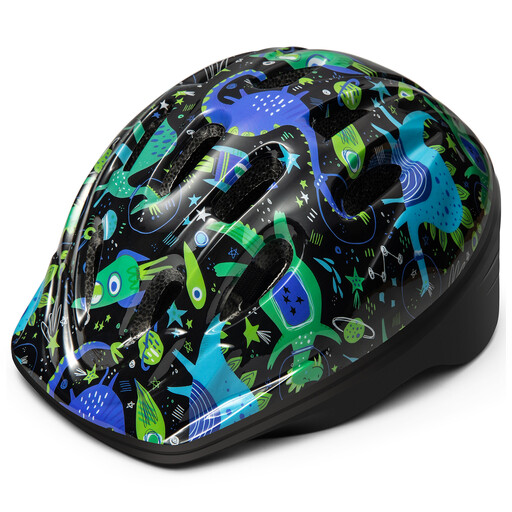
Why it suits this type of user: This model is designed for children aged 5 and over who cycle, ride a scooter or skateboard. The blue dinosaur design may appeal to younger users.
The adjustable dial and two removable liners help you adapt the fit to different head sizes. Make sure size M is right for your child’s head circumference.
ABS outer shell, EPS core, adjustable chin strap and washable liners. Ventilation makes this model suitable for a range of leisure activities.
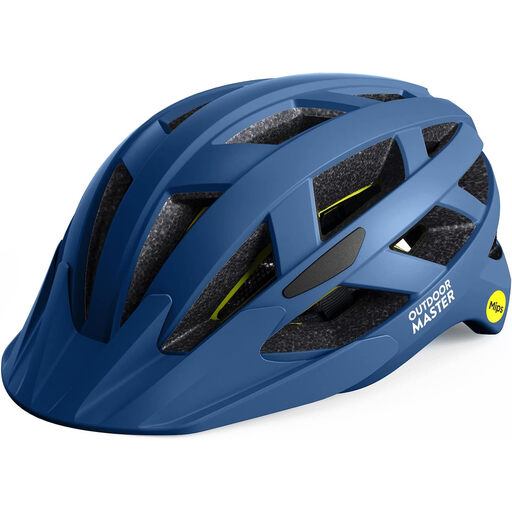
Why it suits this type of user: A practical bike helmet for adults who regularly cycle for leisure, mountain bike, ride BMX or skate, and value a MIPS system.
The helmet combines an adjustable dial with two liners, so you can fine-tune the fit more precisely than with a model that has fixed padding only.
MIPS system according to the product description, 25 ventilation openings, removable liners and a detachable visor. Available in several sizes and colours.
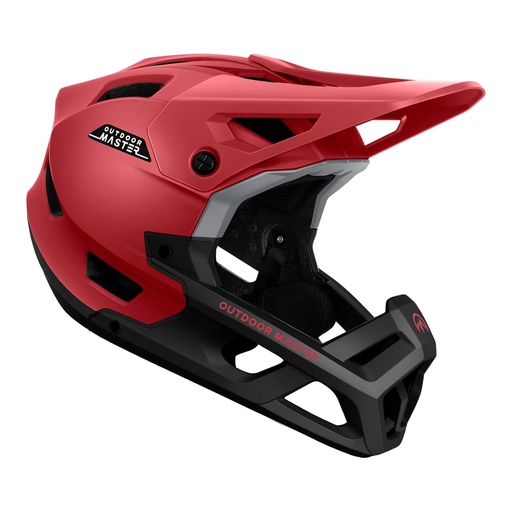
Why it suits this type of user: Designed for downhill, BMX and demanding mountain bike rides where extra coverage around the chin and face is desirable.
This isn’t an all-purpose city helmet, but a full-face model for a specific use. That makes it easier to match your choice to the activity and the level of protection required.
ABS shell, EPP inner layer, chin guard with shock-absorbing pads, 27 ventilation channels, removable lining and adjustable visor.
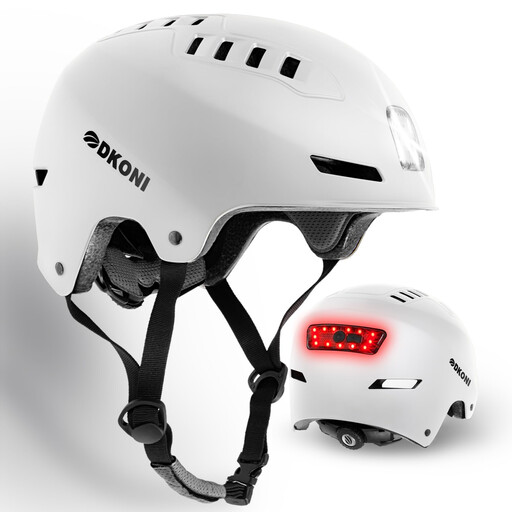
Why it suits this type of user: An option for adults who often cycle in the city and want to be more visible in the morning or evening.
The lights are an additional feature, not your only safety measure. The helmet also has an adjustable fit and 20 ventilation openings.
Five white LEDs at the front, thirteen red LEDs at the rear, four rear light modes and a washable inner lining, according to the product description.
We’ve put together a complete, up-to-date list of products that meet these strict selection criteria and the applicable European safety regulations.
Your helmet should sit firmly and level on your head without creating pressure points. Once the chin strap is fastened, the helmet shouldn’t slide easily forwards, backwards or from side to side. Adjust the dial first, then check the length of the chin strap.
Replace your helmet after a fall or hard impact, even if there’s no visible damage. Also check the shell, lining, buckles and straps regularly. Cracks, loose parts or badly worn padding are all reasons to stop using the helmet. Follow the manufacturer’s care and replacement guidance too.
A bike helmet with rechargeable lights just needs charging from time to time and careful cleaning. A MIPS bike helmet has no additional running costs for the system. However, you may need replacement liners, batteries or parts as they wear out. So consider more than just the purchase price: check the availability of accessories and the recommended care instructions.
