
Vandaag of morgen in huis

Kwaliteit gegarandeerd

Welkomstaanbiedingen ontgrendelen: GRATIS bezorging | Tot 80% korting | Gratis 30 dagen JoyPlus-proefperiode
Download de app
A bike helmet with lights combines head protection with added visibility. It’s useful for commuting, cycling in town and leisure rides in the dark or in poor weather. However, a built-in LED light doesn’t automatically mean a helmet is right for every cyclist.
Most disappointing purchases come down to three simple mistakes:
Use a flexible tape measure around your head, about two centimetres above your eyebrows. Keep the tape level and note the measurement in centimetres. Compare it with the manufacturer’s size guide.
For example, for the DKONI HS-086 models:
A size label such as M or L isn’t universal. Always check the measurements in centimetres. An adjustment dial and adjustable chin strap help you fine-tune the fit, but they can’t fully compensate for choosing the wrong base size.
The helmet should fit securely without creating pressure points. The chin strap should sit close against your chin without digging in. Wear the helmet level; don’t position it too far back on your head.
Many bike helmets combine a hard PC outer shell with EPS foam on the inside. According to the product information, the DKONI HS-086 has an in-mould construction, a PC shell and EPS foam.
Practical details also matter for everyday cycling:
A well-ventilated bike helmet is particularly comfortable on longer rides or in warm weather. Bear in mind, though, that large ventilation openings don’t automatically make a helmet suitable for every weather condition.
A bike helmet with LED lights may have a fixed rear light or a removable one. In either case, check:
According to the product description, the DKONI HS-086 has a removable USB-rechargeable rear light with two settings and a stated battery life of around 3 to 5 hours. So charge the light before setting off on a long evening ride.
The DKONI HS-158 has lights at the front and rear: five white LEDs at the front and thirteen red LEDs at the rear, with four rear-light settings. This makes it an interesting option for cyclists looking for an integrated lighting system. The product information lists this helmet as having CPSC, CE and ASTM certification. Always check the current product documentation and the applicable requirements for these markings before buying.
A bright colour can help you be seen, but fit and light placement are more important. A helmet might look good but still not fit your head properly.
A USB-rechargeable bike helmet is convenient, but its lights need charging regularly. For example, make charging part of your routine after your commute. For longer rides, a separate rear bike light can be a practical extra.
A mountain bike helmet often has a visor, extra coverage at the sides and more ventilation. These features are useful on unpaved paths, in wooded areas and in changeable weather. For everyday cycling in town, a simpler model may be less bulky.
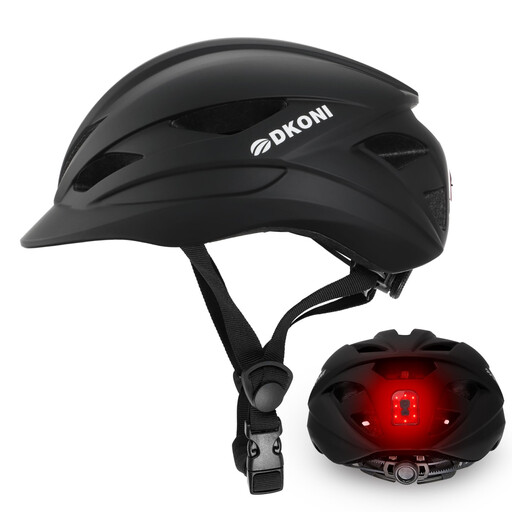
Why it suits this profile: This model combines an adult bike helmet with a removable rear light and ventilation openings. It’s a practical choice for urban cyclists and commuters looking for an all-in-one product.
The size is given in centimetres, and the LED light can be removed for charging. That means you don’t have to rely solely on a general size label or a fixed battery.
PC shell with EPS foam, 15 ventilation openings, USB-rechargeable rear light and two light settings.
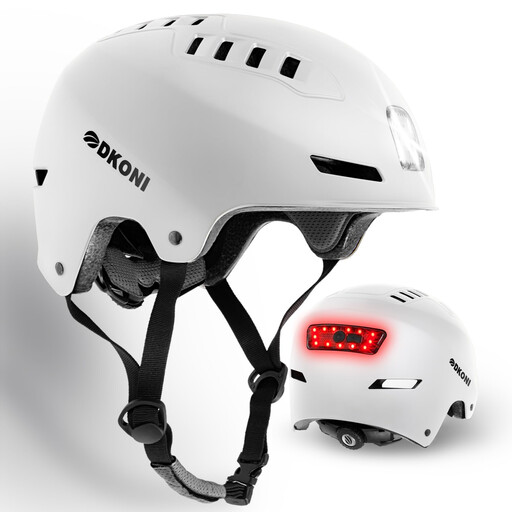
Why it suits this profile: A good choice if integrated front and rear lights are important to you when commuting, cycling in town or riding in low-light conditions.
The light isn’t just at the rear. The product information lists five white LEDs at the front and thirteen red LEDs at the rear, as well as four rear-light settings.
USB rechargeable, 20 ventilation openings, adjustable dial and removable, washable inner lining.
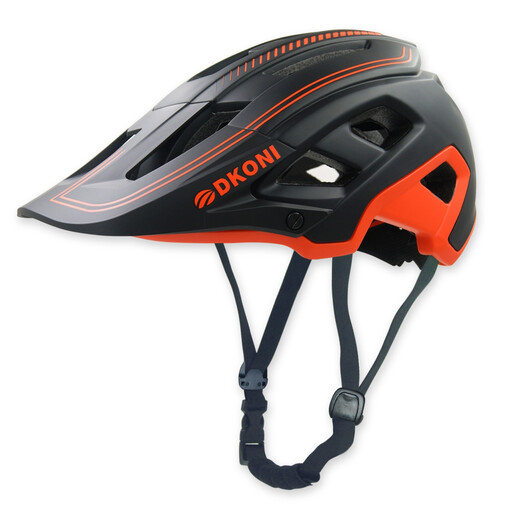
Why it suits this profile: This mountain bike helmet is designed for rides on unpaved paths, where a visor, extra head coverage and ventilation can come in handy.
Here, the choice isn’t just about having a light. The helmet has an adjustment dial, soft pads and a removable ABS visor for sun, rain, mud and branches.
Approximately 380 grams, 17 ventilation openings, PC/EPS construction and size L for 56–61 cm.
We’ve put together a complete, up-to-date list of products that meet these strict selection criteria and the applicable European safety requirements.
Already have a suitable helmet? A separate light can be a simple extra. According to the product information, the Dunlop Bicycle Helmet Headlight 2-in-1 is rechargeable using the supplied cable and provides white and red light. It has several settings and can be used on a helmet or for other purposes. Check the mounting method and the stated technical details, including the fact that it has no IP rating.
For a fixed rear light, you could also consider the Dunlop Bike Rearlight K-Mark. This model has an ABS housing and is designed for various bike models. If you’re looking for lights for a dynamo connection, the Prophete LED E-bike Headlight/Taillight is designed for hub and side magnets. According to the product information, this rear light is designed for a two-wire connection and is StVZO-approved. Check that the connection is compatible with your bike.
A helmet and bike lights are two different things. Bike lighting requirements depend on the bike and the conditions you’re riding in. A light on your helmet can make you more visible, but always check that your bike itself also has the required lights and reflectors.
It varies by model and light setting. The DKONI HS-086 is listed as lasting around 3 to 5 hours. Flashing and steady-light settings may have different battery lives. Charge the light regularly and test it before an evening ride.
Replace your helmet after a hard fall or collision, even if there’s little visible damage on the outside. Also check the shell, EPS foam, chin strap and adjustment parts regularly. If in doubt, follow the manufacturer’s care and replacement instructions.
