
Vandaag of morgen in huis

Kwaliteit gegarandeerd

Welkomstaanbiedingen ontgrendelen: GRATIS bezorging | Tot 80% korting | Gratis 30 dagen JoyPlus-proefperiode
Download de app
By the Joybuy Product Recommendation Officer, July 10, 2026
Riding a bike often means navigating through the dark or adverse weather. In these conditions, visibility is just as crucial as protection. A bike helmet with integrated lights combines these two essentials into one smart design. However, the market is vast, and the technical specifications can be confusing.
This guide will help you make an informed choice. We'll cover what to look for when buying a helmet and highlight some top picks for different types of cyclists.
Before making a decision, it's wise to consider a few key factors. A quality helmet is more than just a shell with a light attached.
A safe bike helmet is the absolute top priority. Within Europe, bike helmets must comply with the EN 1078 standard. This certification indicates that the helmet has been tested for shock absorption and structural integrity. Always check for this mark to ensure a fundamental level of protection in the event of a fall.
A helmet that doesn't fit properly won't offer optimal protection and will be uncomfortable. To find your size, measure your head's circumference (about 2 cm above your eyebrows). Most helmets feature an adjustable system with a dial at the back, allowing you to fine-tune the fit. Also, pay attention to the number of ventilation ports; sufficient airflow is essential for comfort, especially on warmer days or during strenuous rides.
The lighting itself is a key component. A bike helmet with LED lighting is the current standard. Look for the following features:
Based on product specifications and functionality, we've selected several compelling models for you.
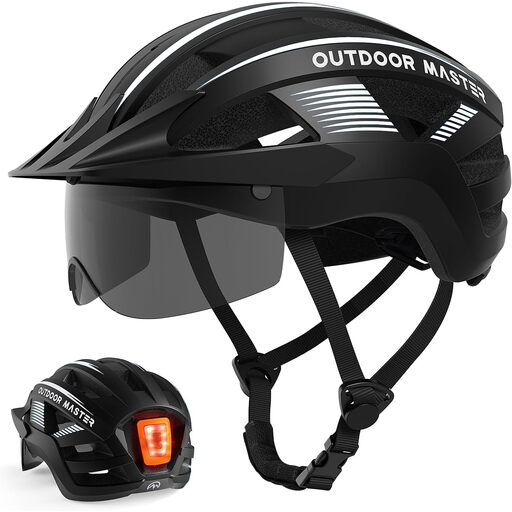
Why It Stands Out: This helmet is a versatile all-in-one package. It combines a rechargeable rear light with detachable magnetic goggles and a sun visor. The construction uses in-mold technology, which fuses the outer shell and EPS foam for a more robust and durable build.
Key Features:
Who Is This Helmet For? This is an ideal helmet for the daily cyclist, whether you need an urban cycling helmet or an e-bike helmet. The combination of lighting, goggles, and a sun visor makes it a complete solution for commuting and recreational rides.
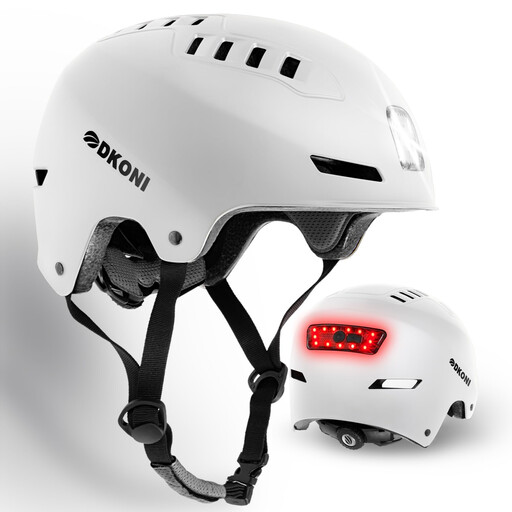
Why It Stands Out: The DKONI HS-158 is entirely focused on maximizing visibility. This helmet is equipped with both a white front light and a red rear light, both of which are USB-rechargeable. This design ensures 360-degree visibility in traffic.
Key Features:
Who Is This Helmet For? This helmet is a strong contender for commuters and urban cyclists who often ride at dusk or in the dark and prioritize visibility above all else. Its design is suitable for a wide range of riders, available in both men's bike helmet and women's bike helmet styles.
Some performance-focused cyclists prefer a specialized helmet and use separate, often more powerful, bike lights. Below are two examples for road cycling and mountain biking.
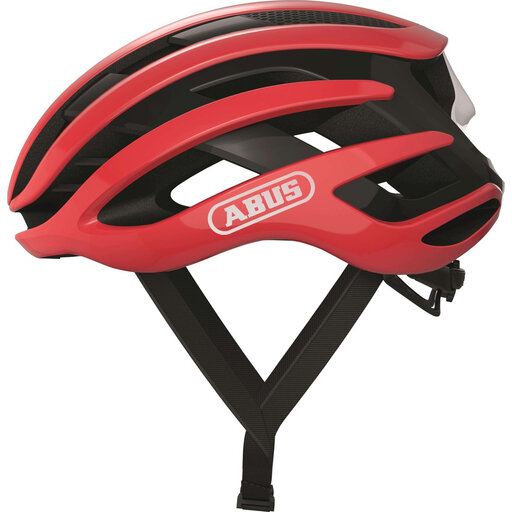
This road bike helmet was developed with a focus on aerodynamics and ventilation. According to ABUS, its "Multi Speed Design" ensures optimal airflow at both low and high speeds. This helmet does not have integrated lighting, as performance-oriented cyclists often opt for specific, high-powered lights mounted on the handlebars or seatpost.
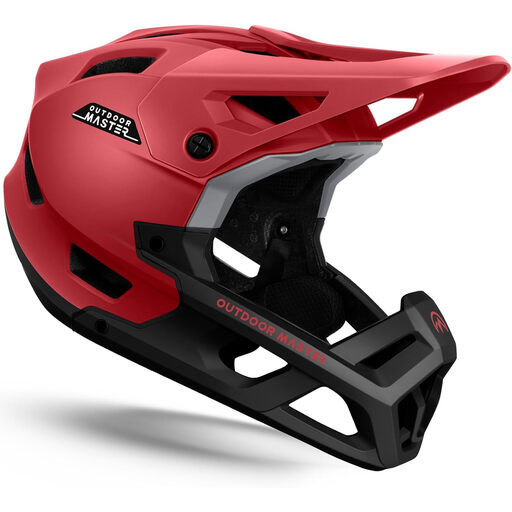
For downhill, BMX, or aggressive trail riding, maximum protection is essential. This mountain bike helmet offers full-face protection thanks to its chin guard. The focus here is on impact resistance, featuring an ABS outer shell and an EPP inner liner. This helmet also lacks built-in lights, as mountain bikers typically use very powerful, helmet-mounted lights for night trails.
Choosing a helmet is a highly personal decision that depends on your riding style and preferences. Are you looking for a different model or want to explore more options?
? Explore our full range of Men's Bike Helmets here.
No, in the Netherlands, a helmet is not generally mandatory for cyclists, with the exception of speed-pedelec riders. However, wearing a helmet is strongly recommended for added safety. The light on a helmet is considered a supplement to, and not a replacement for, the legally required separate bike lights (a white or yellow front light and a red rear light).
Using a measuring tape, measure the circumference of your head at its widest point, approximately 2 centimetres above your eyebrows and ears. The measurement in centimetres corresponds to the helmet size. Most helmets have a size range, such as 54-58 cm. Ensure your head circumference falls within this range.
Most manufacturers recommend replacing a bike helmet every 3 to 5 years. Over time, materials like the EPS foam can lose their protective properties due to exposure to factors like sweat and UV radiation. It is essential to replace a helmet immediately after any crash, even if there is no visible damage. The internal structure could be compromised in ways that are not visible.
