
Vandaag of morgen in huis

Kwaliteit gegarandeerd

Welkomstaanbiedingen ontgrendelen: GRATIS bezorging | Tot 80% korting | Gratis 30 dagen JoyPlus-proefperiode
Download de app
A bike helmet that combines visibility, eye protection, and safety sounds like the ideal solution for the modern cyclist. Yet, the search for a quality bike helmet with a light and visor often ends in disappointment. Many models look good on paper but fail in practice due to impractical design flaws. Before you make a choice, it's worth knowing the common pitfalls.
The most frequent complaints concern three specific issues:
These problems can be avoided by paying attention to a few key specifications.
To avoid buyer's remorse, it's wise to look beyond the marketing and focus on the technical features that truly matter. For a multifunctional helmet, these are the most important points of focus.
A helmet's purpose is to protect your head. The presence of a safety certification is therefore not a luxury, but an absolute necessity. Look for helmets with CPSC or ASTM certification. These international standards indicate that the helmet has been tested for shock absorption and impact resistance. A CPSC-certified helmet offers a verified level of protection, which is especially important for e-bike riders and mountain bikers. The construction, often a combination of a hard outer shell (PC) and a shock-absorbing inner layer (EPS foam), is decisive here.
The extra features must be practical and durable.
Comfort is inextricably linked to safety. A helmet that doesn't fit properly won't provide optimal protection. An adjustable bike helmet with a dial at the back is the standard for a good fit. This allows you to precisely adjust the helmet to your head's circumference. Additionally, pay attention to the number and placement of ventilation openings. Sufficient airflow is essential to keep your head cool, whether you're cycling leisurely through the city or on an intensive tour with your MTB helmet with goggles.
Based on these criteria, we have selected a number of products that suit different types of cyclists.
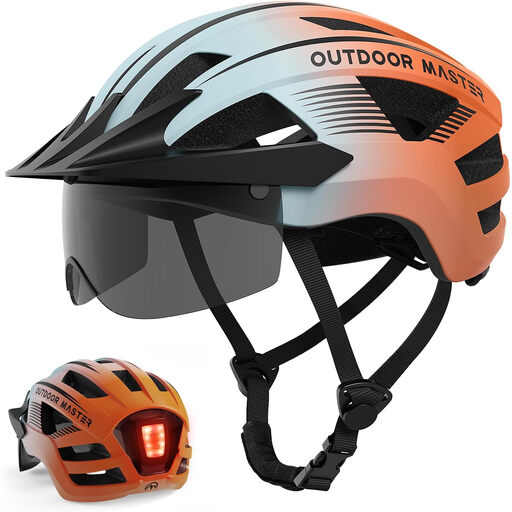
Why This Fits Their Persona: Ideal for those who cycle daily through all weather conditions. The combination of a bright rear light and a visor provides visibility and protection in busy city traffic and during an unexpected rain shower.
The rechargeable Type-C rear light is reliable, and the magnetic visor is easy to attach and detach, ensuring it doesn't go unused.
CPSC and ASTM certified for safety. The 17 ventilation openings ensure good airflow, even at a leisurely pace.
Why This Fits Their Persona: For e-bike riders who travel at higher speeds, visibility and a stable fit are crucial. This helmet offers both, with a bright rear light and an adjustment system that prevents shifting.
The adjustable dial ensures a secure fit that doesn't wobble at speed. The visor protects the eyes from wind and insects, contributing to a safer ride.
The in-mold construction with EPS foam is designed for shock absorption. The visor protects against UV rays, wind, and rain.
We have compiled a complete, real-time list of products that fully satisfy these strict selection criteria and UK safety regulations.
The right size is essential for a helmet to function correctly. Measure the circumference of your head at its widest point, about 2 cm above your eyebrows and ears. Use a flexible measuring tape for this. Compare the measured circumference (in cm) with the manufacturer's size chart. A good helmet will also have an adjustment system (usually a dial) to further fine-tune the fit.
The battery life varies by brand, model, and the light mode used. Manufacturers usually specify this in the product description. A flashing mode typically consumes less power than a continuously on light. Models like the OutdoorMaster bike helmet use a rechargeable battery via a standard Type-C cable, which makes charging simple.
A magnetic visor offers more flexibility. You can quickly remove it when you don't need it, for example, in overcast weather or when you stop for coffee. This is often more practical than fixed goggles or a visor that you have to unclip. For an MTB helmet with goggles, a magnetic visor can also be useful, as you can quickly take it off during a climb and reattach it for a descent.
