
Vandaag of morgen in huis

Kwaliteit gegarandeerd

Welkomstaanbiedingen ontgrendelen: GRATIS bezorging | Tot 80% korting | Gratis 30 dagen JoyPlus-proefperiode
Download de app
A good bike helmet is an essential piece of gear, especially in today's busy traffic. More and more cyclists are opting for models with extra features, such as built-in lights and a visor. The market is flooded with options, but this doesn't always make the choice easier. Marketing promises and vague specifications can lead to a helmet that disappoints in practice. In this guide, we'll help you ask the right questions so you can choose a safe bike helmet that suits your rides.
Before you purchase a helmet, it's wise to know the common mistakes. Many buyers fall into the same traps, resulting in an uncomfortable or unsafe helmet.
helmet with a rear light sounds convenient, but the quality varies enormously. Cheaper models often have a dim light with a short battery life that starts to fail after just a few charge cycles. A visor that fogs up, scratches easily, or distorts your vision is more of a hazard than a help.To avoid the pitfalls mentioned above, it's important to focus on a few objective features. These specifications determine the safety, comfort, and usability of your bike helmet for adults.
In Europe, a safe bike helmet must comply with the EN 1078 standard. This certification guarantees that the helmet meets the basic requirements for shock absorption and construction. Always check for this label. For added protection, look for helmets with MIPS (Multi-directional Impact Protection System). This is an extra layer inside the helmet designed to reduce the rotational forces on the head during an angled impact. This is often recommended, especially for a MIPS road bike helmet or MTB helmet.
A good fit is crucial. An adjustable bike helmet typically has a dial on the back that allows you to precisely adjust the inner ring to your head's circumference. Measure your head circumference (just above your eyebrows) with a measuring tape to determine the correct size (S, M, or L). The chin straps should hold the helmet in place without pinching.
With a bike helmet with lights and a visor, the details matter.
helmet with a rear light significantly increases your visibility, which is a major advantage for the daily commuter's e-bike helmet.Based on these criteria, we have selected several models from OutdoorMaster that suit different types of cyclists.
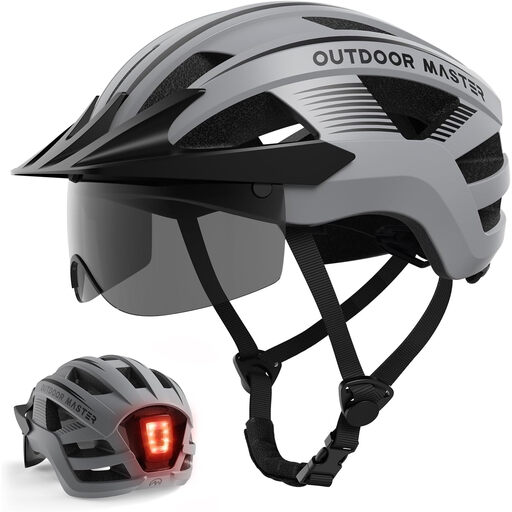
Why This Fits Their Persona: Ideal for those who cycle daily through all weather conditions, for instance, commuting to work on an e-bike. This helmet combines visibility, eye protection, and comfort in one practical package.
The helmet features a USB-C rechargeable rear light and a magnetically detachable goggle, avoiding the pitfall of subpar extras. The dial adjustment system ensures a proper fit.
All-in-one solution: Integrated light and visor.
Certified safety: Complies with CPSC and ASTM standards, according to the manufacturer.

Why This Fits Their Persona: For the road cyclist or performance rider who prioritises safety and ventilation. This helmet focuses on the core essentials: protection and comfort during intense rides.
This helmet focuses on the most critical specification: safety. By integrating MIPS technology, it goes beyond basic protection and avoids the trap of a helmet that only looks good.
MIPS technology: Designed for extra protection against rotational forces.
Ventilation: The design with multiple vents helps keep your head cool.

Why This Fits Their Persona: Suitable for the cyclist who enjoys variety: from a trail ride on an MTB to a relaxed trip through the city. This helmet offers advanced safety and comfort for various activities.
By focusing on a superior fit with two sets of pads and an adjustable dial, this helmet bypasses the "one-size-fits-all" trap. The MIPS technology provides a level of safety not found in every recreational helmet.
MIPS system: Offers advanced protection.
Customisable fit: Comes with two removable liners for a personalised fit.
We have compiled a complete, up-to-date list of products that fully meet these strict selection criteria and European safety regulations.
The right size is essential for both comfort and safety. Measure the circumference of your head at its widest point, about 2 cm (0.8 inches) above your eyebrows and ears. Use a flexible measuring tape. Compare the measured circumference in centimetres with the manufacturer's size chart. A well-fitting helmet sits level on your head and does not move when you shake your head.
Battery life varies greatly depending on the model and the light mode used. Manufacturers often provide an estimate, such as "up to 10 hours in flashing mode." A helmet with a USB-C charging port is typically a practical choice. It's a good habit to charge the helmet after every long evening ride, just as you would with your phone.
Yes, it is strongly recommended to replace your helmet after a crash or a hard impact, even if there is no visible damage. The internal structure of the shock-absorbing EPS foam may have been compressed by the impact and will no longer offer optimal protection in a subsequent fall. Think of it as a single-use crumple zone for your head.
