
Vandaag of morgen in huis

Kwaliteit gegarandeerd

Welkomstaanbiedingen ontgrendelen: GRATIS bezorging | Tot 80% korting | Gratis 30 dagen JoyPlus-proefperiode
Download de app
Whether you're commuting to work, exploring forest trails on your mountain bike, or cruising through the city on your skateboard, a quality helmet is essential. But with so many choices available, finding the right bike helmet can be challenging. Which type suits your activity? And what should you look for in terms of fit and safety? As a Joybuy Product Recommendation Officer, I'm here to guide you. In this guide, we'll provide practical tips and highlight some popular choices to help you make an informed decision.
Before we dive into specific models, here are a few key points to consider when choosing the right helmet.
Not all helmets are created equal. The construction is often tailored to the specific risks of an activity.
bike helmet with a light, offer enhanced visibility in traffic.MTB helmet typically provides more coverage for the back and sides of the head. Many models include a visor to protect you from sun and branches.BMX, a full-face helmet is a wise choice. It protects not only your head but also your chin and face.skate helmet usually has a round, hard shell designed to withstand multiple small impacts, which are common in skating.A helmet is only effective if it fits correctly. A helmet that's too loose can shift during a fall, while one that's too tight is uncomfortable. Measure your head's circumference (about 2 cm above your eyebrows) to determine your size. Look for helmets with an adjustable system, often a dial at the back, and adjustable chin straps. This allows you to fine-tune the fit.
Most helmets consist of a hard outer shell and a shock-absorbing inner layer of foam, such as EPS (Expanded Polystyrene). Some helmets use in-mold construction, where the outer shell and inner foam liner are fused together, creating a lighter and stronger helmet. All helmets sold in the EU must meet the EN 1078 safety standard.
Based on functionality and specifications, we've selected a few versatile options from OutdoorMaster for you.

Why It Stands Out This helmet is a true all-rounder. Thanks to its robust construction and classic design, it's suitable for a wide range of activities, from cycling and skating to scootering. The included extra liner makes it adaptable for different head sizes.
Pros
skate helmet, adult bike helmet, and for BMX.Who Is It For? For the active user looking for a single helmet for multiple sports. Ideal for recreational cycling, skating, and commuting.
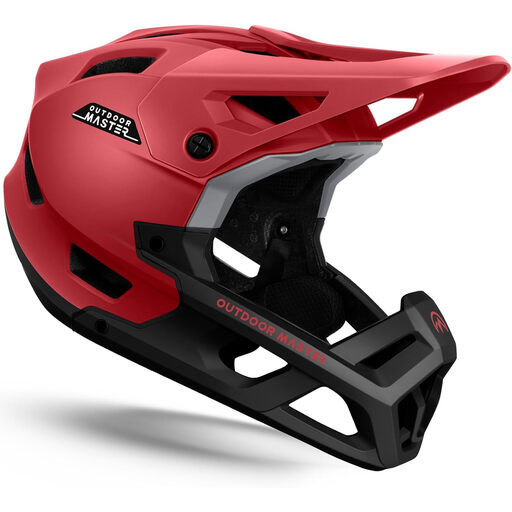
Why It Stands Out This full-face helmet is designed for maximum protection without compromising on comfort. The focus is on safety for the entire head, including the chin and jaw, which is essential for downhill and BMX.
Pros
full face construction with an EPP system for clavicle impact protection offers comprehensive safety.Who Is It For? For serious mountain bikers, downhill riders, and BMXers seeking a helmet that offers superior protection on rough terrain.
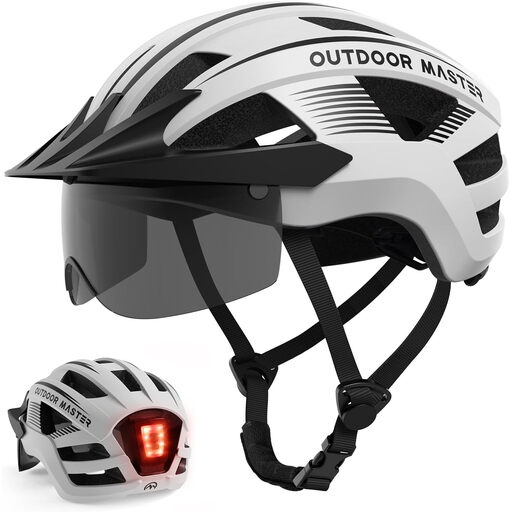
Why It Stands Out This helmet combines safety with modern technology. The built-in rechargeable LED light and magnetic goggles make it a very complete choice for both road bike helmet users and urban cyclists.
Pros
Who Is It For? Perfect for cyclists who frequently ride in the city or on the road, including commuters. The extra visibility and convenient goggles make this bike helmet with a light a smart choice for daily use.
A good helmet is the first step towards safe sports. But a strong core is just as important for your balance and stability, whether you're cycling or skating. If you also want to improve your overall fitness, check out our selection of Abdominal Exercise Equipment to complete your workout.
The right size is essential for both comfort and safety. You can find your size by measuring your head's circumference with a flexible measuring tape. Place the tape about 2 centimetres above your eyebrows and ears, and measure the widest part of your head. Most helmets indicate a size range in centimetres (e.g., 54-58 cm). Choose the size that your head circumference falls within.
A helmet should be replaced immediately after a hard fall or impact, even if there is no visible damage. The internal shock-absorbing structure may be compromised. Additionally, it is recommended to replace a helmet every 3 to 5 years. Materials like the EPS foam and the plastic shell can degrade over time due to exposure to sunlight and sweat.
Not necessarily. All helmets sold in the Netherlands and the EU must meet the EN 1078 safety standard, which guarantees a basic level of protection. The price difference is often due to other factors, such as weight, ventilation, aerodynamics, comfort, and extra features like a built-in light or a more advanced adjustment system. A more expensive helmet is often lighter and more comfortable, but it doesn't automatically offer more protection in a fall than an approved, less expensive model.
