
Vandaag of morgen in huis

Kwaliteit gegarandeerd

Welkomstaanbiedingen ontgrendelen: GRATIS bezorging | Tot 80% korting | Gratis 30 dagen JoyPlus-proefperiode
Download de app
Buying a bike helmet sounds straightforward until you have to choose between an adult bike helmet, children’s bike helmet, skateboard helmet or multisport helmet. Product pages often highlight LED lighting, ventilation or “impact protection”, but these features mean little if the size is wrong or the helmet does not fit your needs.
Three common pitfalls are:
Use a tape measure to measure horizontally around your head, approximately one to two centimetres above your eyebrows. Keep the tape measure in contact with your head, but do not pull it tight. Compare the result with the size chart for the specific model.
Do not just look at the letter S, M or L. Measurements vary by brand and model. For example, the DKONI HS-158 is available for head circumferences of 48–55 cm, 52–58 cm and in a larger version. The OutdoorMaster Oryx models have separate sizes, including 54–58 cm.
A good fit means:
Many bike helmets combine a hard outer shell with foam on the inside. Product descriptions commonly refer to PC, ABS, EPS and EPP:
Also check which standard or certification is stated on the product page and product label. The DKONI HS-158 lists CPSC, CE and ASTM. The OutdoorMaster RhinoUrban lists CPSC and ASTM. These are verifiable product details, but a listing alone does not prove that a helmet is suitable for every sport or every type of impact. Always check the official documentation, usage limitations and EU conformity information.
According to the brands’ own product information, certain models are intended for cycling, skateboarding, BMX or mountain biking. Treat this information as the manufacturer’s usage advice and do not choose an urban helmet for activities where a different helmet model is recommended.
For commuting and longer recreational rides, ventilation and a washable lining are practical features. Check:
An LED light at the front or rear is an additional feature, not a replacement for legally required bike lights. Check that the light is sufficiently charged before setting off. You should replace a helmet after a hard fall or collision, even if there is no obvious external damage. Always follow the manufacturer’s instructions.

Why it suits this profile: A practical choice for anyone who wants to combine cycling, skating and skateboarding without buying a different helmet for every activity. This model is available in size M for a head circumference of 54–58 cm.
The product description states that it has an adjustable dial, chin strap and two removable linings. This allows you to adjust the fit and maintain the lining.
ABS outer shell, EPS inner layer, ventilation and compatibility with bicycles, BMX bikes, skateboards and inline skates.
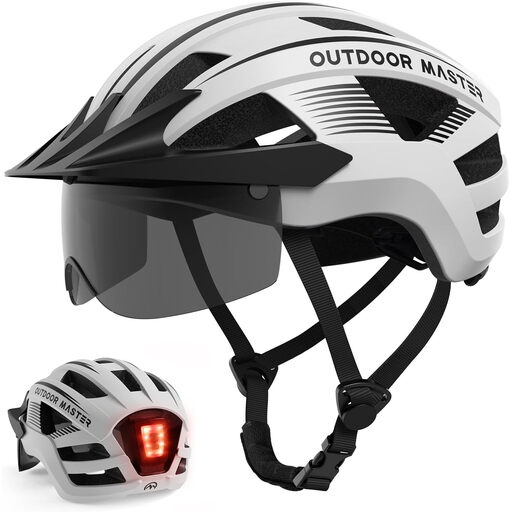
Why it suits this profile: Suitable for adults who combine urban rides, road cycling and mountain biking, and value additional visibility.
According to the product information, the light can be recharged via Type-C. This means you do not need to insert separate batteries, but you will need to recharge it regularly.
17 ventilation openings, adjustable fit, removable glasses and sun visor, plus an integrated rear light. The product information lists CPSC and ASTM.

Why it suits this profile: A full-face model for users who take part in downhill riding, BMX or intensive mountain biking and want more coverage than a standard urban helmet provides.
The full-face design is clearly intended for a different type of use than commuting. This helps prevent you from using a basic bike helmet for an intensive discipline where greater coverage may be preferred.
ABS outer shell, EPP inner layer, chin bar, chin protection pads, 27 ventilation channels, adjustable visor and removable washable lining.
The RoyalBaby Everest and RoyalBaby Moon are children’s bike helmets for a head circumference of approximately 52–56 cm. The Everest has an adjustment dial, adjustable straps, ten ventilation openings and a removable lining. According to the product information, the Moon also features an integrated rear light with three modes and a fixed visor.
Measure children’s heads regularly. A helmet that fitted last season may now be too small. Also check the buckle: it should fasten without pressing against the throat. A children’s helmet is not a substitute for supervision, following traffic rules or riding appropriately.
We have put together a complete, up-to-date list of products that fully meet these strict selection criteria and the applicable European safety regulations.
The helmet should sit horizontally on your head. There should be little space between the helmet and your head, without the helmet feeling tight. Adjust the dial first, then fasten the chin strap. Open your mouth: the strap should tighten slightly, but must not press against your throat.
Replace the helmet after a serious fall or collision, even if there is no visible damage. Also check the shell, buckles, straps and lining regularly. Some manufacturers recommend replacing helmets after three to five years, as materials can deteriorate over time. Follow the replacement period stated in your model’s manual.
No. An LED light on the helmet can improve visibility, but it does not replace suitable bike lights fitted to the bicycle. Check the charge level of a rechargeable bike helmet before setting off, and also use reflective elements and the lights required for your situation.
