
Vandaag of morgen in huis

Kwaliteit gegarandeerd

Welkomstaanbiedingen ontgrendelen: GRATIS bezorging | Tot 80% korting | Gratis 30 dagen JoyPlus-proefperiode
Download de app
Buying a bike helmet seems straightforward, until you have to choose between a MIPS bike helmet, a mountain bike helmet, a road cycling helmet or a bike helmet with a light. Marketing copy often highlights terms such as “extra safe”, “ultralight” or “maximum ventilation”. On their own, these words say very little. The size, certification and intended use have far more influence on whether a helmet is right for you.
For cyclists in the Netherlands, there are three common pitfalls:
An adjustable bike helmet should stay firmly in place without creating pressure points. Position the helmet horizontally on your head. The front should not sit too far back, and the chin strap should fit snugly without feeling tight. Check whether the adjustment dial can be operated with one hand and whether the straps rub against your ears.
Pay attention to the size range in centimetres. A 56–61 cm model will not automatically fit everyone who normally wears size L. Some helmets come with different liners. These allow you to fine-tune the fit, but a liner cannot make an outer shell that is too small fit properly.
Many helmets combine a polycarbonate or ABS outer shell with an EPS inner layer. In-mould construction means that the shell and foam are bonded together during manufacturing. This says something about the construction, but not by itself whether the helmet is suitable for your sport.
For an adult bike helmet or a children’s bike helmet, it is important to check the product page. Look for a relevant European standard, such as EN 1078 for bicycle, skateboard and roller sports helmets. For a ski helmet, CE EN 1077 is relevant; some models also mention ASTM F2040. A safety helmet for cycling should therefore not simply be replaced with a ski helmet or motorcycle helmet.
According to information provided by the brands themselves, MIPS may help limit rotational forces in certain impact scenarios. This is not a guarantee against injury and does not make a helmet suitable for every activity. Always check the stated intended uses and certification.
Ventilation is particularly relevant for long rides, commuting and mountain biking. A helmet with 15, 17 or 25 vents may feel more breathable, but the shape and position of the vents are also important.
According to the product description, a bike helmet with a light increases visibility in dark conditions. The lamp does not replace bicycle lights on your bike and must be charged. Also check whether the light module can be removed.
A bike helmet with a visor can help protect against sun, rain, dust or splashes of dirt. Check that the visor is securely attached, provides sufficient visibility and does not touch your glasses. A magnetic visor or detachable sun peak is particularly practical if you use the helmet in different conditions.

Why it suits this profile: A versatile model for cycling, BMX, skateboarding, scooting and skating. The S size is intended for a head circumference of 52–55 cm.
The adjustment dial and chin strap help prevent a loose fit. According to the product description, two removable liners are washable and allow you to vary the fit.
ABS shell, EPS core, ventilation and two liner sizes; stated as suitable for use from 5 years of age.

Why it suits this profile: Suitable for adults looking for a MIPS bike helmet for recreational cycling, mountain biking, road cycling, BMX or skating.
The product information lists MIPS, an adjustment dial and two liners. This allows you to tailor the fit and use more effectively than with a non-adjustable model.
PC outer shell, EPS inner layer, 25 vents and detachable visor according to the product specifications.
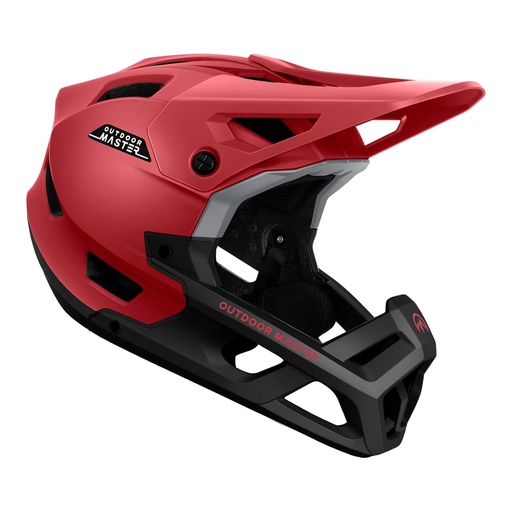
Why it suits this profile: Designed for downhill, BMX and intensive mountain biking, where full-face protection may be desirable.
The full-face construction is more specialised than that of a standard urban helmet. Always check, however, that the stated certification and fit are suitable for your discipline.
ABS shell, EPP inner layer, chin guard, 27 ventilation channels and an adjustable visor.
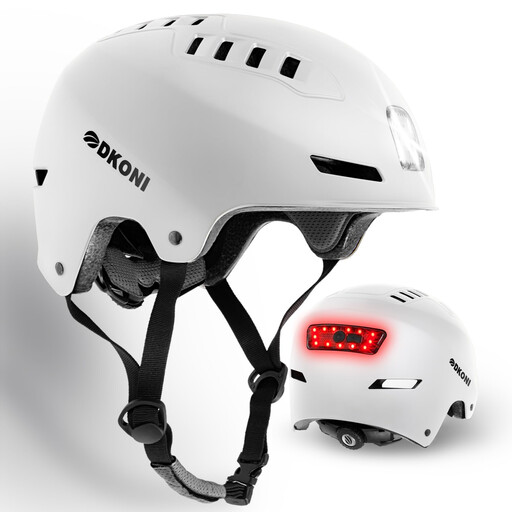
Why it suits this profile: Practical for urban cyclists and commuters who regularly ride in low-light conditions and are looking for an adjustable bike helmet with lights.
The helmet combines an adjustment dial with front and rear lights. Check the charge level before setting off and also use the required bicycle lighting.
20 vents, USB-rechargeable LEDs and, according to the product information, CPSC, CE and ASTM certification.
Replace a helmet immediately after a fall or significant impact, even if you cannot see any damage. The foam may have been deformed internally. Product information for various models also recommends replacement after approximately three to five years, as materials can deteriorate over time. Always follow the manufacturer’s instructions.
Wash liners with mild soap and allow them to air-dry completely. Do not use harsh chemicals, glue or a heat source. Adjust the chin strap before every ride and check that the visor, light and adjustment dial are securely attached.
We have put together a complete, up-to-date list of products that fully meet these strict selection criteria and the applicable European safety regulations.
Measure your head circumference at its widest point, approximately one centimetre above your eyebrows. Compare the measurement with the size range of the specific model. Then adjust the dial and chin strap. The helmet should not wobble when you move your head.
You should replace your helmet after a collision, even if there is no visible damage. With normal use, the product instructions for some models recommend replacement after three to five years. Intensive use, UV light and damaged components may mean that it needs to be replaced sooner.
MIPS is an additional construction which, according to information provided by certain brands themselves, is designed to limit rotational forces in specific impacts. It is not a replacement for a good fit and relevant certification. Choose MIPS when the other features, size and intended uses are also suitable.
