
Vandaag of morgen in huis

Kwaliteit gegarandeerd

Welkomstaanbiedingen ontgrendelen: GRATIS bezorging | Tot 80% korting | Gratis 30 dagen JoyPlus-proefperiode
Download de app
A good bike helmet is an essential piece of gear, whether you're commuting to work, enjoying a weekend e-bike tour, or teaching your kids to skate. But the market is flooded with options. How do you choose a helmet that offers real protection and comfort, without overpaying for marketing hype? Many helmets look fine at first glance but hide design flaws that only become apparent after a few weeks of use.
Here are the most common pitfalls and how to avoid them:
To avoid buyer's remorse, focus on a few objective specifications. These factors determine a helmet's safety and comfort, regardless of brand or price.
This is the most crucial factor. A CE-certified helmet that complies with the EN 1078 standard has been tested for shock absorption, construction, and the strength of the chin strap. This standard applies to helmets for cyclists, skateboarders, and roller skaters. Always check that this certification is clearly stated inside the helmet or on the packaging. Without it, you're taking an unnecessary risk.
A helmet only works if it fits properly. Measure the circumference of your head with a measuring tape, about 2 cm above your eyebrows. Most manufacturers list the size in centimetres (e.g., 54-58 cm). A good adjustable helmet has a dial at the back. This allows you to precisely tighten the inner ring so the helmet sits securely and comfortably, without pinching. This is essential for a men's bike helmet, women's bike helmet, and a kids' bike helmet.
A helmet's comfort largely depends on its ventilation. Pay attention to the number and placement of the vents. More vents generally mean better airflow. Most modern bike helmets use an "in-mold" construction, where the hard outer shell (polycarbonate) is fused directly with the shock-absorbing EPS foam layer. This makes the helmet both lightweight and strong. A skate helmet often has a tougher ABS outer shell that is more resistant to multiple small impacts.
Based on these criteria, we have selected a few popular choices that suit different users.
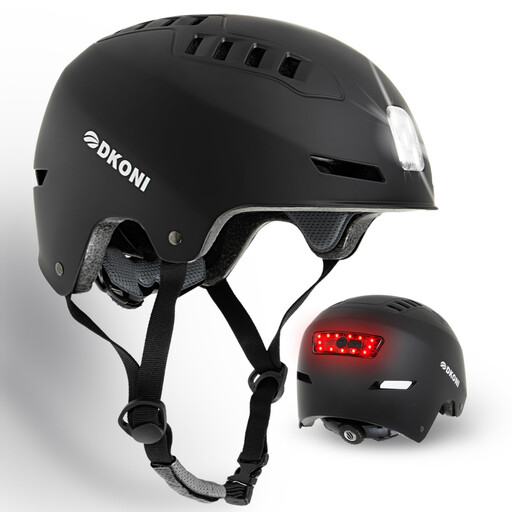
Why it's a match: Ideal for those who navigate traffic daily. The integrated front and rear lights ensure visibility in the early morning or late evening, a common scenario for Dutch commuters.
This helmet with lights offers a practical feature rather than a gimmick. The USB rechargeability is convenient, and the adjustment system ensures a proper fit, avoiding the "one-size-fits-all" trap.
Integrated USB-rechargeable front and rear light. Good ventilation with 20 vents for comfort during daily rides.

Why it's a match: For those who switch between a bike, skateboard, and scooter. The robust construction is designed to handle different types of impacts, which is typical for multi-sport use.
This skate helmet focuses on durability with a reinforced ABS shell. The two included, removable liners ensure a better fit than a standard helmet, directly addressing the fit problem.
Reinforced ABS shell suitable for various sports. Comes with two sets of liners for a customisable fit.

Why it's a match: Safety first. This helmet is specifically designed for children, with sizes that fit smaller heads and an adjustment system that grows with them. Ideal for their first cycling and skating adventures.
This kids' bike helmet tackles the biggest risk: a poor fit. The adjustable dial system ensures the helmet stays securely in place, even during unexpected movements. The multiple certifications (CE, CPSC, ASTM) provide extra peace of mind.
Specifically designed for children with a wide adjustment range. Meets multiple international safety standards.
We've compiled a complete, up-to-date list of products that meet these selection criteria and European safety standards.
The right size is crucial for safety. Take a flexible measuring tape and measure the circumference of your head at its widest point, about 2 centimetres above your eyebrows and ears. Compare this number (in cm) with the size chart of the helmet you are considering. A well-fitting helmet sits level on your head and does not move when you shake your head.
The general guideline is to replace a helmet immediately after a fall or a hard impact, even if there is no visible damage. The internal shock-absorbing structure may be compromised. Additionally, it is recommended to replace a helmet every 3 to 5 years. Over time, materials like the EPS foam and plastic can lose their protective properties due to exposure to sunlight and sweat.
As of 2026, a helmet is only mandatory in the Netherlands for riders of a speed pedelec (a fast e-bike that provides assistance up to 45 km/h). For regular bicycles and standard e-bikes (up to 25 km/h), a helmet is not legally required, but wearing one is strongly recommended for your own safety.
