
Vandaag of morgen in huis

Kwaliteit gegarandeerd

Welkomstaanbiedingen ontgrendelen: GRATIS bezorging | Tot 80% korting | Gratis 30 dagen JoyPlus-proefperiode
Download de app
Finding a good bike helmet can feel like a daunting task. The selection is vast, and the specifications aren't always clear. As a Joybuy Product Recommendation Officer, I'm here to help you filter the options. In this article, we'll provide practical tips and highlight several popular choices to help you find a helmet that fits your riding style and needs.
Before we look at specific models, there are a few key points to consider. These will help you make an informed decision.
A helmet only works effectively if it fits properly. A helmet that's too loose can shift during a fall, while one that's too tight is uncomfortable. Measure the circumference of your head at its widest point, about one centimetre above your eyebrows. Most helmets are available in different sizes (S, M, L) that correspond to a specific head circumference in centimetres.
An adjustable helmet is often a great choice. A dial at the back allows you to fine-tune the fit precisely. Also, pay attention to the chin straps; they should be comfortable and easy to adjust. Although you often hear about a men's bike helmet or a women's bike helmet, the fit is usually unisex. The main differences are typically in the colour schemes and sizing.
All helmets sold in Europe must comply with the EN 1078 standard. This guarantees a basic level of protection. For users of a faster e-bike (speed pedelec), there is a stricter standard, the NTA 8776.
A technology you'll see more and more is MIPS (Multi-directional Impact Protection System). A MIPS helmet has an additional thin layer on the inside that can move slightly with your head. According to the developers of MIPS, this can help reduce the rotational forces that can act on the brain during a fall.
Modern helmets offer more than just protection. Think about features that make your ride more comfortable and safer. A bike helmet with a light on the back significantly increases your visibility in the dark, which is a major advantage, especially for commuters.
Other useful extras include ventilation openings for cooling during exertion, an insect mesh to keep bugs out, and a visor or magnetic goggles to protect your eyes from the sun, wind, and rain.
Based on the criteria above, we have selected a few models from OutdoorMaster that stand out for their specifications and functionality.
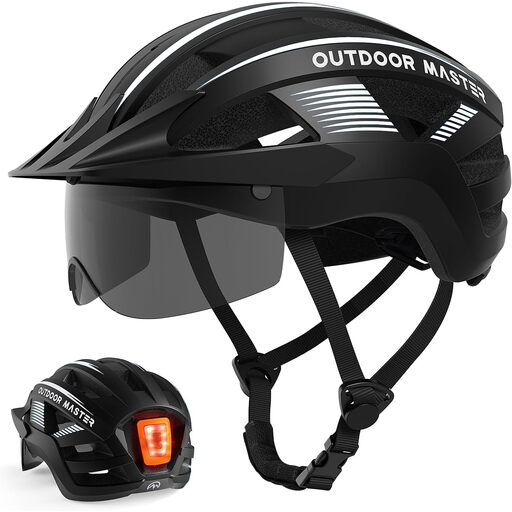
Why It Stands Out This helmet is an all-in-one solution for the urban cyclist and commuter. It combines safety with practical features like a rechargeable rear light and magnetic goggles, eliminating the need for separate accessories.
Pros
Who Is It For? Ideal for the daily rider, e-bike user, or urban explorer looking for an all-in-one helmet that offers comfort, visibility, and convenience.
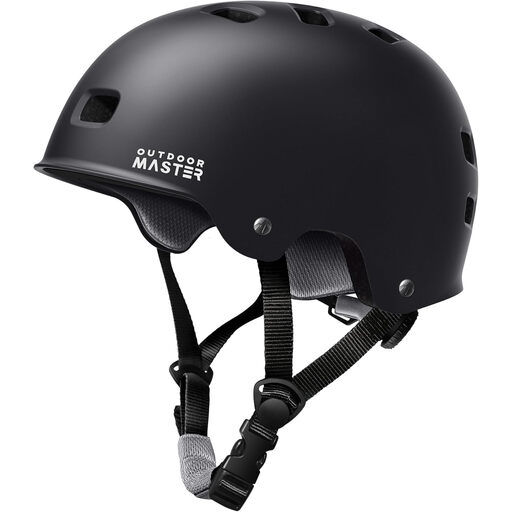
Why It Stands Out This is a robust skate helmet that is also highly suitable for cycling, BMX, and other urban sports. The reinforced ABS shell is designed to withstand impacts, making it a durable choice for versatile use.
Pros
Who Is It For? For the multi-sport athlete who wants one helmet for various activities. Also a great option for cyclists who prefer the classic, robust style of a skate helmet.

Why It Stands Out This road bike helmet is specifically designed for performance-oriented cyclists and integrates MIPS technology. Its lightweight and aerodynamic design focuses on comfort during long and intensive rides.
Pros
Who Is It For? For the serious road cyclist, mountain biker, or performance-oriented rider looking for a lightweight, well-ventilated helmet with an advanced safety feature like MIPS.
A new helmet is a great start, but maybe you're also ready for a new bike? Check out our selection of black bikes for a complete, stylish upgrade to your gear.
Use a flexible measuring tape to measure the circumference of your head. Place the tape about 1 cm above your eyebrows and ears, at the widest part of your head. Compare the measurement in centimetres with the size chart of the helmet you are considering. A well-fitting helmet sits level on your head and doesn't move more than a few centimetres when you shake your head.
MIPS stands for Multi-directional Impact Protection System. It is a thin, low-friction layer on the inside of the helmet. During an angled impact, this layer can move a few millimetres relative to the helmet shell. According to the creators of MIPS, this is designed to help reduce the rotational energy that would otherwise be transferred to the brain.
The general guideline is to replace a bike helmet immediately after a hard fall or impact, even if there is no visible damage. The internal structure may be weakened. Additionally, it is recommended to replace a helmet every 3 to 5 years. Materials like the EPS foam can lose their protective properties over time due to factors like sweat and UV light.
