
Vandaag of morgen in huis

Kwaliteit gegarandeerd

Welkomstaanbiedingen ontgrendelen: GRATIS bezorging | Tot 80% korting | Gratis 30 dagen JoyPlus-proefperiode
Download de app
A bike helmet for adults may seem straightforward to choose, until you consider fit, ventilation, lighting and the type of bike you ride. A helmet that feels comfortable on a short city ride may be less suitable for a long road cycling trip or a bumpy mountain bike trail.
Marketing terms can also be confusing. An integrated light, MIPS system or magnetic goggles is only useful if the design suits how you intend to use it. Below, you’ll find the key points to check, along with some product options for different types of cyclists.
A size such as M or L does not tell you enough. Head circumferences can vary between brands and models. Measure with a flexible tape around the widest part of your head, approximately one to two centimetres above your eyebrows. Then check the stated range, for example 58–61 cm.
The helmet should sit level on your head. It must not slide backwards when you lean forwards. The chin strap should fit snugly without digging in. An adjustable bike helmet with a dial is practical, but the dial cannot make the wrong base size fit properly.
A bike helmet with a light can help make you more visible to traffic approaching from behind. However, it does not automatically replace the bike lights and reflectors legally required on your bicycle. Also check:
For commuting during the darker months, a USB- or Type-C-rechargeable light can be useful. Make sure you charge it regularly and check that it works before setting off.
Terms such as “impact-resistant” only tell you something when the construction and certification are also specified. Product descriptions often mention a polycarbonate or PC outer shell with an EPS inner layer. EPS is a foam material that can help absorb energy in a collision, but it does not guarantee protection against injury.
Some models mention CPSC, ASTM or CE. These are not automatically the same standards, nor do they provide a complete explanation of suitability for use in Europe. Check the current conformity information, intended use and warnings for each product. A helmet designed for cycling is not intended for motor vehicles.
A good bike helmet for adults should be adjustable in several places. Look for a rear-head adjustment system, adjustable side straps and a chin strap with sufficient range. The helmet should not wobble when you gently move your head from side to side.
A model with several removable liners can help you fine-tune the fit. Wear the helmet without a thick hat or cap, as these can affect its position and stability.
For commuters, a lightweight helmet with ventilation openings is often practical. If you go on longer rides, you’ll generally benefit more from a model with air channels and plenty of openings. Also check whether the inner pads are removable and washable.
A PC or polycarbonate shell with EPS lining is common in many bike helmets. Also consider the edge finish, weight and how the straps are attached. A comfortable helmet is more likely to be worn consistently in everyday use.
A MIPS bike helmet contains a system that, according to the product description, is designed to reduce rotational forces in certain impacts. This is a design feature, not a promise that injuries will be prevented. You should therefore also compare the fit, size and certification information.
A bike helmet with goggles can be useful for protection from wind, rain, dust and bright sunlight. Check whether the goggles are removable, whether they clip securely into place and whether there is enough room for ordinary cycling glasses. A visor can be useful for mountain biking or sunny rides, but it is not essential for every road cyclist.
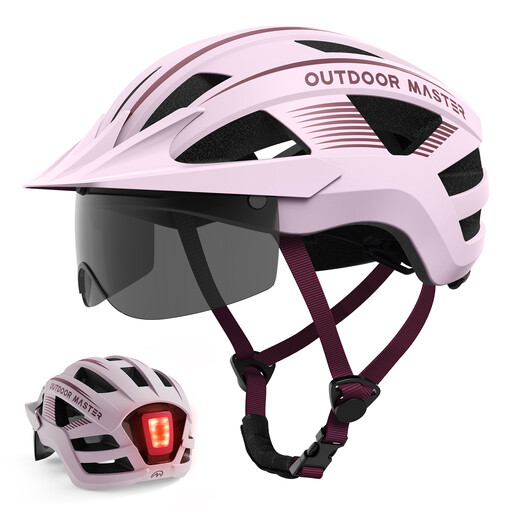
Why it suits this profile: This combination is designed for adults who want to use one helmet for city rides, recreational cycling, mountain biking and e-bike use. The size is suitable for a head circumference of 58–61 cm.
The product description specifies an adjustable dial, chin strap, 17 ventilation openings and a Type-C-rechargeable rear light. The goggles and sun visor are removable.
PC shell with EPS lining, magnetic goggles, removable sun visor and multiple light modes. The description mentions CPSC and ASTM certification.

Why it suits this profile: This model is a good match for road cyclists, commuters and adults looking for a MIPS design with ventilation and a understated look.
The product information explicitly mentions an integrated MIPS system, an adjustable fit and a ventilated construction. However, check that size L suits your head circumference.
Polycarbonate shell, EPS lining, MIPS system, adjustable dial and multiple ventilation openings.
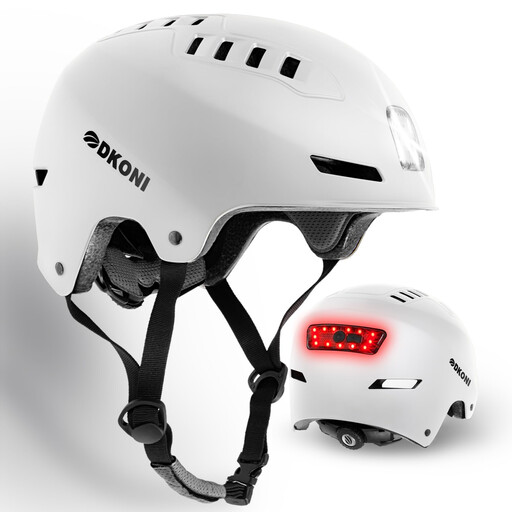
Why it suits this profile: This bike helmet with lights is designed for city rides, commuting and users who want lighting at both the front and rear of the helmet.
The specifications list 5 white LEDs at the front, 13 red LEDs at the rear, four light modes and a USB charging system. The fit can be adjusted with one hand.
20 ventilation openings, removable washable lining and size S for head circumferences of 48–55 cm. The product information mentions CPSC, CE and ASTM certification.
For children aged 3 to 15, a separate set with knee and elbow pads and wrist guards can be practical for cycling, scooting, skating or skateboarding. According to the product description, the OutdoorMaster Kids Elbow & Knee Pads Black S contains two knee pads, two elbow pads and two wrist guards, plus a storage bag.
Make sure the protectors fit securely and do not move around. Check the hook-and-loop fastenings before every use and replace any parts that are cracked or heavily worn. This equipment does not replace supervision or safe decisions in traffic. View the children’s protective gear if you’re looking for an additional set.
We’ve put together a complete, up-to-date list of products that fully meet these strict selection criteria and the applicable European safety requirements.
The helmet should stay stable when you move your head, but it must not cause pressure or pain. First adjust the dial or rear-head fitting system, then adjust the chin strap. You should generally be able to fit about one finger between the strap and your chin. Wear the helmet horizontally, not tilted far backwards.
There is no universal replacement date that applies to every model. Replace the helmet immediately after a serious fall or collision, even if there is no visible damage on the outside. Also check the EPS lining, shell, straps and fastening regularly. Sunlight, heat and wear can cause materials to deteriorate.
A MIPS system is a design choice that, according to the product description, is intended to reduce rotational forces in certain impacts. It is not a substitute for the correct size, proper adjustment or defensive riding. For an e-bike, the most important thing is that the helmet is suitable for the intended type of cycling and stays securely in place at the speeds you ride. Speed pedelecs are also subject to different legal requirements from standard e-bikes.
