
Vandaag of morgen in huis

Kwaliteit gegarandeerd

Welkomstaanbiedingen ontgrendelen: GRATIS bezorging | Tot 80% korting | Gratis 30 dagen JoyPlus-proefperiode
Download de app
Working on your own bike is satisfying and saves you money. But the search for a good bicycle repair kit can be frustrating. You invest in a set, only to find the critical bit missing during your first repair, or worse, a wrench bends or damages an expensive bolt. Before you make a purchase, it's important to recognise the common pitfalls.
Many cyclists fall into these traps:
To avoid a bad purchase, focus on a few key specifications. This will help you cut through the marketing jargon and choose tools that actually work.
Ask yourself what you really need. An extensive bike tool case is ideal if you plan to do everything yourself, from replacing a chain to installing a bottom bracket. For specific, delicate jobs, specialised bike maintenance tools are often a better investment. Think of a dedicated chain tool or a cable cutter that cleanly snips steel cables without fraying.
The quality of the steel determines the lifespan of your tools and the safety of your bike. Tools made from Chrome Vanadium (Cr-V) steel are a good indicator of durability. This material is harder and more resistant to wear and deformation than standard steel, significantly reducing the risk of damaging bolts and nuts.
Modern bicycles, especially those with carbon or lightweight aluminium parts, are sensitive to over-tightened bolts. A bicycle torque wrench is not a luxury here, but a necessity. This tool measures the force (torque) with which you tighten a bolt, expressed in Newton-meters (Nm). It prevents you from irreparably damaging an expensive frame or stem. There are mechanical models that produce a 'click' when the correct torque is reached, and there is the digital torque wrench that displays the value on a screen for even greater precision.
Based on these criteria, we have selected a number of options that suit different types of cyclists.
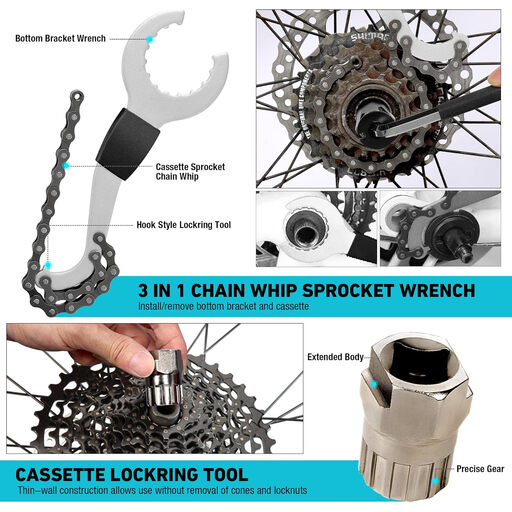
Why This Fits Their Persona: Ideal for those just starting to work on a city or touring bike. This kit offers a wide selection of tools for the most common jobs, like tyre repair, chain maintenance, and adjusting brakes and gears. Everything is neatly organised in a case.
This kit tackles the 'incomplete set' pitfall by providing a broad range of essential tools. You're unlikely to be caught without the right tool for standard maintenance.
A complete bike tool kit at an accessible price point. Includes specific tools like a crank puller and chain tool.
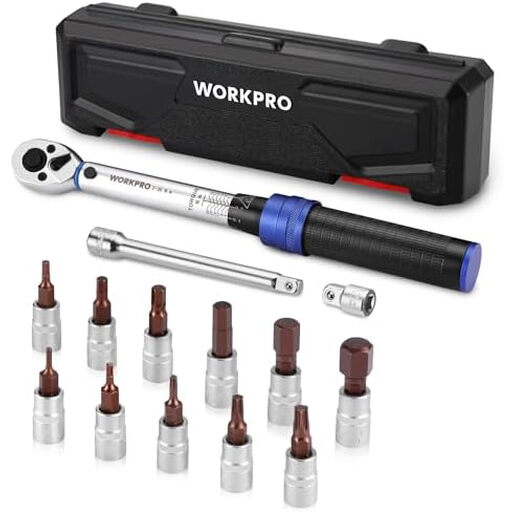
Why This Fits Their Persona: Perfect for the road bike or mountain bike owner who installs their own components. This set is specifically designed for precision work, which is essential for carbon and lightweight aluminium components.
This is the answer to the 'one-size-fits-all' myth. It's a specialised bicycle torque wrench that prevents you from over-tightening and damaging expensive components.
Precise torque range of 2-26 Nm and bits made from high-quality S2 steel. The 'click' clearly indicates when the set torque has been reached.
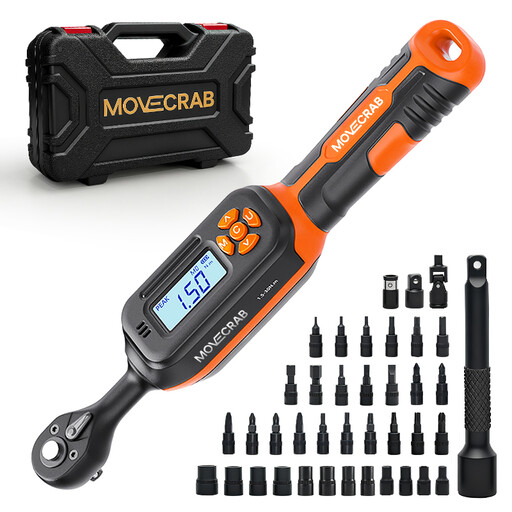
Why This Fits Their Persona: For the cyclist who makes no compromises on accuracy. This digital wrench offers verifiable precision for critical components and is also suitable for more complex jobs on motorcycles or cars.
This is the opposite of a 'soft metal' tool. It offers controllable precision with a manufacturer-specified accuracy of ±2% and a clear digital display.
A digital torque wrench with an LED display, audible alert, and memory functions. The set is very comprehensive with 40 pieces for various applications.
In addition to complete sets, a single, specialised tool can also make all the difference. A portable bike compressor like the HAUSHOF Cordless Compressor makes inflating tyres on the go effortless, while a specific WORKPRO Cable Cutter ensures a perfect finish on brake and gear cables.
We have compiled a complete, up-to-date list of products that meet these selection criteria and comply with current regulations.
This varies greatly by component. A seat post clamp often requires only 5-7 Nm, while a crankset can demand 40 Nm or more. Always consult the specifications from the manufacturer of your bike or the specific component. A bicycle torque wrench with a range of 2-20 Nm is a good starting point and covers most jobs on the handlebars, stem, and saddle.
Not necessarily. For basic jobs like patching a tyre, lubricating the chain, or adjusting a saddle, a compact multitool or a small basic set is sufficient. A complete case becomes worthwhile if you plan to perform major maintenance yourself, such as replacing a cassette, chain, or bottom bracket.
A mechanical torque wrench is set manually and provides a tactile and audible 'click' when the set torque is reached. A digital torque wrench displays the exact torque value on a screen and often gives a light and/or sound signal. According to manufacturers, digital models generally offer higher accuracy and additional features, such as storing measurement values.
