
Vandaag of morgen in huis

Kwaliteit gegarandeerd

Welkomstaanbiedingen ontgrendelen: GRATIS bezorging | Tot 80% korting | Gratis 30 dagen JoyPlus-proefperiode
Download de app
Cycling in the Netherlands is a way of life, but good visibility is crucial, especially at dusk or after dark. A separate bike light is a start, but a bicycle helmet with lights offers an integrated solution that protects your head while making you visible to other road users.
However, the market is flooded with options. Which helmet is right for your rides? In this article, we'll guide you through the process. We'll cover the key factors to consider and highlight some popular choices based on their specifications, helping you make an informed decision that suits your needs.
Before you make a choice, it's helpful to know which features are important. Here are a few practical tips to help you with your selection.
The core feature is, of course, the lighting. A good helmet with front and rear lights ensures you are seen from all angles. Pay attention to the following points:
You're less likely to wear a helmet that doesn't fit well. A comfortable and adjustable bicycle helmet is therefore essential, especially for daily commutes.
A safe bicycle helmet is the most important factor of all. In Europe, all bicycle helmets must comply with the EN 1078 standard. A helmet with a CE mark indicates that it meets European safety requirements. This means the helmet has been tested for shock absorption, construction, and chin strap strength. All helmets discussed here meet this standard.
Based on the criteria above, we have selected a number of models that stand out for their functionality. These helmets are suitable for both daily cyclists and recreational riders.
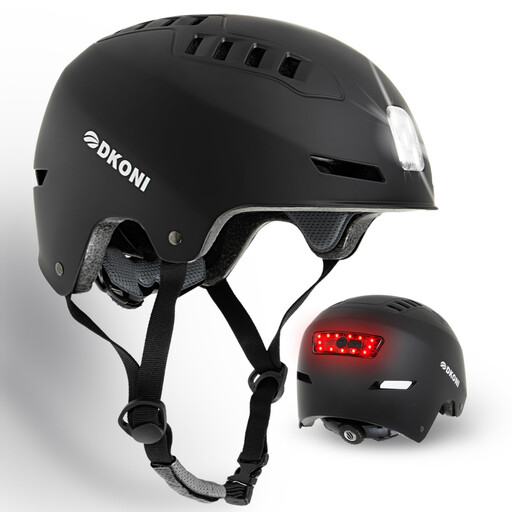
Why It Stands Out This model combines a robust outer shell with an integrated lighting system. The helmet features 5 white LEDs at the front and 13 red LEDs at the rear. The rear light has four different modes, including fast and slow flash functions. This makes the helmet a practical choice for the city bike.
Advantages
Who is this helmet for? This men's and women's bicycle helmet for head circumferences between 56 and 61 cm is a solid choice for the daily commuter looking for a complete and practical solution for safety and visibility.
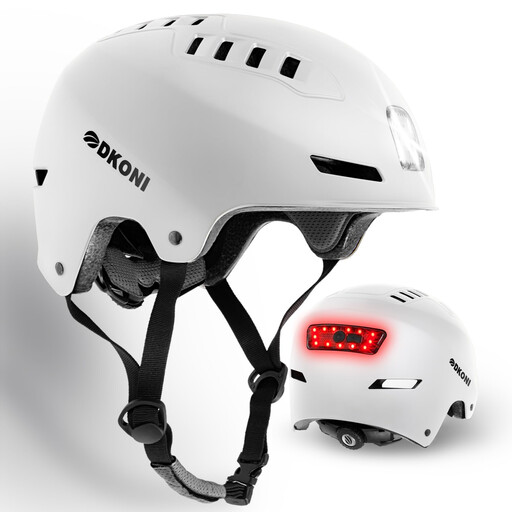
Why It Stands Out This is the same functional helmet as the previous model, but finished in white and designed for cyclists with a smaller head circumference. The white colour can contribute to extra visibility during the day. The specifications are identical, featuring a powerful LED lighting system and a comfortable fit.
Advantages
Who is this helmet for? An excellent option for cyclists, including many women, with a head circumference of 48 to 55 cm. The combination of the white colour and integrated lighting makes this a highly visible women's and men's bicycle helmet for those who prioritise safety.
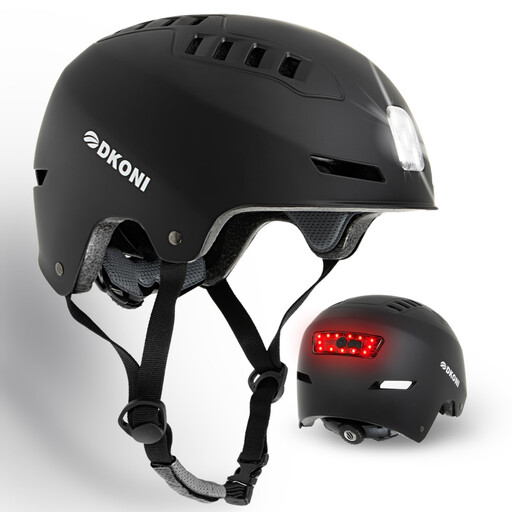
Why It Stands Out This model is the perfect middle ground for cyclists with an average head circumference. It offers the same reliable features as the other DKONI variants: a strong outer shell, a shock-absorbing EPS inner lining, and the convenient, rechargeable lighting system.
Advantages
Who is this helmet for? For the large group of cyclists with a head circumference between 54 and 58 cm. This helmet is an all-rounder, suitable for both fast city rides and leisurely weekend tours.
Besides products for your safety on the bike, we're also happy to help with other practical outdoor solutions. For example, do you want to create more privacy and comfort in your garden or on your balcony?
Check out our selection of outdoor privacy screens
No, at present, wearing a bicycle helmet (with or without lights) is not legally required in the Netherlands for cyclists on a standard bicycle. For speed pedelecs, an approved helmet is mandatory. Nevertheless, wearing a helmet is strongly recommended to help prevent head injuries in a fall or collision. Integrated lighting significantly increases your visibility.
The right size is essential for both comfort and safety. You determine your size by measuring the circumference of your head. Use a flexible measuring tape and measure about 2.5 cm above your eyebrows, across the widest part of the back of your head. Compare the measured circumference in centimetres with the helmet's sizing information. Most helmets have an adjustment mechanism to further fine-tune the fit.
The battery life varies by model and depends on the light mode used. A flashing mode generally consumes less power than a steady mode. Manufacturers often provide an estimate of the usage time per mode. For most rechargeable helmets, the battery lasts for several hours, which is more than enough for daily commutes. The advantage of a USB-rechargeable helmet is that you can easily top it up between rides.
