
Vandaag of morgen in huis

Kwaliteit gegarandeerd

Welkomstaanbiedingen ontgrendelen: GRATIS bezorging | Tot 80% korting | Gratis 30 dagen JoyPlus-proefperiode
Download de app
A bicycle helmet with a light combines head protection with improved visibility at dusk, in rainy weather or when cycling home in the dark. This makes this type of helmet appealing to urban cyclists, commuters and leisure riders. However, a built-in LED rear light does not automatically indicate the quality or suitability of a helmet.
The right choice starts with fit, materials and how you intend to use it. Below, you’ll find what to look out for and which product features are relevant in everyday use.
An LED rear light on a helmet helps make you more visible from behind. It does not automatically replace a front light or other legally required bicycle lighting. So check which lights your bicycle already has and use the helmet light as an additional safety feature.
Also pay attention to battery life. The DKONI HS-086 is specified as offering around 3 to 5 hours of illumination, depending on the selected light mode. That may be enough for several commutes, but you’ll need to recharge the rear light regularly.
An adult bicycle helmet in size M or L may fit differently depending on the brand. So don’t just look at “M” or “L”; measure your head circumference in centimetres. A helmet that is too loose may shift while you’re cycling. A helmet that is too tight can create pressure points and may be worn less often as a result.
Many models feature a dial at the back. This allows you to fine-tune the fit, but it cannot compensate for choosing the wrong basic size.
A cheap or heavy helmet can feel hot and uncomfortable on longer rides. For commuting and leisure cycling, ventilation holes, low weight and an adjustable chin strap are practical features to consider.
A lightweight bicycle helmet with multiple ventilation holes is not automatically suitable for every cyclist. Also check the shape of the inner shell, how adjustable it is and whether the padding can be removed.
Measure horizontally around your head, approximately above your eyebrows and ears. Use the largest measurement as your guide.
The straps should sit beneath your ears, while the chin strap should feel secure without being tight. The helmet should remain stable when you move your head.
Many bicycle helmets use a hard PC shell with an EPS foam core. With an in-mould construction, these layers are combined during manufacturing. According to the product description, the DKONI HS-086 consists of a PC shell and high-density EPS foam.
These are verifiable material specifications, but they do not guarantee protection in every situation. Replace a helmet after a serious impact, even if there is no visible external damage. The manufacturer also warns against modifying the helmet and advises fastening the chin strap before every ride.
In the European market, look for a visible CE marking and information about the relevant bicycle helmet standard, such as EN 1078, where this is stated on the product page or packaging. An LED rear light says nothing about the helmet’s own certification.
A USB-rechargeable bicycle helmet is convenient if you don’t want to use loose batteries. Check:
A bicycle helmet with an LED rear light is primarily designed to improve visibility from behind. If you also want to illuminate the road surface, you may need additional bicycle lighting. Product claims about improved visibility come from the product description; they should not be interpreted as a guarantee that other road users will always notice you.
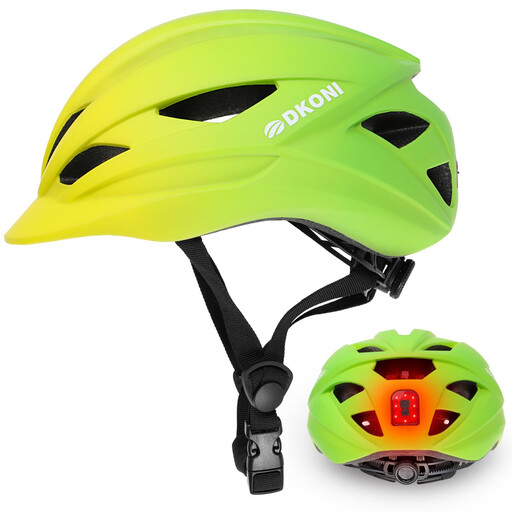
Why it suits this profile: This size M is a practical choice for teenagers aged 14 and over and adults with a head circumference of 55-58 cm who are looking for a bicycle helmet for urban cycling or short commutes.
The size is stated in centimetres and the USB-rechargeable rear light can be removed. This means you can charge the helmet light without leaving the helmet on the bicycle.
PC shell with EPS foam, 15 ventilation holes, two light modes and a stated runtime of approximately 3-5 hours.
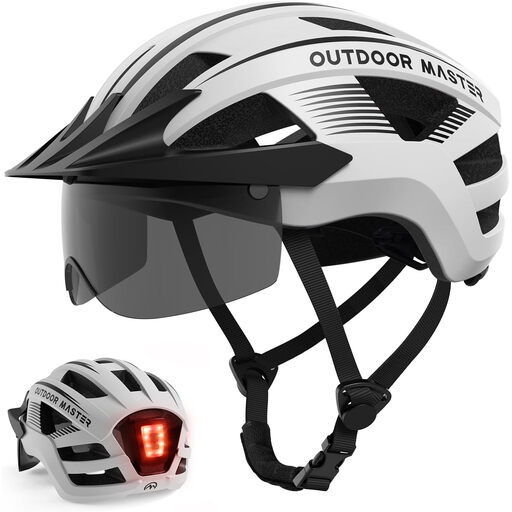
Why it suits this profile: An option for adults who wear size L and want not only a bicycle helmet with a light but also a visor and removable goggles for commuting, road cycling or leisure rides.
The fit can be adjusted with a dial and chin strap. The product description also states that it has 17 ventilation holes and a Type-C rechargeable rear light with multiple modes.
PC shell with EPS lining, removable goggles, removable sun visor and CPSC and ASTM certification stated in the product information.
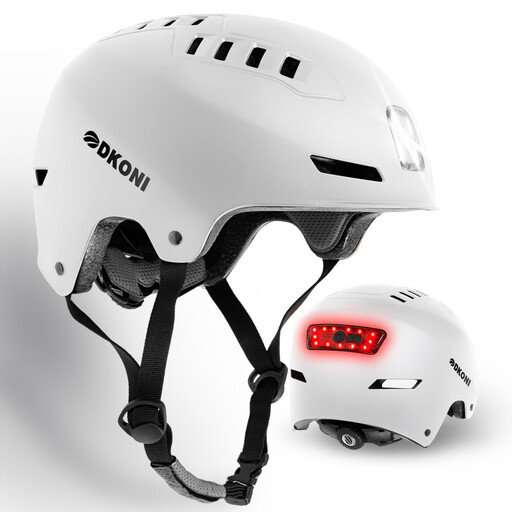
Why it suits this profile: This helmet is designed for cyclists who want both front and rear lights built into their helmet, for example when making daily journeys in the city or travelling longer routes with little ambient light.
The product description mentions removable, washable inner padding and an adjustable system. This helps with everyday maintenance and fine-tuning the helmet’s fit.
Five white LEDs at the front, thirteen red LEDs at the back, four rear-light modes and 20 ventilation holes. According to the product description, CPSC, CE and ASTM certification is stated.
We’ve put together a complete, up-to-date list of products that fully meet these strict selection criteria and the applicable European safety regulations.
Fully charge a USB-rechargeable bicycle helmet before a ride in the dark. Clean the outside with a damp cloth and avoid harsh cleaning products. Allow a wet helmet to dry completely before storing it.
Check regularly:
A bicycle helmet does not last indefinitely. Replace it after a major impact and also follow the manufacturer’s maintenance or replacement guidance.
No. The rear light is intended to improve your visibility from behind. When cycling in the dark, you will generally also need suitable front and rear lights on your bicycle. In addition, check the current Dutch traffic regulations.
With models such as the DKONI HS-086, you remove the LED module from the helmet and charge it via USB. Ideally, recharge the light after several rides and check that the selected light mode works before setting off.
Measure your head circumference in centimetres. For example, choose size M for 55-58 cm and size L for approximately 58-61 cm when this range is stated on the product page. Then adjust the dial, side straps and chin strap. The helmet should not wobble, but it should not create pressure points either.
