
Vandaag of morgen in huis

Kwaliteit gegarandeerd

Welkomstaanbiedingen ontgrendelen: GRATIS bezorging | Tot 80% korting | Gratis 30 dagen JoyPlus-proefperiode
Download de app
Buying a bicycle helmet seems straightforward: choose a colour, check the size and place your order. Yet problems often only become apparent once you start using it. A helmet may fit too loosely, provide poor ventilation or have extra features that add little in practice. Carrying out the right checks beforehand can help you avoid making the wrong purchase.
A size such as 55-58 cm does not tell you everything. The shape of your head varies from person to person, and the adjustment system also determines how securely the helmet sits. A bicycle helmet should sit low and straight on your head, without pressure points. The chin strap should fit closely without being tight.
An adjustable bicycle helmet with a dial or adjustable straps can therefore be more practical than a model with just one fixed size.
A bicycle helmet with a light can help you stand out more clearly in dark conditions. However, a rear light does not replace bicycle lights, reflectors or lights on your clothing and bicycle. Check the battery too: some models work for only a few hours per charge and then need to be recharged via USB.
Terms such as “impact protection”, “dual protection” or “shock absorbing” are difficult to compare without a standard or technical explanation. Look at the stated safety standards and the information on the product page instead. When cycling in the Netherlands, it is sensible to check that the helmet is suitable for its intended use and that the required conformity information is available. A US CPSC or ASTM reference is not automatically the same as a European standards reference.
Measure your head circumference with a flexible tape measure, approximately two fingers above your eyebrows. Compare the measurement with the manufacturer’s size chart:
According to the product description, the OutdoorMaster Ibex for children has two removable inner liners and an adjustable dial. This can be useful as a child grows or when the inner padding needs washing regularly.
Many bicycle helmets combine an outer shell made from polycarbonate (PC) or ABS with an inner layer of EPS. The exact construction varies from model to model. An in-mould bicycle helmet forms the outer shell and foam layer as a single construction; always check the complete product information and safety markings.
You should replace a helmet after a hard fall, even if there is no visible damage on the outside. The material may have been damaged internally. You should also avoid storing a helmet for long periods in extreme heat, near corrosive cleaning products or in direct sunlight.
A breathable bicycle helmet has ventilation openings and sometimes internal air channels. More openings can improve airflow, but the design and fit remain important. Also consider features that suit your type of riding:
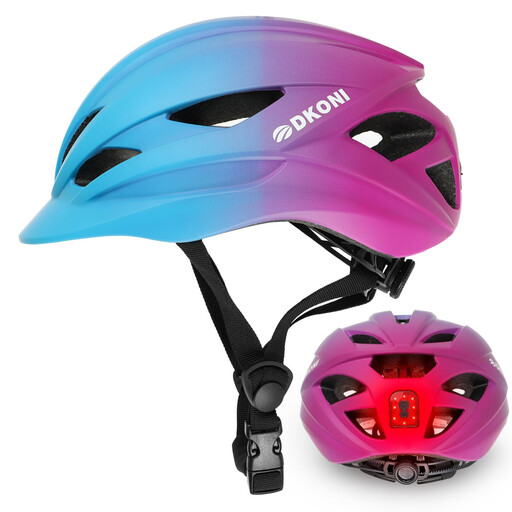
Why it suits this profile: This bicycle helmet is designed for city rides and commuting. The stated L size fits a head circumference of 58-61 cm, and the removable rear light can be recharged via USB.
The size indication is linked to a specific head circumference. You can also remove the light to charge it separately.
PC/EPS construction, 15 ventilation openings and a USB-rechargeable rear light with two light modes, according to the product description.

Why it suits this profile: This model is intended for adult cyclists who want to use one helmet for mountain biking, road cycling, BMX and skating.
The fit can be adjusted with a dial and two removable liners. This helps prevent the inner lining from being too loose or too tight.
MIPS system according to the product description, 25 ventilation openings and a removable visor.
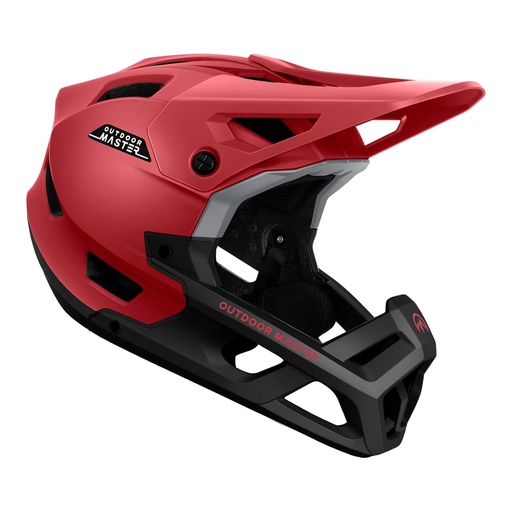
Why it suits this profile: According to the product description, this full-face bicycle helmet is intended for downhill, BMX and intensive mountain biking. The chin guard provides more coverage than an open helmet.
The product information states a clear intended use. This makes it less likely that you will choose an open city helmet for a discipline where more coverage is desirable.
ABS outer shell, EPP inner lining, 27 ventilation channels and an adjustable visor, according to the product description.
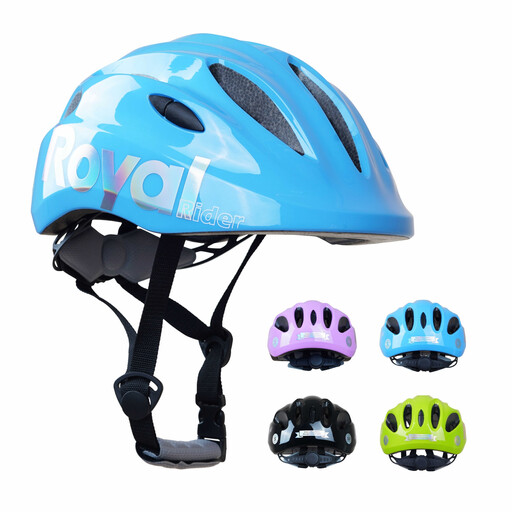
Why it suits this profile: According to the product description, this children’s bicycle helmet is suitable for children aged 5 to 13, with an adjustment range of 52,05-55,88 cm.
The dial and adjustable strap allow you to customise the fit. The inner lining is removable and washable.
PC outer shell, EPS inner layer, 10 ventilation openings and a stated weight of approximately 213 grams.
We have put together a complete, up-to-date list of products that fully meet these strict selection criteria and the applicable European safety regulations.
Its service life depends on the materials, storage conditions, use and any impacts. Replace the helmet immediately after a hard fall. Some manufacturers also recommend replacing certain models after several years, as materials can deteriorate over time. Follow the instructions and regularly check the shell, straps, buckle and inner lining.
No. An integrated rear light is designed to increase your visibility, but it does not replace legally required bicycle lighting or reflectors. Before every ride, check that your USB-rechargeable bicycle helmet has sufficient charge and use suitable lights on your bicycle too.
The price varies depending on the brand, size, materials and extra features such as a visor, lighting or removable liners. So do not compare the price alone: also consider the size range, fit, ventilation, safety information and intended use.
