
Vandaag of morgen in huis

Kwaliteit gegarandeerd

Welkomstaanbiedingen ontgrendelen: GRATIS bezorging | Tot 80% korting | Gratis 30 dagen JoyPlus-proefperiode
Download de app
A bicycle helmet for adults may seem straightforward to choose at first glance. However, there are clear differences in fit, ventilation, lighting and intended use. A helmet that feels comfortable on a short ride to the station does not necessarily need the same features as a mountain bike helmet for off-road trails.
Marketing copy can sometimes make it difficult to distinguish important details from minor features. Focus particularly on measurable specifications and how well the helmet suits the way you cycle.
An adjustable bicycle helmet is not automatically suitable for every head. Sizing can vary from one model to another. For example, one size M may cover 54–58 cm, while another size M may be listed as 55–58 cm.
Measure the circumference of your head with a tape measure, approximately two centimetres above your eyebrows. Then always check the size chart for the specific model. The helmet should remain stable without creating pressure points. The chin strap should sit securely but must not feel tight.
A bicycle helmet with a light can make you more visible, particularly at dusk or when commuting. However, a rear light on the helmet does not automatically replace the legally required or suitable lighting on your bicycle. Also check the battery life, charging method and how the light is attached.
A USB-rechargeable bicycle helmet is practical, but only if you charge the light regularly. On some models, the light can be removed, making charging and maintenance easier.
A bicycle helmet with a visor protects your eyes from wind, rain, dust and bright sunlight. This is particularly useful when mountain biking. A visor does not make a helmet suitable for every type of sport and may affect its weight or airflow.
With a MIPS bicycle helmet, MIPS refers to a system that, according to the product information, is designed to help reduce rotational forces in certain impacts. It is not a substitute for a good fit and does not guarantee that injury will be prevented. Also check which standard and certification the manufacturer lists for the product.
Many bicycle helmets consist of an outer layer made from polycarbonate (PC) or ABS, with an inner layer of EPS foam. With in-mould construction, these layers are bonded together during production. This says something about the construction, but does not by itself determine whether the helmet is suitable for your intended use.
Check whether the product information mentions a relevant standard or certification, such as CE/EN 1078, CPSC or ASTM. The OutdoorMaster RhinoUrban is listed in the product description as CPSC- and ASTM-certified. The DKONI HS-158 lists CPSC, CE and ASTM. Treat this information as a product specification and, if in doubt, check the manufacturer’s current documentation.
A helmet should sit low and straight on your head. The front should cover your forehead without restricting your vision. First adjust the rear fitting system, then position the chin strap correctly. There should be approximately one finger’s width of space beneath your chin.
A model with a dial is useful when you want to adjust the fit on the move or with one hand. Also consider the shape of your head: a helmet can still feel uncomfortable even when your measurements fall within the correct centimetre range.
Ventilation openings help release heat, but more openings do not automatically mean greater comfort. Consider the overall design, the position of the channels and the thickness of the inner pads.
For a breathable bicycle helmet, removable and washable pads are practical. If you often cycle in the dark, you may want to choose a bicycle helmet with a light. If you wear glasses, check that your goggles, visor and glasses do not touch one another.

Why it suits this profile: This model combines an adjustable fit with a removable USB-rechargeable rear light. It is therefore well suited to urban rides and everyday commuting without the need for lots of separate accessories.
The size is clearly specified as 55–58 cm and the light can be removed for charging. This makes fit and maintenance clearer than with a model whose sizing is not specified.
PC and EPS construction, 15 ventilation openings and a USB-rechargeable rear light with two light modes.

Why it suits this profile: For road cyclists and commuters who pay extra attention to fit, ventilation and MIPS functionality, this model offers a focused combination of features.
The product information mentions a MIPS system, adjustable dial and straps. This means you can assess the relevant features side by side rather than relying solely on the marketing name.
PC outer shell, EPS inner layer, integrated MIPS system and ventilation for road cycling and commuting.
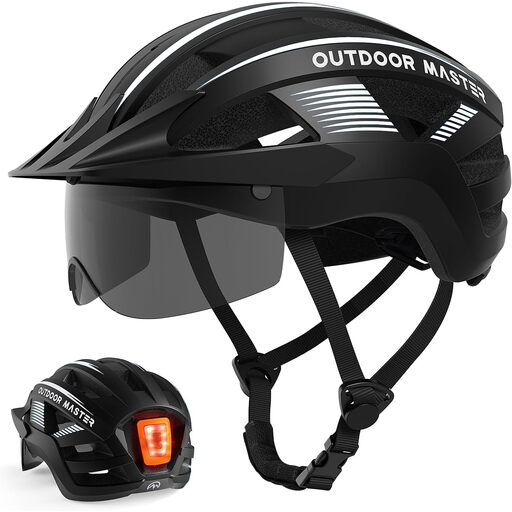
Why it suits this profile: Mountain bikers, e-bike riders and cyclists who switch between urban and off-road routes get a model with removable goggles, a sun visor and a rear light.
The eye protection is removable and the rear light can be charged via USB-C. You can therefore use only the components that suit each ride.
17 ventilation openings, magnetic goggles, removable sun visor and rear light with multiple modes.
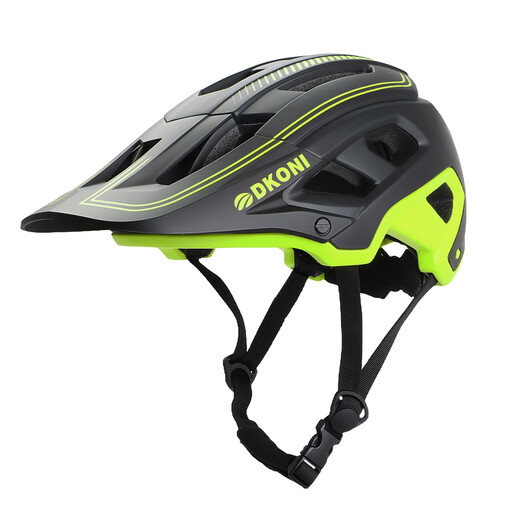
Why it suits this profile: This practical mountain bike helmet is designed for recreational rides, with a larger visor and a size range of 56–61 cm.
The product description specifies the size range, a weight of approximately 380 grams and 17 ventilation openings. This makes it easier to assess the fit and wearing comfort in advance.
Removable ABS visor, one-handed adjustment dial, soft inner pads and PC/EPS in-mould construction.
We have compiled a complete, up-to-date list of products that fully meet these strict selection criteria and the applicable European safety regulations.
Clean the outside with a soft, damp cloth. Do not use harsh chemicals and allow removable pads to air-dry completely. Before every ride, check the shell, straps, adjustment dial and the attachment of any visor or light.
After a serious fall, you should replace the helmet, even if there is no visible damage. The EPS layer may have been deformed internally. Store the helmet somewhere dry and cool, away from direct sunlight. There is no fixed legal replacement date for every bicycle helmet; however, replace the model when parts become worn or when the manufacturer recommends doing so.
For ordinary bicycles, wearing a helmet is generally not compulsory in the Netherlands. Different rules apply to some fast bicycles, such as speed pedelecs. Always check the current traffic regulations that apply to your vehicle.
The helmet should remain stable when you move your head. It must not slide forwards or backwards and should not create painful pressure points. Adjust the dial and chin strap before you start cycling, and check the fit again when wearing a beanie or cap.
Its lifespan depends on use, storage and material ageing. Replace a helmet after an impact, if there are cracks or damaged straps, and when the inner pads no longer fit properly. With regular use, it is advisable to follow the manufacturer’s maintenance instructions and inspect the helmet regularly.
