
Same-day & Next-day Delivery

Quality Guaranteed

Unlock Your Welcome Offers: FREE Delivery | Up to 80% OFF | Free 30-day JoyPlus trial
Download the APP
Frozen dumplings are a handy choice for a quick meal, drinks party or dim sum night at home. However, fillings, sizes, cooking methods and allergen information can vary considerably from one pack to another. If you buy based only on an appealing product photo or the word “authentic”, you could end up with a pack that doesn’t suit your household, the time you have available to cook or your budget.
1. Buying a large pack without a plan for using it
A multipack may seem like good value, but 1 or 2 kilograms isn’t practical if you only eat dumplings occasionally. Check the net weight and, if stated, the number of pieces. A 600-gram pack is usually a better fit for a family or a meal for several people than a bulk pack intended for catering or high-volume use.
2. Confusing cooking times and methods
Not all dumplings are suitable for the same cooking method. Some need to be boiled, while others are intended for steaming or pan-frying. Pan-frying dumplings gives them a crispy base, while steaming usually results in a softer wrapper. Always follow the instructions on the pack, and don’t defrost the product first unless instructed to do so.
3. Overlooking allergens and nutritional information
Dumpling wrappers often contain wheat and therefore gluten. Fillings may also contain soya, sesame, egg, fish, crustaceans or celery. Don’t just check the name, such as “chicken dumplings” or “prawn dumplings”; read the full ingredients list. Product information may change from one pack to another, so check the current label when your order arrives too.
Start by choosing based on flavour and how you plan to serve them. Japanese gyoza often have a thin wrapper and are commonly pan-fried. Chinese dumplings and ravioli-style varieties are more often boiled or steamed. Chicken or vegetable fillings are an easy choice for a quick snack. If you’re after a richer, savoury flavour, try pork dumplings, shiitake mushrooms or Chinese leaf. For a dim sum experience, prawn dumplings and crystal shrimp dumplings are good options.
Check whether the product can be cooked straight from frozen. Several products in the range are clearly labelled “do not defrost”.
Compare not only the total price, but also the price per 100 grams. A 400-gram pack may look cheaper, while a 600-gram value pack could work out better value for a family. Multipacks are worth considering if you buy in bulk, but only if you have enough freezer space and use the product regularly.
Check the storage instructions too. Frozen dumplings should be kept frozen at the temperature stated on the label. Once defrosted, they should be refrigerated and used within the stated period. Refreezing these products is not recommended.
Product information includes details such as energy, fat, carbohydrates, protein and salt per 100 grams. Use these figures to compare products fairly. A product containing prawns, for example, may also contain fish or sesame. Some varieties contain wheat, soya and sesame; others may also contain crustaceans, egg or celery.
Origin provides extra context, but it doesn’t guarantee a particular flavour. Focus on the ingredients, the proportion of the main filling and the cooking instructions. Claims made by brands about authenticity or flavour come from the brands themselves, so treat them as product positioning and compare them with the verifiable specifications.
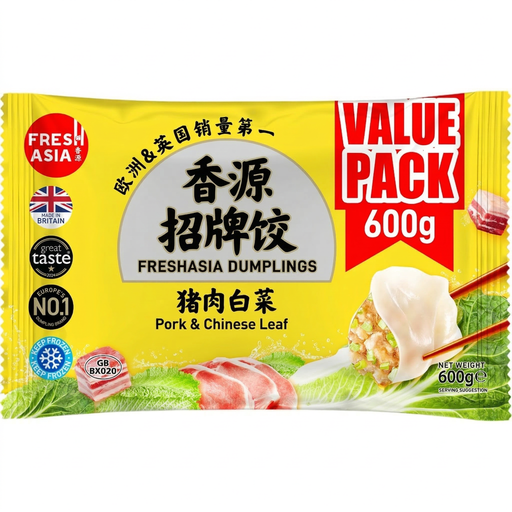
Why it suits this profile: A 600-gram pack is a practical choice for a meal shared by several people. The dumplings can be boiled, steamed or pan-fried.
The clear net weight helps you avoid buying an extra-large supply without a plan. The instructions say to boil the dumplings from frozen for 6 to 8 minutes.
600 grams; pork and Chinese leaf filling; suitable for boiling, steaming and pan-frying.
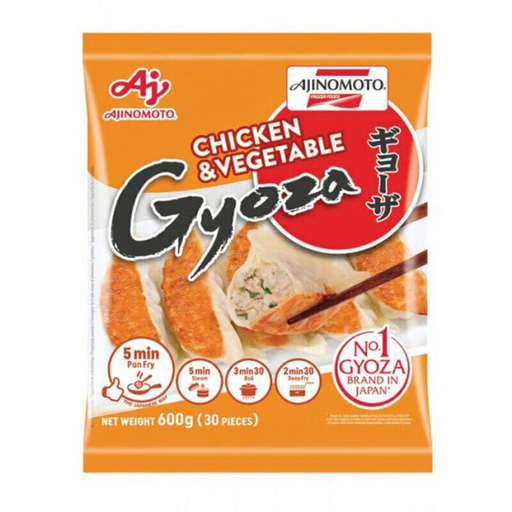
Why it suits this profile: These Japanese gyoza combine chicken and vegetables. According to the product description, they can be pan-fried, steamed or boiled.
The cooking options are clearly listed, so you’re not limited to just one method.
600 grams; chicken and vegetable filling; suitable as a main course, side dish or snack.
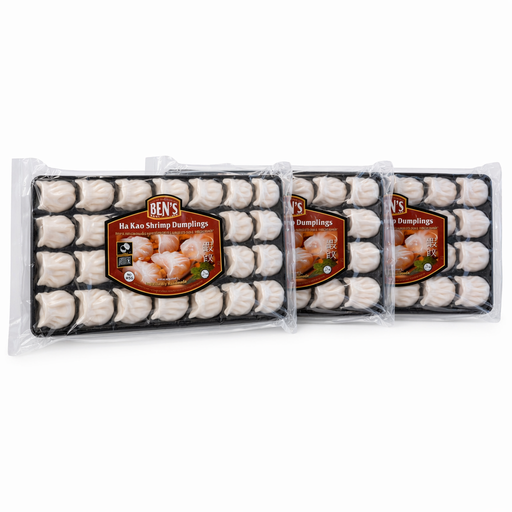
Why it suits this profile: This multipack is aimed at regular use, catering or households with enough freezer space. The pack states that there are 32 pieces in 800 grams.
The number of packs and portion size are clear upfront, making it easier to match your stock to how much you use.
Three 800-gram packs; suitable for steaming or microwaving; cook from frozen.
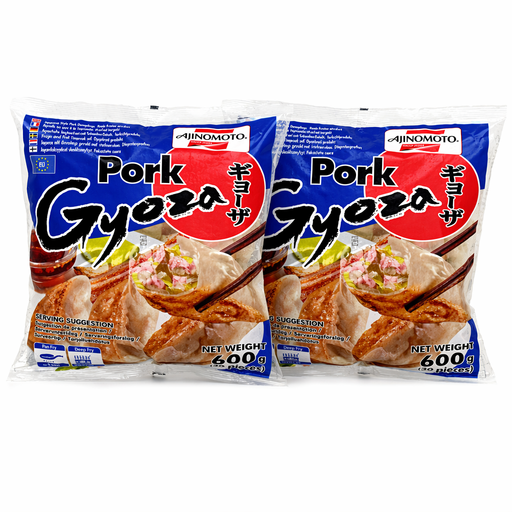
Why it suits this profile: Two packs of 30 are ideal if you regularly serve Japanese gyoza or have several people to feed.
The fixed number of pieces makes it easier to plan portions than with a pack that doesn’t state the piece count.
60 pieces in total; vegetable and pork filling; suitable for pan-frying, steaming or boiling.
We’ve put together a complete, up-to-date list of products that meet these strict selection criteria and the applicable European safety regulations.
Often, yes. Several dumplings in the product listings are labelled as not needing to be defrosted. Always check the pack, as cooking times and methods vary from product to product.
Gyoza are a Japanese type of dumpling, often with a thin wrapper and a meat and vegetable filling. The term “dumplings” is used more broadly for filled dough products from different cuisines. Their shape, filling and cooking method can therefore vary considerably.
Keep the gyoza frozen until the date shown on the pack, at the stated temperature. Once defrosted, keep the product refrigerated and use it within the stated period. Don’t refreeze defrosted dumplings.
