
Vandaag of morgen in huis

Kwaliteit gegarandeerd

Welkomstaanbiedingen ontgrendelen: GRATIS bezorging | Tot 80% korting | Gratis 30 dagen JoyPlus-proefperiode
Download de app
Buying a new vacuum cleaner seems simple until you have to choose between a stick vacuum, cylinder vacuum, bagless vacuum or model with a dust bag. Manufacturers use terms such as “powerful suction”, “all-floor” and “advanced filtration”, but these don’t always tell you enough about what a vacuum is like to use every day.
The right choice depends on your floors, the size of your home, whether you have pets and how much maintenance you’re willing to do. Read on to find out which specifications really matter and which pitfalls to avoid when comparing the best vacuum cleaner for your household.
A higher wattage doesn’t automatically mean a vacuum cleaner will clean every surface better. The power rating mainly tells you about the motor’s energy consumption. Performance also depends on the floorhead, airflow, filters and how well the nozzle connects with the floor.
So don’t compare just 700, 800 or 900 watts. Also look at the floor brushes included, whether the suction can be adjusted, and how suitable the vacuum is for hard floors and carpets.
A vacuum cleaner with a large dust container needs emptying less often, but the container and filter still need to be cleaned. Emptying a bagless vacuum can also release some dust. Check how the container is removed and whether the filter is washable or replaceable.
A vacuum cleaner with a bag may feel more hygienic when you change it, but you’ll need to keep buying compatible dust bags.
Terms such as “anti-allergy” or “high-quality filtration” are only useful if the filter type and test method are specified. A vacuum cleaner with a HEPA filter may be worth considering if you want to reduce fine dust particles in your home. Check whether it has a fully sealed filtration system and how the filter needs to be maintained.
If a brand gives a filtration percentage, treat it as a brand claim. According to Philips’ product description, its H13 filter system captures more than 99.9% of fine dust particles. This is a claim made by Philips, not a general guarantee for every use case.
A powerful vacuum cleaner needs more than a sufficiently powerful motor: it also needs to suit your floors. A soft parquet brush is useful for parquet and other hard floors. For carpets, a brush with a suitable roller or adjustable suction may work better.
Look out for these features:
A washable filter means you’ll need fewer replacement filters, but it must be completely dry before you put it back. A bagless vacuum only works well if the air intake, cyclonic chamber and filter are kept clean.
Before you buy, check:
A compact model with a capacity of around 1 to 1.5 litres may be enough for a flat. In a larger home, a capacity of 2 to 3.5 litres is more practical. However, a larger container doesn’t automatically make a cylinder vacuum easier to carry or store.
The operating radius usually includes the cord, hose and tube. A model with a range of 9 or 10 metres can save you from having to switch sockets so often. Also check the stated noise level in decibels. According to their product specifications, models around 65 to 73 dB are quieter than versions rated at 76 to 79 dB, but the noise you actually hear also depends on the floor and suction setting.
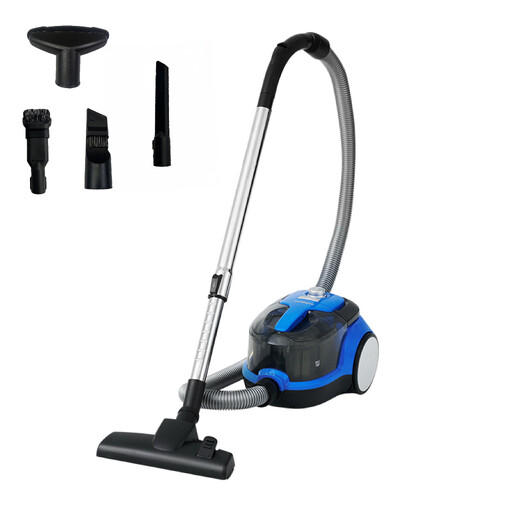
Why it suits this type of user: A practical corded vacuum for everyday cleaning of hard floors, carpets, furniture and crevices.
The product specifications list more than just 800 W: they also include suction of around 17.5 kPa, several brushes and a washable filter.
Bagless design, 1.1-litre dust container, automatic cord rewind and several attachments.

Why it suits this type of user: Designed for households with lots of hard floors and a need for a large dust bag and long operating radius.
The vacuum uses a 3.5-litre dust bag and has four settings for different floors and surfaces.
10-metre operating radius, Parquet Twister brush, AirClean filter system and flexible XL crevice tool.
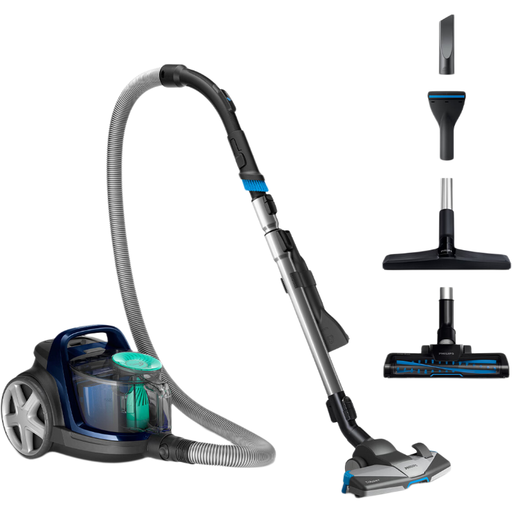
Why it suits this type of user: A bagless cylinder vacuum for households that want to clean hard floors, carpets and furniture with one appliance.
The specifications list the filter type, 1.5-litre capacity, noise level of 71–77 dB(A) and a 6-metre cord.
H13 Allergy filter according to Philips, one-handed emptying, 900 W motor and three extra nozzles.
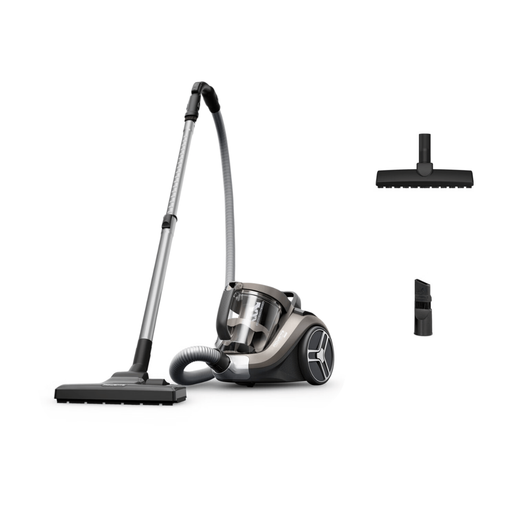
Why it suits this type of user: A bagless vacuum with a large container for bigger homes and longer cleaning sessions.
The dust container holds 2.5 litres and the stated operating radius is 8.8 metres, so you’ll need to empty it and change sockets less often.
900 W, automatic cord rewind, parquet nozzle and a compact design according to the product specifications.
We’ve put together a complete, up-to-date list of products that meet these strict selection criteria and the applicable European safety regulations.
A bagless vacuum saves you from having to buy dust bags. However, you’ll need to empty and clean the dust container and filters regularly. With frequent use, replacement filters or parts may still add to the cost. So compare more than just the purchase price: check filter availability and maintenance requirements too.
Its lifespan depends on how often you use it, how well you maintain it, and the filters and parts it uses. Empty the container when needed, clear any blockages and only put washed filters back once they’re completely dry. Also check the statutory guarantee and any manufacturer’s warranty. In the EU, consumers are entitled to a statutory guarantee under the applicable rules.
It depends on your home. A stick vacuum is easy to manoeuvre and quick to use, but it runs on a battery and usually has a smaller capacity. A cylinder vacuum often has a larger container or dust bag, longer running time and more accessories. A cylinder vacuum may be more practical for a large home or longer cleaning sessions, while a stick vacuum may be enough for quick everyday cleaning.
