
Vandaag of morgen in huis

Kwaliteit gegarandeerd

Welkomstaanbiedingen ontgrendelen: GRATIS bezorging | Tot 80% korting | Gratis 30 dagen JoyPlus-proefperiode
Download de app
Buying a vacuum cleaner seems straightforward – until you have to choose between a cordless vacuum cleaner, a stick vacuum, a robot vacuum or a compact handheld vacuum. A high pascal rating, a long battery life or a mopping function sounds appealing, but it doesn't tell you everything about everyday use.
For British households, three questions really matter: what surface do you need to clean, how much maintenance are you willing to do, and do you need a fixed power connection? Keeping these points in mind will stop you paying for features you barely use.
A vacuum cleaner with high suction power is often promoted with a big Pa number. Pa stands for pascal, a measure of pressure difference at the nozzle. However, the figure is only comparable when brands use the same testing method. The floor head, airflow, filter and seals also affect the result.
A powerful vacuum with a clogged filter can actually be less pleasant to use than a model with a lower stated power but better airflow management. So also consider the brush technology, filter maintenance and suitability for hard floors or carpet.
With a cordless vacuum, the longest run time is usually measured in the eco setting and without a motorised brush. The maximum setting uses significantly more power. So check:
A stick vacuum with a removable battery is more practical for a larger home or multiple floors. For a small flat, a model with a fixed battery may be sufficient.
A robot vacuum with a mopping function can vacuum and lightly damp-clean on a set schedule. However, you still need to maintain the water tank, dirty water tank, filters and brushes. With a self-emptying station, you also need to check whether dust bags, cleaning solution or replacement parts are available.
Also consider your home's layout. A robot with LiDAR navigation creates systematic maps, but still needs clear pathways. Loose cables, small objects and high thresholds can limit its performance.
For hard floors such as vinyl, laminate and tiles, a soft floor brush is often more important than just a high Pa rating. For carpet and pet hair, a motorised brush and an anti-tangle brush are useful. Check whether hair can be easily removed from the brush.
A vacuum cleaner for pet hair also needs to be suitable for furniture, skirting boards and crevices. A combination of a stick vacuum and a handheld vacuum offers more flexibility here than a large cylinder model.
A washable filter can keep running costs down, but it must be completely dry before you put it back. A smaller bin needs emptying more often, while a larger bin can make the appliance heavier.
Look for a clear maintenance warning and check whether replacement filters are available separately. Claims about trapping fine particles should be read as product specifications from the brand, not as medical or health promises.
With a wet-dry vacuum cleaner, the size of the clean and dirty water tanks matters. According to the product specifications, the Lubluelu T6 has a clean water tank of 540 ml, a dirty water tank of 460 ml and a run time of up to 30 minutes. After use, you need to empty the dirty water tank and start the self-cleaning cycle.
A robot station can empty dust, wash mops or use warm air to dry pads. Check the required clearance beforehand: a dock is usually not suitable for a narrow hallway or directly next to furniture.
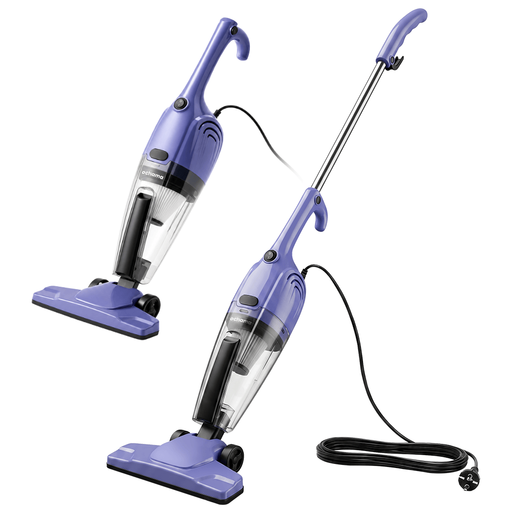
Why this fits the profile: This model works with a 4.5-metre cable, so there's no need to plan around battery life. It's suitable for small spaces, quick cleans and households looking for a simple stick vacuum.
You don't need to interpret a maximum battery run time. The mains connection provides constant power during use.
According to the product description: 550 W motor, visible 0.5-litre dust bin, washable filter and use as a stick or handheld vacuum.

Why this fits the profile: For those who want to automate daily floor care as much as possible, this model combines robot vacuuming with mopping and a comprehensive station.
The station automates several maintenance tasks, but the product description also clearly states which parts are included, such as mop washing, drying and dust emptying.
According to the manufacturer: 20,000 Pa stated suction power, anti-tangle brushes, mapping navigation, 75°C mop washing and automatic drying.
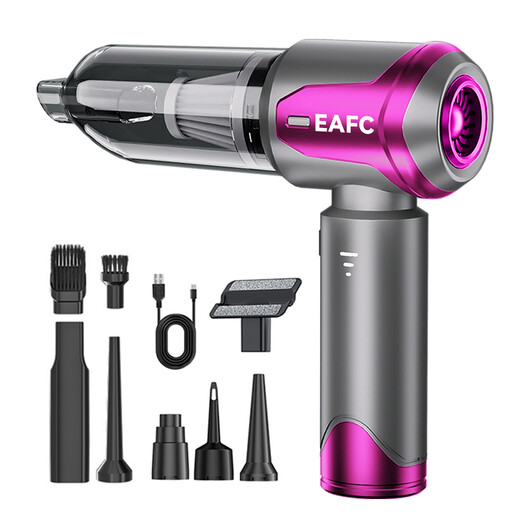
Why this fits the profile: This is primarily a car vacuum and handheld vacuum for crumbs, sand, crevices, furniture and keyboards. Its compact size suits car owners and users doing short cleaning jobs.
The product description mentions specific uses and accessories, so you won't confuse this model with a full-size floor vacuum for the whole house.
According to the product information: brushless motor, USB-C charging, approximately two-hour charging time, washable HEPA filter and four functions including blowing and inflating.
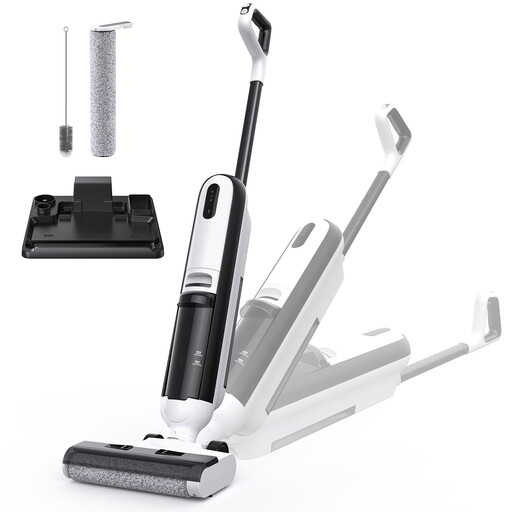
Why this fits the profile: A wet-dry vacuum cleaner is designed for hard floors where dust, crumbs and moisture occur together. The separate tanks make filling and emptying straightforward.
The product specifications explicitly mention a wet-dry design and self-cleaning. The dirty water tank still needs to be emptied after use.
According to the product data: 16,000 Pa stated suction power, approximately 30 minutes of use, self-cleaning and tanks of 540 ml and 460 ml.
We've put together a full, up-to-date list of products that fully meet these strict selection criteria and comply with current European safety regulations.
Look for a motorised floor brush with an anti-tangle function, an easily accessible filter and a handy attachment for furniture. A stick vacuum is practical for daily use; a robot vacuum can help to regularly remove hair from the floor. However, do check whether the brush is suitable for your type of carpet.
The run time per cleaning session depends on the suction setting, brush and battery capacity. The overall lifespan is also influenced by filter maintenance, charging habits and the availability of a replacement battery. Let washed filters dry completely and only use the supplied or recommended charger.
In addition to the purchase price, dust bags, filters, brushes, mop pads and possibly cleaning solution can add to the cost. Check before buying which parts are needed and how often they need to be replaced according to the product information. Even with a self-cleaning vacuum, manual maintenance is still required, especially for water tanks and brushes.
