
Vandaag of morgen in huis

Kwaliteit gegarandeerd

Welkomstaanbiedingen ontgrendelen: GRATIS bezorging | Tot 80% korting | Gratis 30 dagen JoyPlus-proefperiode
Download de app
Buying a new vacuum cleaner seems simple—until you get lost in marketing jargon, overwhelming specs, and promises that sound too good to be true. Many people invest in a model that fails to meet their needs after just a few months because they fall for common pitfalls. As a Joybuy Product Recommendation Officer, I'm here to help you cut through the noise and make a choice that suits your home and your budget.
Before we look at products, let's first discuss the three most common deceptions:
powerful vacuum cleaner is a synergy of components, not a single isolated specification.bagless vacuum cleaner seems like a cost-saver because you don't have to buy bags. However, the filters in these models need to be cleaned or replaced regularly. If you neglect this, suction power will decrease dramatically, and the motor can overheat. The cost and hassle of filter maintenance are often overlooked.cordless vacuum cleaner is often advertised with a maximum runtime of, for example, 60 minutes. This time is almost always measured on the lowest, least powerful setting. In practice, on a setting that actually cleans your carpet or floor, the battery is often depleted in just 15-20 minutes.To avoid a bad purchase, it's better to focus on a few concrete specifications that directly impact your user experience and the cleaning results.
Do you suffer from allergies or have pets? Then a vacuum with a HEPA filter is a crucial consideration. HEPA stands for ‘High-Efficiency Particulate Air’. According to manufacturer specifications, a filter with a HEPA 13 or HEPA 14 certification captures over 99.9% of fine dust particles, pollen, and allergens from pet dander. This ensures cleaner exhaust air and a healthier indoor environment. For bagged vacuums, pay attention to the quality of the bags; for optimal filtration, compatible HEPA vacuum bags are recommended.
The form and function determine how you will use the vacuum cleaner.
robotic vacuum takes care of daily maintenance for you. They are ideal for keeping floors free of dust and hair but do not replace a deep clean. Some models also feature a robotic vacuum with a mopping function for hard floors.Based on objective specifications, we have selected a number of models that are well-suited for specific households.
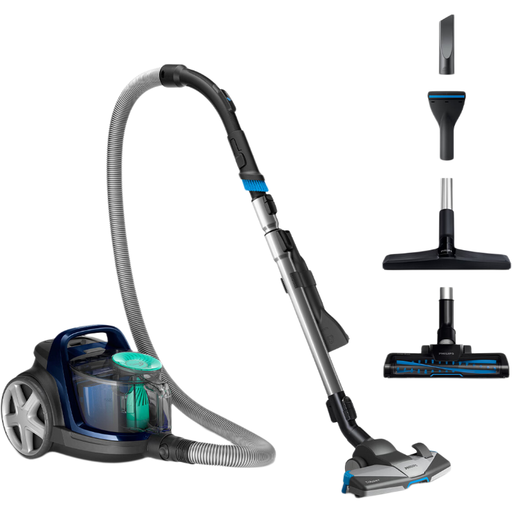
Why This Fits Their Persona: For a household where pet hair and other debris need to be cleaned up daily, a reliable and powerful canister vacuum is ideal. This model combines a strong motor with an effective filtration system for a hygienic result.
This model doesn't focus on hollow suction power claims but on a proven combination: a 900W motor with PowerCyclone 7 technology and an Allergy H13 filter. This guarantees effective dirt and allergen removal.
The H13 filter system captures fine dust particles, pollen, and pet hair. The 1.5-liter dustbin can be emptied hygienically with one hand, simplifying the maintenance of this bagless vacuum.
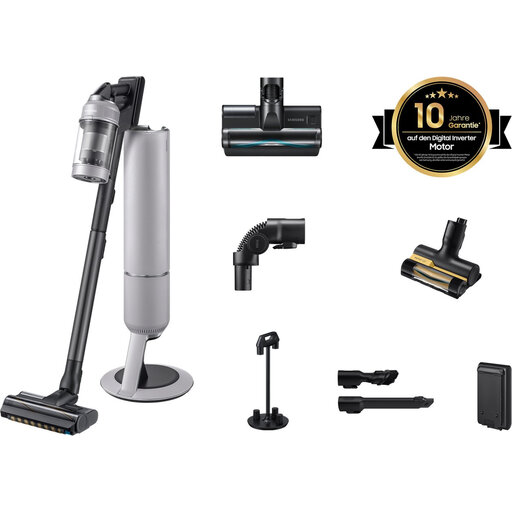
Why This Fits Their Persona: In an apartment, every square foot counts. A cordless stick vacuum is perfect: easy to grab for a quick job and compact to store. This model is lightweight and also functions as a handheld vacuum.
Instead of a vague maximum battery life, Samsung provides a clear specification: up to 60 minutes on the lowest setting with a 3.5-hour charging time. This helps set realistic expectations about its runtime.
Weighing only 2.5 kg, it is highly maneuverable. The 2-in-1 functionality (stick and handheld vacuum) makes it versatile for floors, furniture, and hard-to-reach corners.
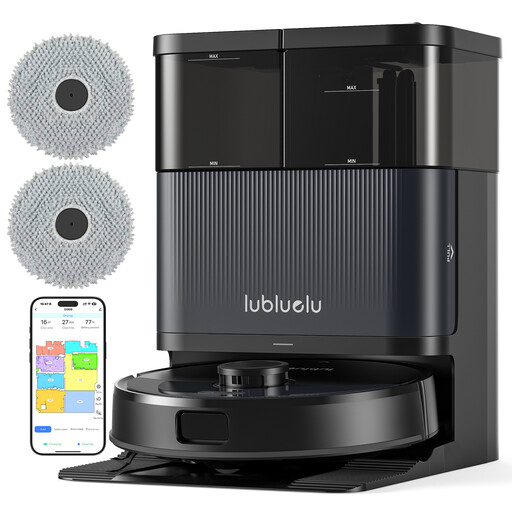
Why This Fits Their Persona: For those who would rather outsource their cleaning, an advanced robotic vacuum is the solution. This model navigates autonomously, empties its own dustbin, and can even mop, fully automating daily maintenance.
This isn't just a simple "smart" vacuum, but a complete system. The All-in-One station for emptying and charging tackles the maintenance problem, while LiDAR navigation ensures efficient routes instead of random bumping.
The combination of vacuuming and mopping (`robotic vacuum with mopping function`) in one device is highly efficient. Control via the app, including setting cleaning schedules, offers maximum convenience.
We have compiled a complete, up-to-date list of products that meet these strict selection criteria and local regulations.
This depends on the type of filter and how often you vacuum. A washable filter can be rinsed every few months and left to dry. A non-washable filter typically needs to be replaced every 6 to 12 months to maintain suction power and air quality. Always consult the manufacturer's manual for specific instructions.
Not necessarily. A higher price may indicate a more powerful motor, longer battery life, more advanced filters, or extra accessories. However, the "better" vacuum is the one that fits your specific needs. An expensive, heavy canister vacuum is a poor choice for a small apartment, while a lightweight stick vacuum may fall short in a large house with a lot of carpet.
These terms can be confusing. Watts (W) measure the power consumption of the motor, not directly the suction power. Pascals (Pa) measure the pressure difference, which can be an indicator of suction but is often measured under ideal lab conditions. Air Watts (AW) is a more comprehensive measurement that combines airflow with suction power and is often used to compare the performance of cordless vacuums. However, always look at the complete system: the motor, filter, and nozzle.
