
Vandaag of morgen in huis

Kwaliteit gegarandeerd
Download de app
Categorieën

Buying a new vacuum cleaner seems simple—until you discover the new model isn't powerful enough for pet hair, the battery dies halfway through a room, or the unit is too heavy for the stairs. The options are vast: from a flexible stick vacuum to a smart robot vacuum or a traditional bagged model.
This guide will help you make an informed choice based on factual specifications. We'll discuss the main types and highlight several models suited for various households.
Before choosing a model, it's helpful to understand the key features. This will help you avoid buyer's remorse and find a device that perfectly matches your needs.
The first decision is the type. Each has its own set of pros and cons.
Suction power is often indicated in two ways:
For a cordless vacuum, battery life is crucial. Look at the runtime on the lowest setting and remember that it will be significantly shorter in turbo mode. For a corded vacuum, the operating radius (the length of the cord plus the hose) is important. A large operating radius means you'll have to switch outlets less frequently.
A good filtration system is essential for indoor air quality. A HEPA filter (High-Efficiency Particulate Air) captures the smallest dust particles, pollen, and allergens. This is particularly relevant for households with individuals sensitive to allergies or asthma.
Based on the criteria above, we have selected three different models. These recommendations are based on the manufacturer's product specifications.
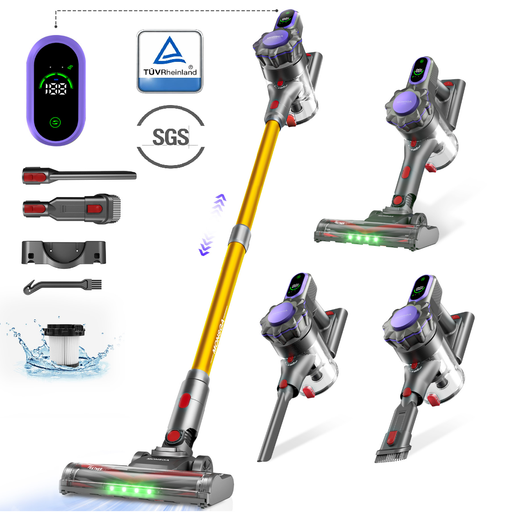
MonsgaClean MV3 Cordless Vacuum Cleaner
Why this product? The MonsgaClean MV3 combines the specifications of a powerful motor with the convenience of a cordless design. According to the manufacturer, its 550W brushless motor delivers up to 45,000 Pa of suction, making it suitable for both hard floors and carpets. The battery is detachable and offers a runtime of up to 50 minutes in standard mode. Handy features like the LED display and green detection lights help make dust more visible.
Advantages:
Who is this for? For households seeking a flexible and powerful all-rounder. Ideal for people with pets, homes with multiple floors, or anyone who wants to clean quickly and efficiently without a cord.

Eureka J12 Ultra Robot Vacuum with Mopping Function
Why this product? The Eureka J12 Ultra is designed for maximum autonomy. Its all-in-one base station not only empties the dustbin but also cleans and dries the mopping pads with hot air. The manufacturer claims the station can operate for up to 75 days without manual intervention. The Dual LiDAR and 3D AI obstacle detection ensure precise navigation, avoiding furniture and loose objects.
Advantages:
Who is this for? For busy households, tech enthusiasts, and anyone looking to minimise daily cleaning chores. Especially useful in larger homes with predominantly hard floors.
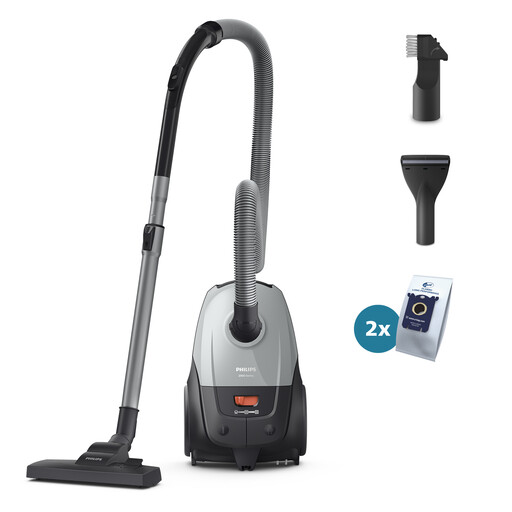
Philips 2000 Series Bagged Vacuum Cleaner (XD2142/12)
Why this product? This Philips vacuum represents the classic approach: reliable, powerful, and hygienic. The 800W motor delivers consistent suction power. Its main advantage is the HEPA filtration system, which captures and traps fine dust particles and allergens in the sealed S-Bag. With a 9-metre operating radius, you can clean large areas of your home without switching outlets.
Advantages:
Who is this for? For those who prefer the proven performance of a traditional vacuum cleaner. An excellent choice for households where allergies are a concern or where deep cleaning of carpets is a priority.
These three models represent popular choices in different categories. However, the world of vacuum cleaners is much larger. Are you looking for a model specifically for your car, a wet/dry vacuum, or a different type of stick vacuum? Then be sure to check out our full range.
Discover more options in our cleaning appliances category.
1. What is more important for suction power: Watts or Pascals (Pa)? Pascals (Pa) are a more direct indicator of suction power than Watts (W). Watts measure the motor's power consumption, while Pa measures the actual vacuum pressure that lifts the dirt. For tasks like cleaning carpets or vacuuming pet hair, a higher Pa value is generally more effective.
2. Is a robot vacuum a complete replacement for a regular vacuum? For daily maintenance on hard floors and low-pile carpets, a robot vacuum can take a lot of work off your hands. However, for deep cleaning, stairs, furniture, and hard-to-reach corners, a stick or traditional vacuum often remains necessary. Many people use them in combination.
3. How often should I replace a HEPA filter? This depends on the model and frequency of use. Some HEPA filters are washable and reusable, while others need to be replaced periodically (e.g., every 6 to 12 months). Always consult the manufacturer's manual for specific maintenance instructions to ensure optimal filter performance and air quality.