
Vandaag of morgen in huis

Kwaliteit gegarandeerd

Welkomstaanbiedingen ontgrendelen: GRATIS bezorging | Tot 80% korting | Gratis 30 dagen JoyPlus-proefperiode
Download de app
A bag cluttered with different chargers: one for your laptop, one for your phone, and yet another for your tablet. It's a familiar inconvenience. Fortunately, the USB-C standard offers a solution. A single powerful and compact USB-C fast charger can often power all your devices. But with so many options on the market, choosing the right one can be tricky.
This guide is designed to help. We'll explain the key specifications and provide specific recommendations, so you can find a charger that fits your devices and your needs.
Before you make a choice, it's helpful to understand three key features. These determine how well a charger will work for you.
The wattage, expressed in watts (W), is the most important specification. A charger with insufficient power will charge your device slowly, or not at all.
Most modern chargers use the Power Delivery (PD) standard. This protocol allows the charger and your device to communicate to deliver the optimal amount of power. This means a 100W charger can also safely charge your phone, as it won't supply more power than the device requests.
Do you use multiple devices at once? A multi-device charger is a practical choice. Pay attention to the combination of ports:
When you charge multiple devices simultaneously, the total wattage is distributed across the ports. For example, a 100W charger might deliver 65W to your laptop and 30W to your phone when both are connected.
You'll increasingly see the term GaN charger. GaN stands for Gallium Nitride, a semiconductor material that is more efficient than traditional silicon. For you, the user, this means two things:
A GaN charger is especially useful for travellers or anyone who wants a powerful charger that takes up minimal space.
Based on specifications and use cases, we've selected a few models that are worth considering.
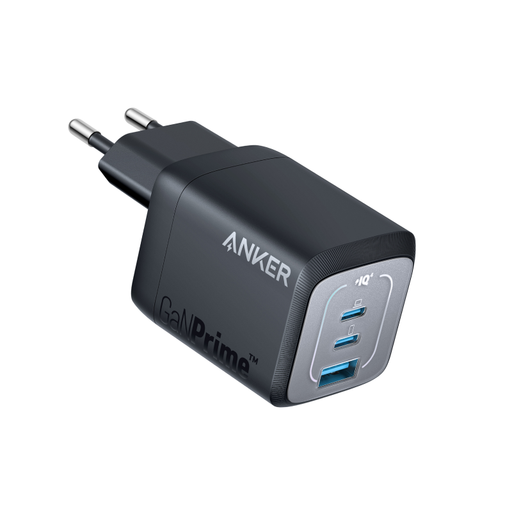
Why It Stands Out This Anker charger is a versatile mid-range option. With 67W of power, it's strong enough for most ultrabooks (like a MacBook Air) while simultaneously charging a phone and another accessory. The combination of two USB-C ports and one USB-A port makes it highly flexible.
Advantages
Who Is This Charger For? For the user looking for a reliable all-in-one solution for daily use. It's ideal if you often need to charge a laptop, phone, and earbuds at the same time without carrying multiple chargers.
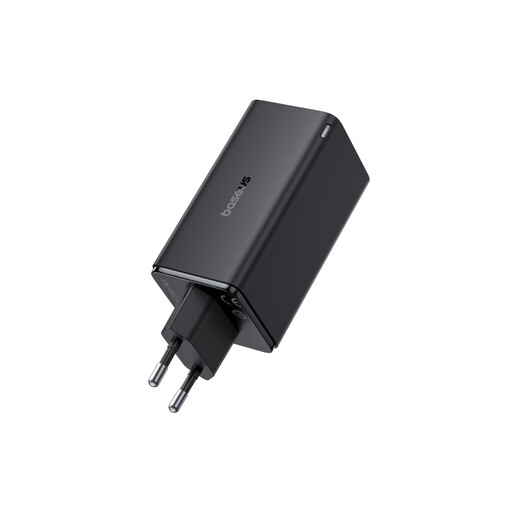
Why It Stands Out This is a real powerhouse. With a maximum output of 100W and four ports, this charger is designed for the demanding user. The GaN6 technology ensures all this power fits into a relatively compact housing. According to Baseus, its BCT technology provides intelligent power distribution among connected devices.
Advantages
Who Is This Charger For? For the professional or tech enthusiast who owns multiple powerful devices. If you need to charge a high-performance laptop, tablet, phone, and smartwatch simultaneously, this 100W charger provides the necessary capacity.
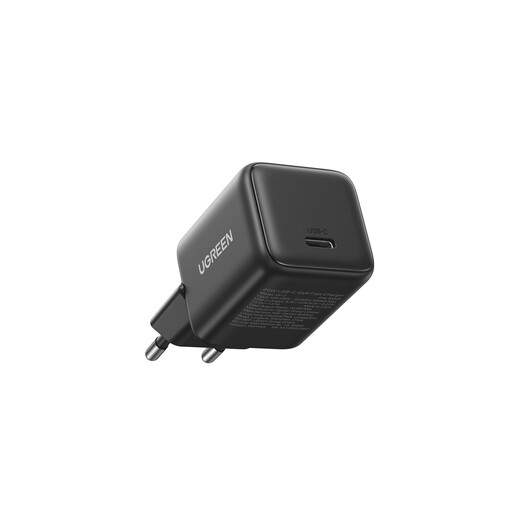
Why It Stands Out Sometimes you don't need a powerhouse, but something small and efficient. This UGREEN charger is exactly that. With 20W of power, it's the perfect fast phone charger. Thanks to GaN technology, it's exceptionally small, making it easy to slip into your jacket pocket or a small compartment in your bag.
Advantages
Who Is This Charger For? For anyone looking for a minimalist, portable, and fast charger for their smartphone. It's an excellent replacement for bulkier stock chargers or as an extra one for the office or travel.
The perfect charger is different for everyone. You might be looking for a model with a different wattage, a specific colour, or another port configuration. Technology evolves quickly, and many options are available.
For a broader overview of models that meet various needs, you can browse our full collection.
A GaN charger is typically a bit more expensive but offers clear advantages in size and efficiency. If you travel often or want a powerful charger that doesn't take up much space, the investment is often worth it. For a permanent spot on your desk, a traditional charger may also suffice.
Yes, that's perfectly safe. Thanks to Power Delivery charger technology (PD), the charger and the device communicate with each other. The charger will never deliver more power than the device can safely handle. So you can use a 100W laptop charger to charge your 20W phone with peace of mind.
