
Viewer short on space
You want to see the stage and any subtitles clearly, but have limited room for the screen and stand. Measure the viewing distance and the space where the TV will go.


First, measure your viewing distance and the space available; a bigger TV isn’t automatically more comfortable or a better fit. If you mostly watch in the evening or from a seat to the side, compare compact OLED TVs. If your room gets plenty of daylight, LCD or Mini LED models are also worth considering. Check that you can play theatre recordings through your preferred app or connection, and that dialogue and subtitles are easy to follow.
You want to see the stage and any subtitles clearly, but have limited room for the screen and stand. Measure the viewing distance and the space where the TV will go.
You often watch in subdued lighting and want to make out dark sets and costumes. Compare viewing angles too, especially if not everyone sits directly in front of the screen.
You often watch during the day, or spoken dialogue, music and subtitles matter to you. Check for reflections and try out the recording and audio connection you plan to use.
Choose this if: you mostly watch in the evening and dark scenes or visibility from a seat to the side are important to you.
The trade-off: compare the specific screen in your room’s lighting; OLED isn’t better than LCD in every situation.
Choose this if: you often watch during the day or want to compare an alternative to OLED.
The trade-off: according to the Dutch Consumers' Association, some QLED TVs can offer higher brightness, while OLED generally has the advantage for black levels and viewing angles. The result depends on the model and setup.
| What to consider | What to look for | Who is this important for? |
|---|---|---|
| Size and placement | Measure the viewing distance, available width and the dimensions of the TV and stand. The Dutch Consumers' Association suggests a comfortable viewing distance of around 2.4 times the screen diagonal; use this as a guide, not a hard-and-fast rule. | If your room is narrow, you’ll want a clear view of the screen without the TV or stand failing to fit in the chosen spot. Around 33% of consumers put finding the right size and placement first. |
| Dark scenes and viewing angles | Compare the same dark recording from the seats you usually use, and check the specific screen type. | Black levels and viewing angles matter more if dark sets need to remain clear or you won’t be sitting directly in front of the screen. Around 27% of consumers give these factors top priority. |
| Daylight and reflections | Assess the specific model in the lighting conditions at home, and look out for windows and lamps opposite the screen. | If you watch during the day, you’ll want to see how the screen performs in your bright room. Around 20% of consumers prioritise daytime viewing. |
| Sound and playback | Try your preferred app, player or HDMI source, and check subtitles, dialogue clarity and any audio outputs you may need. | If dialogue and music need to be easy to follow, check your own playback setup and recording. Around 20% of consumers start with sound and ease of playback. |
A TV may be the right diagonal size for your viewing distance but still be too wide for your furniture or wall.
Measure both the viewing distance and the space available, then check the dimensions of the exact model, including the stand if you plan to use it.
QLED is a type of LCD. The Dutch Consumers' Association says OLED generally offers better black levels and viewing angles, while some QLED TVs can be brighter.
Compare specific models in your room’s lighting and from your usual seats; the technology name alone won’t tell you how a TV will perform in your room.
A description of the sound or an immersive picture won’t tell you how easy it is to follow your theatre recording from your seat.
Test dialogue and music using the source you plan to use, and check that the connections will work with any external audio equipment.
The LG OLED48C56LB is a 48-inch OLED model to compare if screen size and black levels are important to you.
According to Philips, the Philips 48OLED810/12 combines a 48-inch OLED screen with Ambilight.
The Samsung QE50QN90FATXXN is a 50-inch Neo QLED Mini LED model to compare with OLED.
The TCL 50C6K is a 50-inch QD Mini LED model to compare with OLED and other LCD TVs.
The Sony BRAVIA 8 II K-55XR8M2 is a 55-inch OLED option if you have enough space for that size.
This Joybuy selection includes TVs with different screen sizes and technologies to compare for watching theatre recordings in a narrow living room. Measure the available space and viewing distance, and check your preferred playback setup before choosing a model.
 No image available
Compare this 48-inch OLED model if you’re looking for a relatively compact screen for watching dark scenes.
48 inches, OLED and 4K; the product name also identifies it as a smart TV.
 No image available
Consider this model as a Mini LED alternative to OLED, and check that 50 inches suits your viewing distance and available width.
50 inches, 4K, Mini LED and 144 Hz according to the product name.
 No image available
Compare this 43-inch model if you want to assess a smaller LCD alternative alongside OLED.
43 inches, QLED and 4K UHD; the product name lists Google TV. The Dutch Consumers' Association describes QLED as a type of LCD.
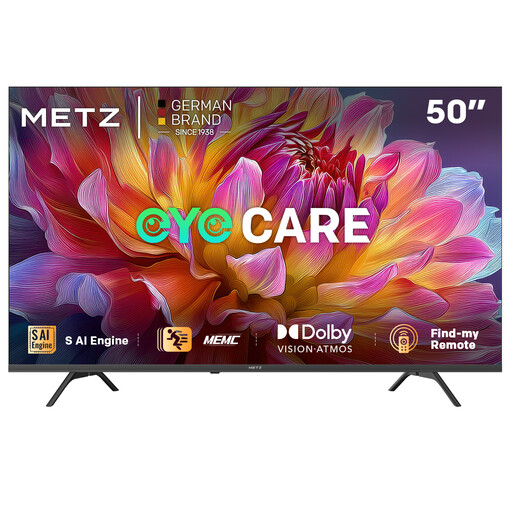 No image available
Check whether this 50-inch model fits your available space, and make sure the listed connections work with your playback equipment.
The product information lists 4K UHD, Google TV and HDMI connections.
 No image available
Compare this larger OLED model only if your measured viewing distance and available space allow for a 55-inch screen.
55 inches, OLED and 4K. This version doesn’t include a table-top stand; the product information lists an integrated wall-mounting solution.
Measure the distance between your seat and the screen’s intended position, and check the width of both the TV and stand. The Dutch Consumers' Association suggests a comfortable viewing distance of around 2.4 times the screen diagonal; use this as a guide, then compare the sizes available.
First, check the specific recording and playback setup. Make sure you can use your preferred app, external player or connection, and, where possible, test subtitles and sound with your own content too.
Check the mounting details for the TV model and bracket, as well as the type of wall. LG recommends using a professional installer for wall mounting, as the wall type and installation environment may impose limitations. This is the manufacturer’s advice, not a general legal requirement for installation.
Compare the energy label for the exact model; the European EPREL database contains energy-use information for products sold in the EU. In the Netherlands, you have statutory rights against the seller if a product is faulty. There is no fixed statutory warranty period of two years.
According to the Dutch government, many online purchases made by consumers from businesses come with a 14-day cooling-off period. The seller must provide information about the applicable period, so check the terms of your specific purchase.