
Vandaag of morgen in huis

Kwaliteit gegarandeerd

Welkomstaanbiedingen ontgrendelen: GRATIS bezorging | Tot 80% korting | Gratis 30 dagen JoyPlus-proefperiode
Download de app
A trolley seems like a simple purchase—until it isn't. A wheel jams on an uneven paving stone, a frame buckles under the weight of a few cartons of milk, or a folding mechanism gets stuck after just three uses. Many trolleys are designed for a low price point, not for durability. This often leads to frustration and the need to buy a replacement after only a short time.
Before you make a decision, it's important to understand the common pitfalls. These include models with small, hard plastic wheels unsuitable for anything but a mirror-smooth supermarket floor, or frames made of flimsy metal that deform under the first heavy load. Another common issue is an impractical design, where a folding trolley ends up taking more space than you'd expect.
To avoid buyer's remorse, it's helpful to check a few key specifications. These will determine whether a trolley becomes a practical assistant or a source of annoyance.
The maximum load capacity indicates how much weight a trolley can handle. For a weekly shopping cart, 30 to 40 kg is often sufficient. However, a hand truck or platform trolley for moving or heavy-duty jobs must have a much higher capacity, sometimes up to 150 kg or more.
The frame material is just as important.
shopping trolley that you need to lift frequently, for instance on public transport or up the stairs.kitchen trolley, serving cart, or storage trolley that remains stationary or needs to hold heavier items.The wheels determine the ease of use. Pay attention to the following aspects:
utility cart or serving cart highly manoeuvrable. Two fixed wheels and two swivel castors offer a good balance between manoeuvrability and stability, a common feature on a wagon. A brake on one or more wheels is a useful addition for extra safety.Consider how you will use the trolley. A folding trolley is essential if you have limited storage space. For groceries, an integrated cooler compartment can be very convenient. A kitchen trolley or storage trolley with multiple tiers or removable baskets offers flexible storage options for your home.
Based on objective specifications, we have selected a number of trolleys that suit different needs.
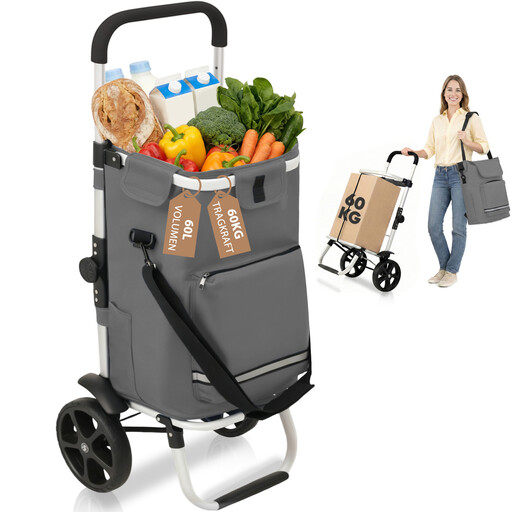
Why This Fits Their Persona: Ideal for city dwellers who shop without a car or for seniors looking to avoid heavy bags. Its lightweight and foldable design make it easy to carry and store.
The lightweight aluminium frame and high-quality PVC wheels are designed for urban pavements and supermarket floors, unlike cheap models with wheels that wear out or jam quickly.
The 3-in-1 functionality (shopping cart, hand truck, and detachable shoulder bag) and the integrated cooler compartment for fresh produce offer versatile usability.
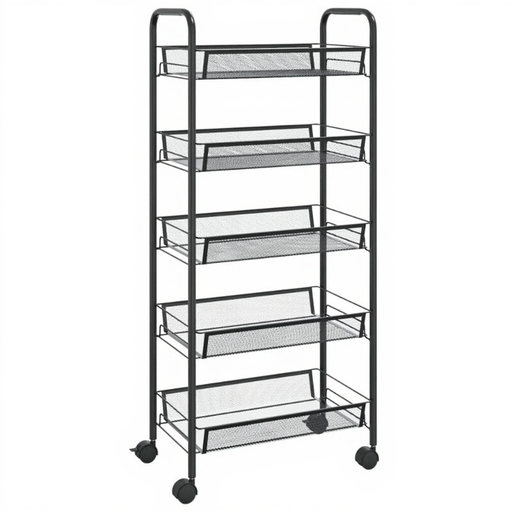
Why This Fits Their Persona: Perfect for anyone needing extra work or storage space in the kitchen, bathroom, or office. Its slim design fits easily into smaller spaces.
The iron construction is sturdy and stable, preventing the wobble common in many lighter utility carts. The locking wheels ensure it stays firmly in place.
The mesh baskets are strong and removable, providing flexible storage. It's a practical and space-saving solution for organising belongings.
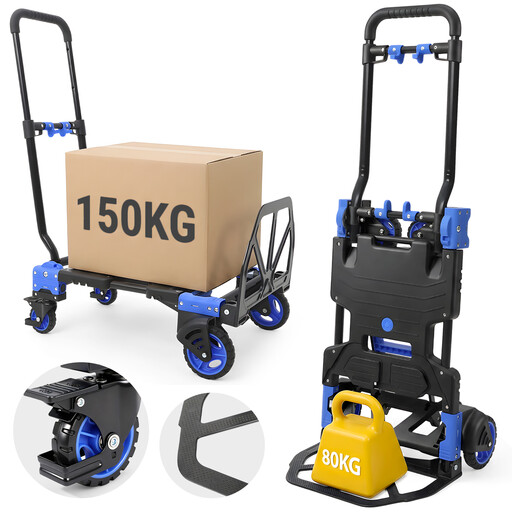
Why This Fits Their Persona: For the DIY enthusiast, mover, or anyone who regularly needs to transport heavy boxes, furniture, or equipment. A reliable assistant for the heavy lifting.
This is not a simple shopping cart, but a robust utility cart with a high load capacity (up to 150 kg in platform mode). The reinforced aluminium frame is designed for heavy loads and will not buckle.
The 2-in-1 convertible design quickly switches between a hand truck and a platform cart. It folds down compactly, and its shock-absorbing wheels roll smoothly over various surfaces.
We have compiled a complete, real-time list of products that fully satisfy these strict selection criteria and safety regulations.
This varies greatly by type. A simple shopping trolley often has a load capacity of around 30 kg. A kitchen trolley can typically support 10-20 kg per shelf. A heavy-duty hand truck or platform trolley is built for loads from 80 kg up to 150 kg or more. Always check the manufacturer's specifications.
On most budget-friendly models, the wheels are not designed to be replaced. On higher-quality trolleys, particularly hand trucks and serving carts, it is sometimes possible to replace the wheels. If durability is a priority, it's wise to choose a model with robust, wear-resistant wheels.
A shopping trolley (or shopping cart) is designed for transporting relatively light goods, like groceries, and usually consists of a bag structure on a lightweight frame. A hand truck is much more robust and intended for moving heavy, awkward objects like boxes, crates, or small pieces of furniture. It has a small platform at the bottom on which the load rests.
