
Vandaag of morgen in huis

Kwaliteit gegarandeerd

Welkomstaanbiedingen ontgrendelen: GRATIS bezorging | Tot 80% korting | Gratis 30 dagen JoyPlus-proefperiode
Download de app
A trolley seems like a simple purchase—until the model you chose gives out after just a few weeks. A wheel that jams on the pavement, a frame that buckles under the weight of your groceries, or a "foldable" model that still takes up too much space in the hallway. These are common problems that turn a helpful tool into a source of frustration.
Before you make a decision, it's wise to look beyond the marketing claims. Many trolleys are advertised with features that fall short in real-world use. We've outlined the main pitfalls and the specifications that truly matter, so you can choose a model that fits your daily life.
A good trolley is more than just a bag on wheels. Its durability and ease of use depend on a few crucial specifications. Pay attention to these to avoid a bad purchase.
The frame material determines the trolley's sturdiness and weight. The wrong choice can lead to a construction that is either too heavy or too fragile.
The maximum load capacity is an objective specification that indicates how much weight the trolley can handle. A shopping cart for weekly groceries benefits from a capacity of at least 25-30 kg, while a professional kitchen trolley will have a specific load capacity per shelf.
The wheels are often the weakest point. Cheap plastic wheels wear out quickly and get stuck on uneven surfaces like paving stones or thresholds.
A foldable trolley is ideal for those with limited storage space. However, always check the dimensions when folded. Some models remain awkward and bulky. For a shopping trolley, the capacity is often indicated in litres. A volume of 40 to 60 litres is generally sufficient for weekly groceries. For a storage trolley in the kitchen or bathroom, the external dimensions and the space between the shelves are more important.
To help you with your choice, we have selected a number of models that suit different user profiles, based on their specifications.
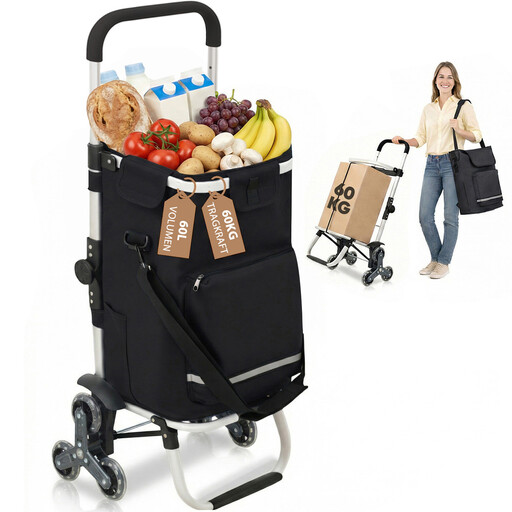
Why This Fits Their Persona: Perfect for city dwellers who do regular grocery runs. The combination of a large capacity (60L), a foldable frame, and the stair-climbing feature makes this trolley practical for apartments and navigating kerbs.
The special stair-climbing wheels made of PU material are designed for obstacles, unlike cheap plastic wheels that jam or break on uneven terrain.
Lightweight aluminium frame, 3-in-1 functionality (trolley, hand truck, shoulder bag), and an integrated cooler compartment.
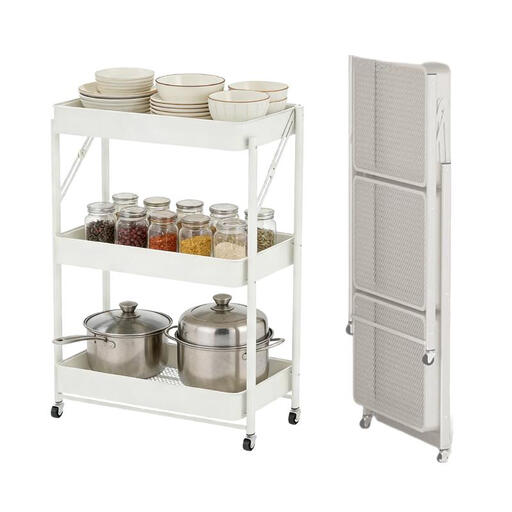
Why This Fits Their Persona: Ideal for those who need extra workspace or storage in the kitchen but don't want a permanent cabinet. This rolling cart offers flexibility and can be stored compactly after use.
This model is ready to use out of the box and is fully foldable. It solves the frustration of complex assembly and permanently taking up space, a common drawback of fixed kitchen trolleys.
No assembly required, robust frame with a load capacity of up to 50 kg, and wheels with a locking function for stability.
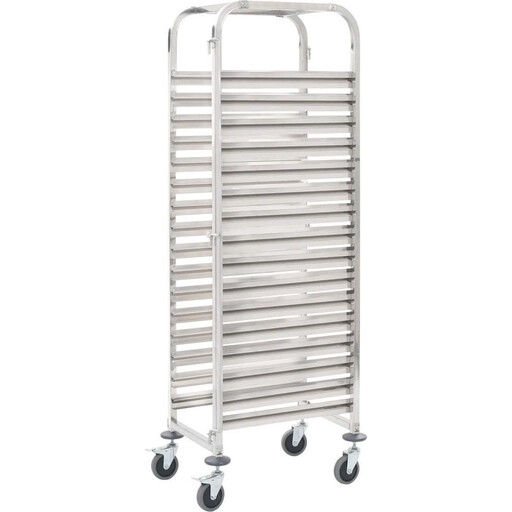
Why This Fits Their Persona: Designed for professional use in hospitality or for the serious home cook in need of maximum storage. This trolley provides space for 16 trays and is built for intensive, heavy-duty use.
Where consumer models buckle under heavy loads, this trolley is made of stainless steel. This guarantees stability, durability, and hygiene, even when fully loaded.
Huge capacity with 16 tiers, smooth-rolling TPR (thermoplastic rubber) wheels with a locking function, and a full stainless steel frame.
We've compiled a complete, up-to-date list of products that meet these strict selection criteria and safety regulations.
The load capacity varies greatly. A simple, foldable trolley can often carry 15-20 kg. Sturdier models, often with an aluminium or steel frame, have a capacity of 30 kg to as much as 60 kg. Always check the manufacturer's specifications to prevent overloading and damage to the frame or wheels.
A stair-climber has a three-wheel construction on each side that rotates as you pull the trolley over a step. This mechanism allows the wheels to 'climb' the stairs, requiring significantly less effort to get the trolley up or down. This is a lifesaver for people living in a walk-up apartment or a building without a lift.
A stainless steel serving cart or kitchen trolley is low-maintenance. For daily cleaning, a damp cloth with a mild detergent is sufficient. Dry the surface thoroughly afterwards to prevent water spots. For stubborn stains or fingerprints, you can use a special stainless steel cleaner. Avoid abrasive sponges or harsh chemicals, as these can damage the surface.
