
Vandaag of morgen in huis

Kwaliteit gegarandeerd

Welkomstaanbiedingen ontgrendelen: GRATIS bezorging | Tot 80% korting | Gratis 30 dagen JoyPlus-proefperiode
Download de app
A toaster may seem simple, but you quickly notice when you have chosen the wrong one. A slot that is too narrow will not accommodate a thick slice of sourdough or a bagel, a limited number of browning settings can produce uneven results, and a crumb tray that is difficult to empty makes cleaning unnecessarily tedious. If you are looking for the “best toaster”, it therefore makes sense to start by considering your own needs and checking the relevant specifications.
Higher power does not automatically mean that a toaster is better suited to your kitchen. It mainly indicates the power consumption. More important is whether the slots are suitable for the size of bread you use and whether the bread is centred automatically.
A toaster with wide slots is more practical for thick slices, bagels and bread rolls. For long slices of bread, a model with long slots may be more convenient than a standard 2-slot toaster.
A toaster with a defrost or reheat function can be useful, but you should also check how the controls work. A clearly marked cancel button, a high-lift function and an easily accessible crumb tray are at least as relevant for everyday use.
According to the product descriptions from various brands, defrost and reheat functions are designed to warm frozen or cooled bread without having to start a completely new programme. This is a claim made in the relevant brands’ product information; the actual result depends on the type and thickness of the bread and the selected setting.
A black toaster or stainless-steel toaster may suit your kitchen well, but the material does not determine appearance alone. Also check the dimensions, cable, stability and how crumbs are removed. A glossy housing can also show fingerprints more clearly than a matt finish.
A 2-slot toaster is suitable for a single-person household or a couple. A model with two long slots may sometimes handle two to four normal slices at once, depending on the design. Therefore, always check whether “four slices” actually means that there are four separate bread slots.
A 4-slice toaster is particularly practical for families or when several people have breakfast at the same time. The appliance usually takes up more space, but reduces waiting time when preparing multiple portions.
Choose wide or variable-width slots if you regularly toast thick farmhouse bread, bagels or bread rolls. For long slices, baguette-style pieces or two normal slices side by side, a long-slot model can be a logical choice.
Also consider the external dimensions. A toaster measuring around 40 centimetres in length will not fit on every worktop and should be kept a safe distance from cupboards, curtains and other flammable materials.
A toaster with adjustable browning settings gives you greater control, from lightly toasted to darker bread. Six to nine settings are listed in the product information for the models mentioned. More settings do not automatically mean better results, but they can help when members of the household have different preferences.
Useful features include:
Also check whether the model mentions automatic shut-off, anti-jam protection and a non-slip base. Always use a toaster on a stable, dry surface and unplug it before removing stuck bread or cleaning the appliance.
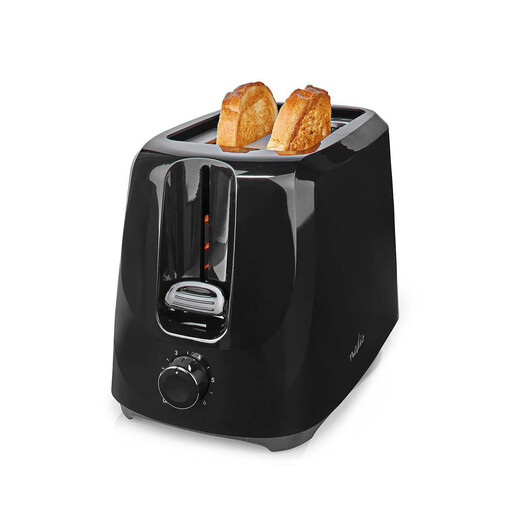
Why it suits this profile: This compact model is designed for everyday use, with two slots, six browning settings and a power rating of 700 W.
The product information lists specific features such as a crumb tray, non-slip feet and cable storage, rather than focusing solely on its appearance.
Compact size, six settings, removable crumb tray and cable storage.
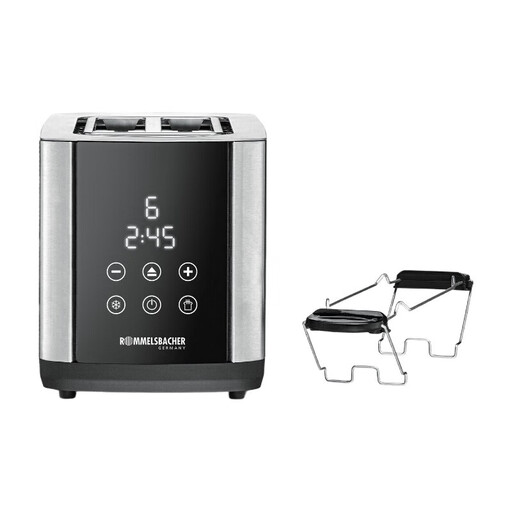
Why it suits this profile: The stainless-steel housing, two extra-wide slots and nine browning levels are ideal for users who value precise control and a well-presented worktop.
The maximum bread size of 12 × 12 cm and the wide slots are clearly stated, making it less likely that you will buy a model that is too small.
Nine browning settings, defrost and reheat functions, automatic centring and a bun warmer.
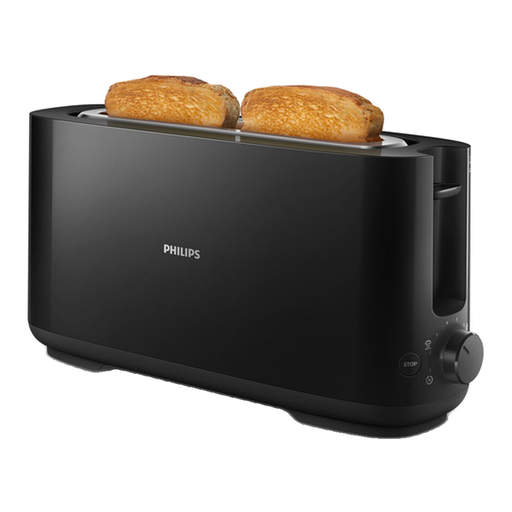
Why it suits this profile: The long slot accommodates different bread sizes, while the product description lists eight browning settings, defrost and reheat functions and an integrated bun warmer.
The long slot means you do not have to turn your bread over or choose smaller slices. However, check the available space: the appliance is approximately 40 cm long.
Long slot, eight settings, high-lift function, crumb tray and integrated bun rack.
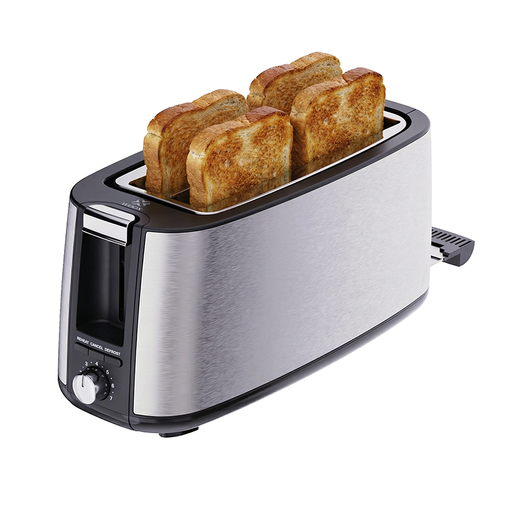
Why it suits this profile: According to the product description, this model is designed for four slices and has a power rating of 1200–1400 W, seven settings and defrost and reheat functions.
The capacity and power rating are clearly stated. The non-slip base and anti-jam function address two practical issues that can arise with frequent use.
Four-slice design, seven settings, stainless-steel finish, crumb tray and cable storage.
We have compiled a complete, up-to-date list of products that fully meet these strict selection criteria and the applicable European safety regulations.
Place a toaster on a level, heat-resistant surface and leave clear space around the appliance. Do not use metal cutlery to remove stuck bread. Unplug the appliance first and allow it to cool down.
Empty the crumb tray regularly. Crumbs can build up when the appliance is used for long periods. Never immerse the toaster, plug or cable in water. Before buying, also check the manual, warranty terms and manufacturer details on the product page.
Many models for home use are rated at around 700 to 1400 W. The power required depends on the capacity, slot design and expected speed. Do not look at wattage alone; compare it with the number of slots and the available functions.
The lifespan depends on how often it is used, how well it is cleaned and its build quality. Emptying the crumb tray regularly, keeping the appliance dry and checking the cable can all help to limit wear and tear. The product information for several of the models mentioned states a warranty or statutory conformity period of at least two years; check the current terms for each product.
A toaster generally uses electricity for only a short time, as a toasting cycle lasts just a few minutes. A model with a higher wattage may use more electricity per minute, but the total cost mainly depends on how long it is used and the number of cycles. Unplug the appliance when it is not in use.
