
Host serving a variety of toppings
If cheese, fish, cold meats or spreads are taking centre stage, you’ll want a toast that doesn’t add a strong flavour of its own. Plain Melba toast is a good starting point; add moist toppings just before serving.


If you’re taking a selection of premium toppings, plain Melba toast makes a good neutral base. Choose wholemeal Melba toast if you mainly want to compare fibre content, or sesame toast if you’d like the toast itself to add flavour. For a guest who needs to avoid gluten, ordinary Melba toast isn’t a safe choice: bring a separate product whose current packaging explicitly states that it’s gluten-free. Check the allergens and salt content for each variety, too.
If cheese, fish, cold meats or spreads are taking centre stage, you’ll want a toast that doesn’t add a strong flavour of its own. Plain Melba toast is a good starting point; add moist toppings just before serving.
If you’re considering a wholemeal option for your picnic, compare the nutritional values per 100 g. Jumbo lists Van der Meulen Melba Wholemeal Toast as containing 9,7 g of fibre per 100 g. Also check the ingredients and allergens for the variety you choose.
For guests who need to avoid gluten or other allergens, the information on the exact packaging matters more than how the picnic platter looks. Ordinary Melba toast may contain wheat and other cereals containing gluten. A cracker explicitly labelled gluten-free is a separate option, not an interchangeable type of Melba toast.
Start with what matters most for your picnic: do you need a toast that goes with a range of toppings, do you want to compare nutritional values, or do you need a separate option for a guest with dietary requirements? Then compare flavour, packaging and the other information on the label.
| What to consider | What to check when buying | Who it matters to |
|---|---|---|
| Toppings and transport | Choose a plain variety if you want the toppings to provide the flavour. Check the pack size and keep the toast dry until you’re ready to serve it. | If I’m taking a selection of toppings, I want a base I can top on the spot, without one particular toast flavour taking over. Versatility is the top priority for around 40% of consumers. |
| Fibre and grains | Compare the fibre per 100 g and check which grains are used; multigrain doesn’t mean the same as wholemeal. | When I’m looking for wholemeal Melba toast, I want to compare its fibre content with that of a plain variety, even if the grain flavour is more pronounced. This choice of grain is the top priority for around 30% of consumers. |
| Allergens and gluten | Read the allergen declaration for the exact variety. If necessary, choose a product explicitly labelled gluten-free and keep it separate from ordinary toast and crumbs. | For a guest who needs to avoid gluten or another allergen, I want to be able to identify a separate option without relying on the product name. Suitability is the most important factor for around 20% of consumers. |
| Flavour and origin | Decide whether sesame or herbs should add flavour to the toppings; for your chosen variety, also compare salt per 100 g and check the allergens. | If the toast itself is part of the flavour combination, I’d rather choose sesame or another distinctive variety deliberately than go for a neutral base. This flavour boost comes first for around 10% of consumers. |
An organic origin or a strong sesame flavour doesn’t tell you how much salt or fibre a toast contains. Allergen information can also vary between varieties.
Compare the nutritional values per 100 g and the ingredients on the exact packaging before choosing based on flavour or origin.
The plain, wholemeal and sesame varieties described contain cereals with gluten. That doesn’t automatically make them suitable for a guest who needs to avoid gluten.
Choose a separate product explicitly labelled gluten-free on its current packaging, and keep it away from ordinary toast and crumbs when serving. Check for other allergens, too.
According to the Netherlands Nutrition Centre, bakers aren’t required to use baker’s salt. So the word ‘salt’ alone doesn’t tell you whether baker’s salt was used in a particular toast.
If this matters for your purchase, check the information on the packaging or ask the manufacturer which salt was used.
A product page can help you identify a variety without confirming that it’s currently available to buy. Albert Heijn marks Van der Meulen Melba Toast Luxe Wholemeal & Spelt as discontinued; Lidl lists its Melba toast as an in-store product.
Check current availability if you’re counting on a particular variety for your picnic.
A brand to compare if you want to weigh up plain, wholemeal and sesame Melba toast.
A supermarket own-brand option if you want to serve plain Melba toast with a range of toppings.
A supermarket where you can compare listings for plain, wholemeal and other toast varieties.
A plain Melba toast variety to consider if you’re looking for a 240 g pack.
A separate cracker option if a guest needs a product explicitly labelled gluten-free.
These two Melba toasts are intended as a base for a picnic where you choose the toppings yourself. Compare their shape and pack weight, and always check the current packaging for allergens and nutritional information.
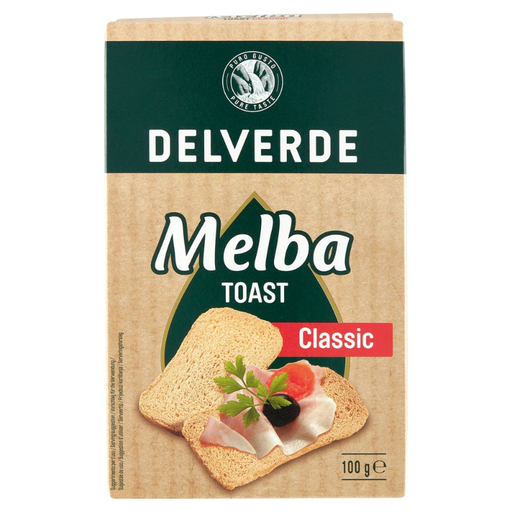 No image available
Worth considering if you want to take classic Melba toast to serve with a variety of toppings.
The pack contains 100 g. When buying, check the label for wheat and barley, as well as possible traces of sesame, soya and mustard. Store opened toast according to the instructions on the packaging.
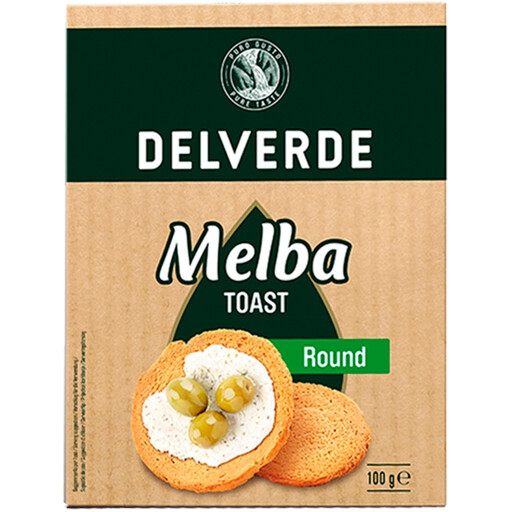 No image available
Worth considering if you’re looking for round Melba toast to serve as individual topped bites.
The pack contains 100 g. Check the current packaging for wheat and barley, as well as possible traces of sesame, soya and mustard. If you need a gluten-free option, choose a product explicitly labelled as such.
No. According to the Netherlands Nutrition Centre, bakers aren’t required to use baker’s salt. If the type of salt matters to you, check the packaging or ask the manufacturer; don’t assume based on the word ‘salt’ alone.
Choose a separate product whose current packaging explicitly states that it’s gluten-free, rather than assuming ordinary Melba toast is suitable. Albert Heijn labels Schär Crackers as gluten-free and wheat-free; also check the packaging for other allergens and keep the product separate from ordinary toast and crumbs.
Ideally, take the toast in its sealed packaging and add moist toppings just before eating. Follow the storage instructions on the packaging for opened packs; for AH Melba Toast, storage in a sealed tin is recommended.
Compare the weight and consider how you want to divide the toast during your picnic. Albert Heijn lists its plain Melba toast as 240 g, divided into 12 packets of 6 pieces of toast; ALDI Nederland lists a 240 g pack of Sun Snacks Plain. For the variety you choose, check current availability and the label, too.