
For snackers who want the topping to shine
If you like to switch between savoury and sweet toppings, plain Melba toast makes a neutral base. Check that the ingredients and salt content of your chosen variety suit your needs.


Choose plain Melba toast if you want your toppings to be the star, or compare wholemeal options if fibre is a higher priority for you. Flavoured toast works best when its flavour complements your topping. Check the salt content and allergens for each specific variety, too.
If you like to switch between savoury and sweet toppings, plain Melba toast makes a neutral base. Check that the ingredients and salt content of your chosen variety suit your needs.
If fibre matters for your late-night snack, compare the nutritional information per 100 g. The terms wholemeal and multigrain alone don’t tell you how much fibre a specific toast contains.
The Melba toasts reviewed include ingredients such as cereals containing gluten, soya and sesame. Check the ingredients and any warnings about possible traces on the current packaging of the variety you plan to eat.
First, decide what you want the toast to bring to your topping. Then compare the nutritional information and allergens for the varieties that fit the bill.
| What to consider | What to check before buying | Who it matters to |
|---|---|---|
| Flavour and toppings | Choose between plain toast and a flavoured variety; also check the shape and pack size. | If I want to use different toppings, I look for toast that won’t overpower their flavour. For around 42% of shoppers, how well it pairs with toppings comes first. |
| Fibre and salt | Compare fibre and salt per 100 g on the packaging of the specific variety, and consider your topping too. | For a late-night snack, I want to weigh up the nutritional value of the toast against what I put on it. Roughly 33% of shoppers give this comparison top priority. |
| Ingredients and allergens | Check both the ingredients list and any ‘contains’ or ‘may contain’ statements on the current packaging. | If I need to avoid certain ingredients, the allergen information determines which toast is suitable. This check matters most to around 25% of shoppers. |
According to Jumbo’s product information, Van der Meulen Melba Wholemeal Toast contains 9.7 g of fibre per 100 g, while the multigrain variety reviewed contains 7.5 g per 100 g. The product name alone doesn’t tell you how the fibre content compares.
Compare the nutrition tables for the specific varieties side by side, using the same quantity.
Albert Heijn describes its plain Melba toast as vegan and lactose-free, but also lists cereals containing gluten and soya as allergens. One claim won’t answer all your questions about the ingredients.
Check separately which allergens the product contains or may contain.
Toast is just one part of a late-night snack. The topping also affects the flavour and nutritional value of what you end up eating.
Choose your toast and topping together: a neutral base gives you different pairing options from toast with a distinctive flavour of its own.
Ingredients and allergen information can change. This is especially important if you need to avoid a particular ingredient.
Before eating, check the information on the packaging of the product you’ve actually bought.
These brands and supermarket ranges offer different types of Melba toast. Assess the flavour, nutritional value and ingredients of each specific variety.
Jumbo lists Van der Meulen Melba toast in plain, wholemeal and multigrain varieties, among others.
Albert Heijn lists 240 g packs of plain Melba toast, as well as an organic sesame Melba toast.
As well as products from other brands, Jumbo has listed Melba toast with its own distinctive flavour.
Lidl lists Melba toast in a 240 g pack as an in-store product.
ALDI lists Sun Snacks Plain Melba Toast in a 240 g pack.
This selection includes three Melba toasts for anyone looking for a crisp base, plus a rice toast as an alternative snack. Compare the shape, pack size and current packaging information with the toppings you plan to use.
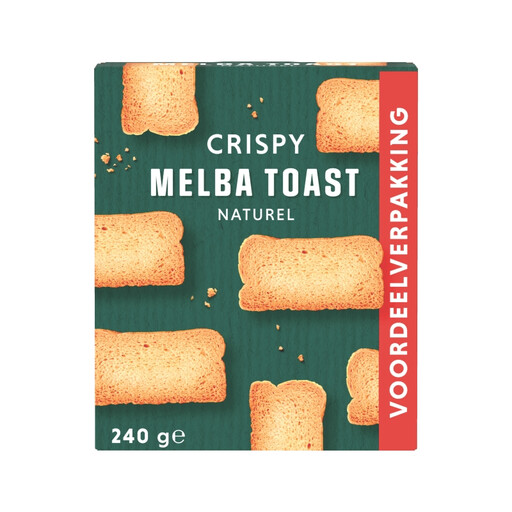 No image available
Melba toast to consider if you’re looking for a crisp base for your toppings. The pack contains 240 g; check the current allergen information carefully, particularly for wheat, soya and sesame.
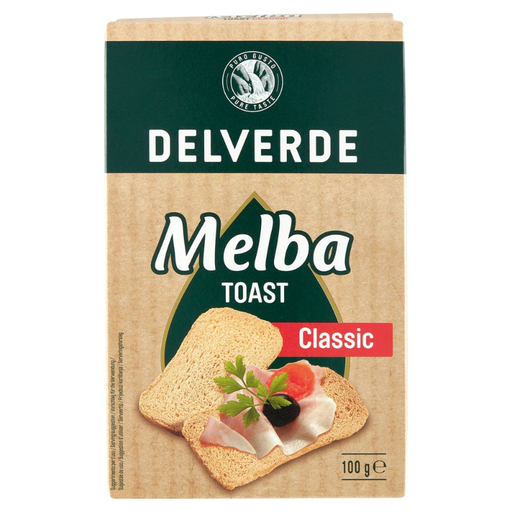 No image available
A classic Melba toast for anyone who wants the topping to provide the flavour. The pack contains 100 g; if you have allergies, check the current ingredients and allergen information.
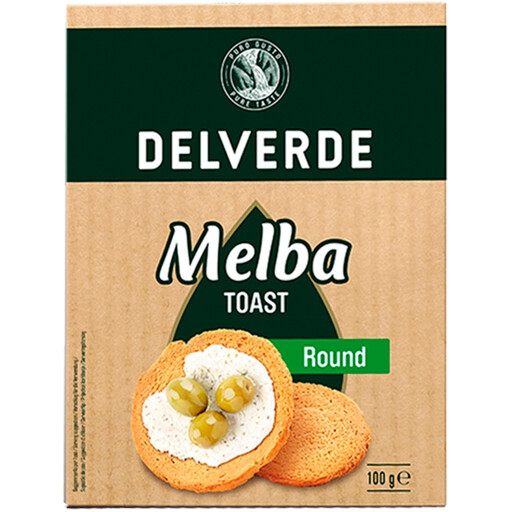 No image available
The round shape sets this Melba toast apart if presentation matters when serving your toppings. The pack contains 100 g; check the allergen information on the label.
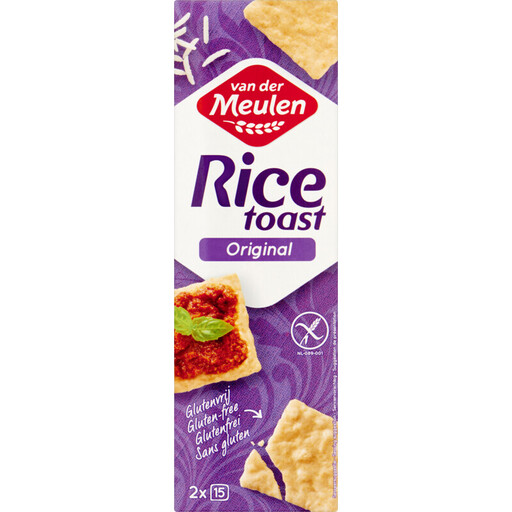 No image available
This rice toast offers a different kind of crisp snack from Melba toast. The pack contains 65 g; check the current allergen information and any gluten-free claim before choosing it for dietary reasons.
No, it depends on what matters to you besides fibre. Jumbo lists 9.7 g of fibre per 100 g for Van der Meulen Melba Wholemeal Toast, compared with 7.5 g for the multigrain variety reviewed. Compare the salt, allergens and the topping you plan to use as well.
At the very least, check for cereals containing gluten and, depending on the variety, soya and sesame. The products reviewed differ in their ingredients and warnings about possible traces, so always read the current packaging.
No. The word ‘salt’ alone doesn’t tell you what type was used in the toast. If this matters to your choice, check whether the ingredients list mentions iodised baker’s salt or ask the manufacturer.
Store the toast somewhere dry and seal the pack or a tin tightly. Albert Heijn recommends keeping its plain variety in a sealed tin once opened; follow the storage instructions on your product’s packaging.
No. Don’t assume a product is available online based on an old listing. Jumbo listed its Melba Toast Tomato & Basil as no longer part of its online range, while Lidl listed its Melba toast as an in-store product. Check whether the variety you want is currently available to buy.