What should you look for in toast to have with your coffee?
First decide whether wholemeal flour, a blend or a base for toppings matters most to you. Then compare the products that fit the bill by checking their labels, always using the same 100 g basis.
| What to consider |
What to check when buying |
Who it matters to |
| Wholemeal and fibre |
Check the description and ingredients; compare the stated fibre content per 100 g. |
I want genuinely wholemeal toast with my coffee and the ability to compare fibre content. Around 31% of consumers prioritise clearly labelled wholemeal products and fibre. |
| A white and wholemeal blend |
Look for a stated percentage of wholemeal flour and check whether white flour is also included. |
If not everyone at home wants fully wholemeal toast, I’m looking for a product made with both wholemeal flour and white flour. This kind of blend is a key consideration for around 31% of consumers. |
| Crispness and toppings |
Read how the supplier describes the flavour and texture; check the ingredients of the product you choose. |
When I’m serving different sweet or savoury toppings, I mainly want crisp toast with a mild flavour. Around 23% of consumers prioritise this kind of base for toppings. |
| Label information |
Read the allergen information, compare salt per 100 g and check for baker’s salt if you’re interested in iodine. |
If I have allergies, or if salt or baker’s salt matters to me, I want to know exactly what the packaging says. Around 15% of consumers prioritise checking this information on the label. |
Melba toast for toppings with your coffee
This Melba toast suits anyone looking for a crisp base for toppings. If you want a wholemeal option or a blend of white and wholemeal flour, the ingredients of the specific product are what count.
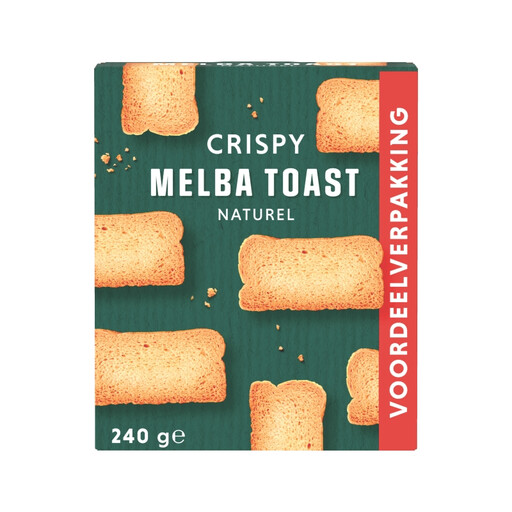 Image unavailable
Crispy Melba Toast 240 g
For anyone who likes thin, crisp Melba toast with toppings alongside their coffee.
The product information lists wheat flour, barley malt flour and soya as ingredients, and warns that traces of sesame may be present. However, the separate allergen information contradicts this. Check the latest packaging before buying, especially if you have allergies.
Once opened, store the toast in a dry, tightly sealed container.
View on Joybuy
Frequently asked questions about toast
Is multigrain toast automatically wholemeal?
No. According to the Netherlands Nutrition Centre, toast is only wholemeal if it is made entirely with wholemeal flour. A multigrain product containing both wholemeal flour and ordinary white flour can be a deliberate blend, but it isn’t the same as fully wholemeal toast.
Does toast in the Netherlands always contain iodised baker’s salt?
No, don’t assume that it does. According to the Netherlands Nutrition Centre, baker’s salt contains iodine, but not every baker uses it. Check whether baker’s salt is listed among the ingredients of the toast you want to buy.
How do I compare the salt and fibre in two types of toast?
Compare the values per 100 g, rather than per portion if the serving sizes differ. The Netherlands Nutrition Centre explains that salt is listed per 100 g in the nutritional information. Compare fibre on the same basis if it is provided.
How can I keep Melba toast crisp once opened?
Seal the pack tightly after opening and store the toast in a dry place, following the storage advice for the specific product. When choosing a pack size, think about how often you serve toast.
What should I look for if I have allergies?
Read the latest ingredients and allergen information for the specific toast product. The product information from Jumbo and Joybuy shows that ingredients vary between varieties, so don’t rely on names such as plain, multigrain or wholemeal alone. If the product information conflicts, it’s especially important to check the packaging.


