
Vandaag of morgen in huis

Kwaliteit gegarandeerd

Welkomstaanbiedingen ontgrendelen: GRATIS bezorging | Tot 80% korting | Gratis 30 dagen JoyPlus-proefperiode
Download de app
Bringing a homemade lunch is a smart choice. It's healthier, more affordable, and you know exactly what you're eating. But the execution can sometimes be disappointing. You know the drill: granola that's gone soft, dressing leaking all over your bag, or a salad that's already wilted upon arrival. A good to-go yogurt cup or to-go salad cup can prevent this, but the market is flooded with options that overpromise and underdeliver.
As a Joybuy Product Recommendation Officer, I'm here to help you make the right choices. We'll look past the marketing hype and focus on what really counts. Let's go over the most common pitfalls so you don't waste money on a product that ends up collecting dust in a cupboard after just a few weeks.
Before you purchase a lunch pot, it's good to know where things often go wrong. Many cups look fine at first glance but have hidden flaws.
To avoid the problems above, there are a few technical specifications you should always check. These are the features that make the difference between a bad purchase and one you'll enjoy for years to come.
The foundation of a good cup is its material. Always choose a product made from BPA-free polypropylene (PP). This type of plastic is strong, food-safe, and is less likely to absorb odours or stains. An added benefit is that it's often suitable for the freezer, microwave, and dishwasher.
The seal is just as important. Look for a hollow silicone seal inside the lid. This flexible ring provides a much better, airtight seal than a simple plastic rim, making the cup truly leak-proof.
Think about how you'll use the cup. Is a small to-go cup for yogurt as a snack enough, or are you looking for a large to-go salad cup for a full lunch? A capacity of 250-400 ml is typically sufficient for a snack. For a meal-sized salad or a large portion of yogurt with fruit and granola, a volume of 700 ml to over a litre is a better choice. Make sure the separate compartment is large enough for your favourite toppings.
A good lunch pot should make your life easier, not harder. Therefore, always check the following points:
Based on these objective criteria, we have selected a number of products that suit different users.
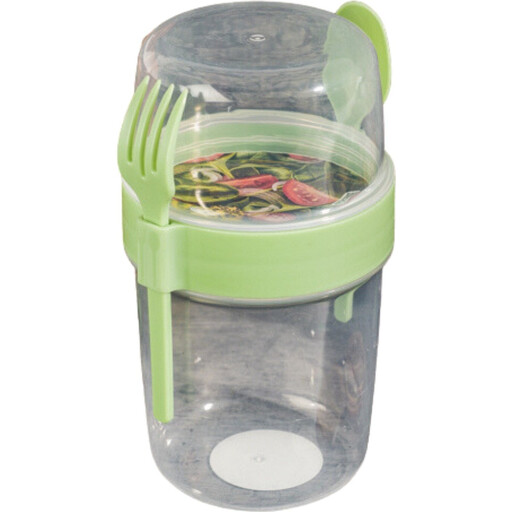
Why This Fits Their Persona: Perfect for those who pack a full, nutritious lunch. The generous 1100 ml capacity is ideal for a large meal-sized salad or a substantial portion of yogurt with plenty of fruit and grains.
The two spacious, separate compartments prevent a soggy lunch. The sturdy, BPA-free polypropylene material is durable and won't warp.
Large capacity (1100 ml) and versatility: suitable for the freezer, microwave, and dishwasher. Includes cutlery.
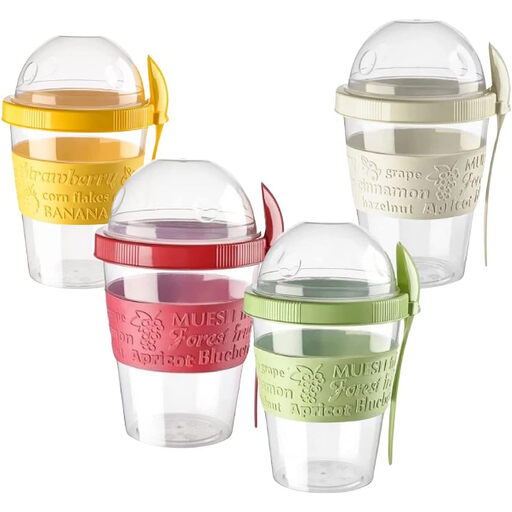
Why This Fits Their Persona: Ideal for students or office workers looking for a compact solution for a snack. At 250 ml, it's small enough for any bag.
The smart design with a separate topping compartment is perfect for a snack-sized portion of granola or fruit, avoiding the 'too small' compartment pitfall for this purpose.
Compact, lightweight, and reusable. The cup is dishwasher-safe for easy maintenance.
Why This Fits Their Persona: This user wants a reliable all-in-one solution for on the go. This cup is a complete lunch pot that doesn't leak and is suitable for both cold and hot meals.
Directly tackles the 'leak-proof promise' pitfall. The hollow silicone seal in the lid guarantees a 100% airtight and watertight closure for a worry-free commute.
A complete solution: includes cutlery and is microwave-safe. Perfect for yogurt, salad, or a reheated soup.
We have compiled a complete, up-to-date list of products that fully meet these strict selection criteria and safety standards.
Pay attention to the closure. A screw-top lid with a thick, flexible silicone ring in the rim is more reliable than a simple snap-on lid. The term 100% airtight is often a good indicator, as this requires a high-quality seal.
Yes, provided the material is suitable for the microwave. Always check if the product description states that the cup is microwave-safe (usually up to 100-120°C or 212-248°F). Always remove the lid before heating to prevent pressure buildup.
Choose a cup made of BPA-free polypropylene (PP). This material is less porous than cheaper plastics and is less likely to absorb odours and stains. Wash or rinse the cup immediately after use. For stubborn odours, soaking it overnight with water and a bit of baking soda can help.
