
Vandaag of morgen in huis

Kwaliteit gegarandeerd

Welkomstaanbiedingen ontgrendelen: GRATIS bezorging | Tot 80% korting | Gratis 30 dagen JoyPlus-proefperiode
Download de app
Buying a tent can be overwhelming. One is ultralight, while another offers palatial space. Are you going on a week-long family trip to the countryside or a trekking tour through the mountains? The right tent is the difference between a successful holiday and a wet, uncomfortable night.
My name is Joybuy, and as your Product Recommendation Officer, I'm here to help you make the right choice. No marketing jargon, just practical information based on specifications, so you can find the tent that perfectly matches your plans.
Before we dive into specific models, here are a few key points to guide your decision.
The first question is simple: how many people are you travelling with? A family tent offers space and comfort but can easily weigh over 10 kg, making it perfect for car camping. However, if you're hiking or cycling, every gram counts. A lightweight tent is essential in that case. A 1-person tent can weigh under 2 kg, while a 2-person tent for backpackers should ideally stay under 3 kg. Also, remember that a little extra space for your luggage can be very convenient.
You can never be sure about the weather. A waterproof tent is therefore essential. The waterproof rating is expressed in millimetres of hydrostatic head (mm).
A 4-season tent isn't necessarily warmer, but it is built more robustly to withstand strong winds and even some snow. For most campers in typical European climates, however, a 3-season tent is more than adequate.
After a long day of travel, the last thing you want is to struggle with a complex tent construction. Tunnel tents are often spacious and relatively easy to set up but require pegs and guy lines to stand. Dome tents are often freestanding, which is useful on hard ground. Pay attention to the setup time indicated by the manufacturer and whether you can pitch the tent alone.
Based on the criteria above, we've selected some popular choices for different types of campers.
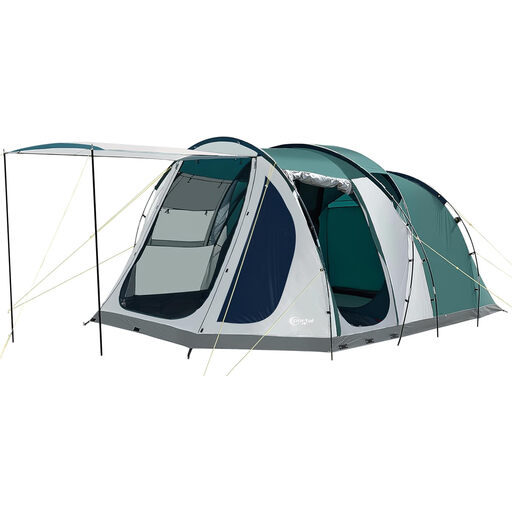
Why It Stands Out This tunnel tent from Portal is designed for comfortable camping with family or a group. The tent features a spacious sleeping cabin of over 7 m? and a separate living area of almost 6 m?. This is where you can store your gear and sit comfortably in less-than-ideal weather. The standing height of 200 cm is a major advantage.
With a hydrostatic head of 3000 mm and a fully sewn-in groundsheet, you are well-protected against rain and rising damp. The ventilation options, including multiple doors and a rear vent, help to reduce condensation.
Pros
Who It's For Ideal for families or groups who camp by car and value space and comfort. Less suitable for trekkers due to its weight of over 12 kg.
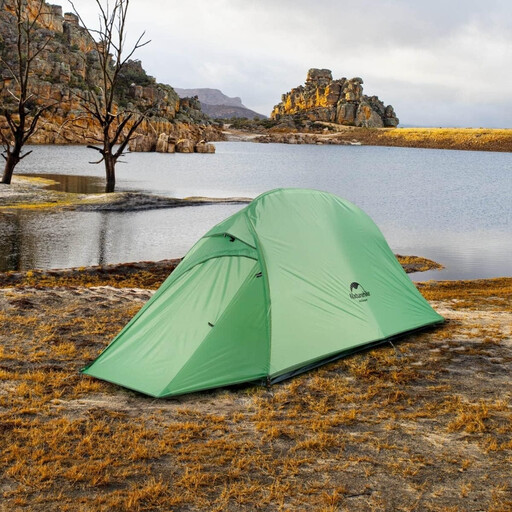
Why It Stands Out For the solo hiker, cyclist, or backpacker, weight is everything. The NatureHike Cloud-Up 1P is a popular 1-person tent in the lightweight tent category. Depending on the chosen fabric (20D nylon or 210T polyester), it weighs only 1500 to 1700 grams. When packed, it's not much larger than a big water bottle.
Despite its low weight, it doesn't compromise on protection. The 20D version has an impressive hydrostatic head of 4000 mm. The 7001 aviation-grade aluminium frame is designed to remain stable in windy conditions, making it a reliable trekking tent.
Pros
Who It's For The perfect companion for solo adventurers covering long distances who need to count every gram.
View the NatureHike Cloud-Up 1P
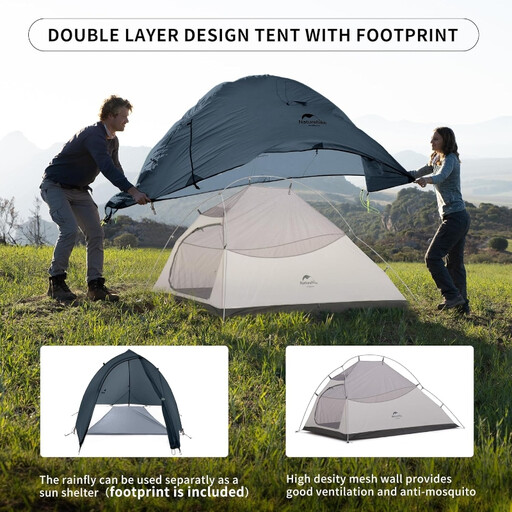
Why It Stands Out The Cloud-Up 2 Upgrade is the big brother of the 1P, offering an excellent balance of weight and space for two people. This 2-person tent weighs just 1.3 kg (without extras) in its 20D nylon version, which is exceptionally light for a tent of this capacity.
It's a freestanding model, meaning you can pitch it without pegs, which is handy on rocky ground. Like the 1P version, it has a hydrostatic head of 4000 mm on both the flysheet and the groundsheet. According to the manufacturer, it is suitable for 4 seasons, indicating a robust construction that can withstand more severe weather conditions.
Pros
Who It's For Backpacking couples, or solo travellers who want some extra room for their gear. A versatile choice for trekking in a wide range of conditions.
View the NatureHike Cloud-Up 2 Upgrade
These recommendations cover some of the most common camping scenarios. But perhaps you're looking for a different size, model, or a specific colour. Every journey is unique and requires the right gear.
Browse our full range of camping tents and find the perfect match for your adventure.
1. How waterproof does a tent need to be for a temperate climate? For camping in most parts of Europe, a tent with a hydrostatic head of at least 2000 mm is recommended. If you want to be sure you'll stay dry during a heavy, sustained downpour, choose a model with 3000 mm or more.
2. What is the difference between a 3-season and a 4-season tent? A 3-season tent is designed for spring, summer, and autumn. These tents focus on ventilation and protection from rain. A 4-season tent is built to withstand winter conditions as well, such as strong winds and snowfall. They often have a sturdier frame and less mesh for ventilation, which can make them warmer but also heavier.
3. How important is the weight of a tent? Weight is crucial if you have to carry the tent yourself, such as a trekking tent for hiking or cycling. Every kilogram counts. For car camping, where the tent goes from the boot to the pitch, weight is less of a concern. In that case, it's better to opt for more space and comfort, as with a family tent.
Best regards,
Joybuy Your Product Recommendation Officer
