
Vandaag of morgen in huis

Kwaliteit gegarandeerd
Download de app
Categorieën

The search for a breakfast with no added sugar can feel like navigating a maze of misleading packaging. Many products marketed as 'healthy' still contain significant amounts of hidden sugars. This article provides a practical guide to choosing sugar-free granola. We focus on the facts: what's on the label, what it means, and which products align with the goal of reducing sugar intake.
An informed choice starts with understanding the product information. The following criteria will help you objectively evaluate breakfast cereals.
The term 'sugar-free' can be confusing. According to EU regulations, it's important to distinguish between:
Fibre is a key component of a nutritious breakfast. It contributes to a feeling of fullness. Products with a high fibre content often contain wholegrain cereals (like oats or wheat) and ingredients such as chicory root fibre. A product is considered high in fibre if it contains at least 6 grams of fibre per 100 grams.
Although the terms are often used interchangeably, there is a subtle difference. Granola typically consists of loose, oven-roasted grains. Cruesli (or crunchy muesli) often refers to a mix of grains baked into crunchy clusters. The choice between them is a matter of personal preference for texture.
Based on the criteria above, we have curated a selection of products specifically developed with no added sugar.
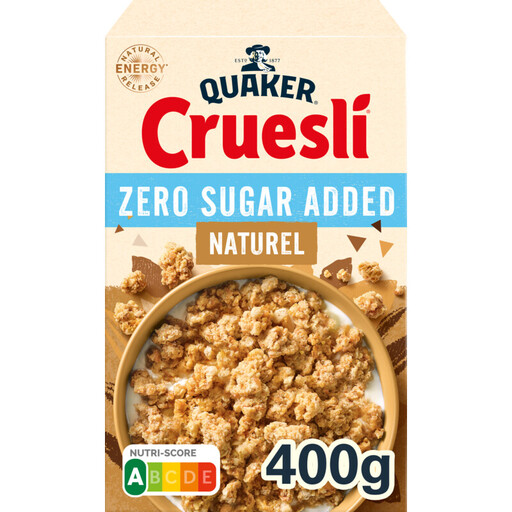
Why we chose it: This is a classic wholegrain cruesli that focuses on a crunchy texture without added sugars or sweeteners. Its base of wholegrain oat and wheat flakes makes it a familiar choice.
Benefits:
Best for: Fans of traditional, crunchy cruesli who prioritise a high fibre intake. It's a neutral base that pairs well with fresh fruit or yoghurt.
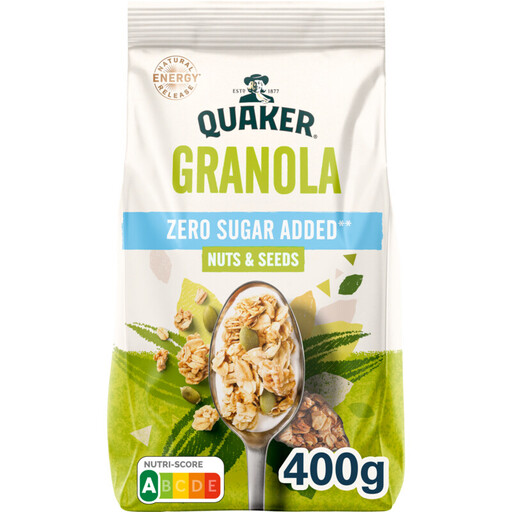
Why we chose it: This sugar-free granola stands out with its addition of nuts and seeds, including pumpkin seeds (4.5%), hazelnuts (3.2%), and almonds (3.0%). This provides extra texture and nutrients.
Benefits:
Best for: Those looking for a high-fibre granola with more 'bite' and the nutritional benefits of nuts and seeds, such as healthy fats and extra protein.
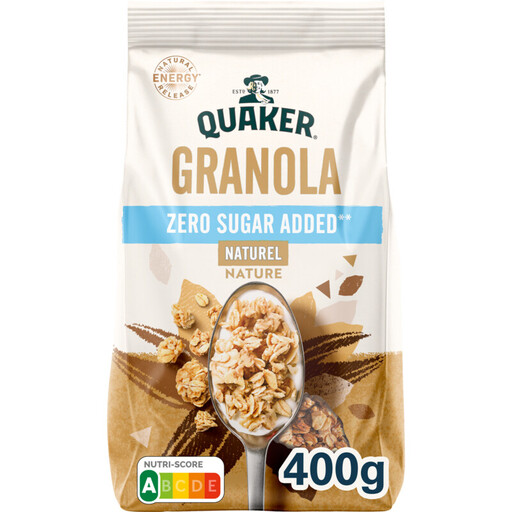
Why we chose it: This is a pure, lightly toasted granola with a high percentage of wholegrain oat flakes (70%). It's a minimalist option that focuses on the essentials: grains and fibre.
Benefits:
Best for: The purist seeking a simple, effective, and high-fibre granola. Ideal for those who prefer to have full control over their breakfast additions.
| Feature | Quaker Zs Cruesli Natural | Quaker Zs Granola Nuts & Seeds | Quaker Zs Granola Natural | | :--- | :--- | :--- | :--- | | Type | Cruesli | Granola | Granola | | Fibre (per 100g) | 24 g | 20 g | 21 g | | Sugars (per 100g) | 3.8 g | 3.4 g | 3.3 g | | Protein (per 100g) | 7.5 g | 10 g | 8.4 g | | Key Ingredient | Wholegrain oat & wheat flakes | Wholegrain oat flakes, nuts, seeds | Wholegrain oat flakes (70%) |
Choosing a breakfast is a personal decision. If you're looking for other varieties, such as organic options, different types of grains, or specific mueslis, you might want to consider a wider range.
Explore more healthier breakfast cereals here.
1. What is the difference between sugar-free granola and cruesli? The main difference lies in the texture. Granola usually consists of loose, roasted flakes. Cruesli is often baked into crunchy, clumped pieces (clusters). Both can be produced without added sugar.
2. Is granola with no added sugar completely sugar-free? No, not always. The 'no added sugar' claim guarantees that the manufacturer has not added sugar. However, the ingredients themselves, such as grains, naturally contain a small amount of sugar. Always check the 'of which sugars' line in the nutrition table for the total sugar content.
3. What is the best way to eat sugar-free granola? Granola and cruesli with no added sugar are versatile. Combine them with low-fat yoghurt or quark for extra protein. Add a small portion of fresh fruit, like berries or a few slices of banana, for natural sweetness and vitamins. A handful of unsalted nuts or seeds can add extra texture and healthy fats.