
Shoppers with a strict sugar-free requirement
For you, ‘sugar-free’ is a specific buying requirement, not another way of saying ‘less sugar’. When choosing flakes, check both the claim and the sugars per 100 g on the pack of the exact variety.


Only choose flakes for a mid-morning snack if you’ve checked the exact variety: under EU Regulation (EC) No 1924/2006, solid food can only be called sugar-free if it contains no more than 0.5 g of sugars per 100 g. If that figure isn’t on the label, don’t assume that ‘less sugar’ means sugar-free. If you’re mainly looking for something other than a sweet topping, the Netherlands Nutrition Centre lists fruit and a sandwich among the possible snack options.
For you, ‘sugar-free’ is a specific buying requirement, not another way of saying ‘less sugar’. When choosing flakes, check both the claim and the sugars per 100 g on the pack of the exact variety.
You want to compare chocolate spreads, but don’t require them to be sugar-free. Check the nutrition information per 100 g and how much you use; ‘less sugar’ and ‘sugar-free’ don’t mean the same thing.
You’re looking for more than a bread topping to enjoy mid-morning. The Netherlands Nutrition Centre lists fruit and a sandwich as possible snacks. Decide what you’d like to eat first, then work out whether you need a topping.
First, decide whether your flakes really need to be sugar-free. If you’re also considering a different type of spread or snack, you can then compare taste, nutrition information and ease of use.
| What to consider | What should you check? | Who is this important for? |
|---|---|---|
| Truly sugar-free | Look for the ‘sugar-free’ claim and, for solid food, check that it contains no more than 0.5 g of sugars per 100 g – the limit set by EU Regulation (EC) No 1924/2006. | If sugar-free is a must for me, I don’t want to choose flakes based on a word like ‘wholesome’ alone. Around 40% of consumers put this strict requirement first. |
| Less sugar | Compare sugars per 100 g and per portion used; also check the rest of the nutrition information. | I want to use less sugar, but don’t necessarily need a sugar-free product. For around 30% of consumers, reducing sugar is the top priority. |
| Type of snack | Decide whether you’re looking for a topping or something to eat on its own, such as fruit or a sandwich. | If I’m hungry mid-morning, I’m more likely to want a snack than just something sweet for my bread. This is the main consideration for around 20% of consumers. |
| Easy to choose | Check the current packaging of the variety you’re picking, even if you’ve bought it before. | I want to be able to choose quickly without picking up a variety with a different sugar content. For around 10% of consumers, convenience matters most. |
A product with less sugar doesn’t automatically meet the sugar-free limit of no more than 0.5 g of sugars per 100 g for solid food, as set out in EU Regulation (EC) No 1924/2006.
Check the claim and the nutrition table on the exact variety you want to buy.
Flakes are primarily a spread or topping. If you’re looking for something to eat in its own right, that choice matters more than just the type of flakes.
The Netherlands Nutrition Centre lists fruit and a sandwich among the possible snack options. Before choosing a topping, consider whether one of these would be a better fit.
The front of the pack won’t tell you at a glance which ingredients, sugars or allergens are listed for that specific variety.
Also read the ingredients list, allergen information and nutrition information per 100 g. If you use a small amount, check the information per portion too, where available.
Albert Heijn and Jumbo list De Ruijter milk, dark, white and Royaal chocolate flakes, among other varieties.
Venz offers crispy flakes and tiger flakes, including milk and vanilla varieties.
Jumbo and PLUS list Choca flakes and mixed flakes in 200 g packs.
Albert Heijn lists its own milk, dark and mixed flakes, as well as chocolate sprinkles with less sugar in a separate lower-sugar selection.
Jumbo’s flakes range includes its own-brand varieties alongside De Ruijter, Venz and Choca.
If you’re looking for something other than flakes for your bread, peanut butter is another type of spread to consider. This product isn’t an answer to the question of sugar-free flakes; if you have a strict sugar-free requirement, always check the sugar content of the product itself.
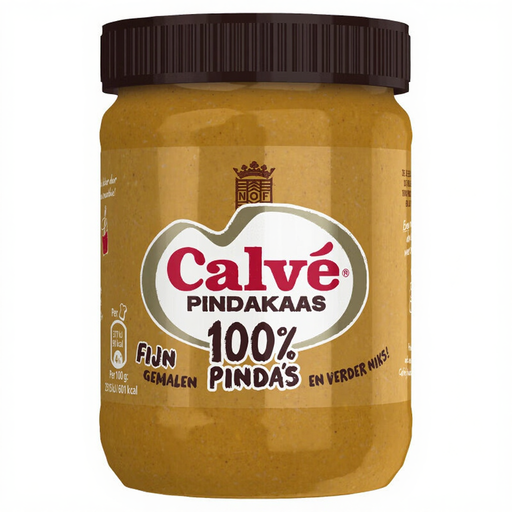 Image unavailable
An alternative to flakes if you’d like peanut butter on bread or toast. This isn’t a flakes product and isn’t suitable if you have a strict sugar-free requirement. If you have allergies, check the packaging before use.
Under EU Regulation (EC) No 1924/2006, the ‘sugar-free’ claim can be used for solid food if it contains no more than 0.5 g of sugars per 100 g. Check this figure in the nutrition table for the variety you’re buying.
Not if sugar-free is a must: ‘less sugar’ doesn’t confirm that a product meets the sugar-free limit. Chocolate sprinkles are also a different type of spread from flakes, so compare the labels on each product.
If you’re not looking for a sweet topping, fruit or a sandwich are possible snacks listed by the Netherlands Nutrition Centre. If you want something to spread on bread, choose that separately based on your preferences and the information on the pack.
Yes. The sugar content per 100 g doesn’t tell you which ingredients or allergens a product contains. So read the ingredients list and allergen information on the specific pack; the Netherlands Nutrition Centre also says that any sweeteners used will be listed on the label.