
Vandaag of morgen in huis

Kwaliteit gegarandeerd

Welkomstaanbiedingen ontgrendelen: GRATIS bezorging | Tot 80% korting | Gratis 30 dagen JoyPlus-proefperiode
Download de app
Whether you dream of homemade sourdough bread, airy cakes, or perfectly whipped cream, a quality stand mixer can significantly lighten the load. But with so many models on the market, finding the right one is a challenge. An underpowered machine will struggle with heavy dough, while an oversized model has an unnecessarily large footprint.
As a Joybuy Product Recommendation Officer, I'm here to help you understand the specifications that truly matter. This guide is designed to help you make an informed choice, ensuring you find a stand mixer that matches your baking ambitions and your kitchen.
Before we look at specific models, here are a few key points to consider. These will help you determine which type of appliance best suits your needs.
Power, expressed in watts, indicates the strength of the motor. For occasional cake batter mixing, a motor around 700W is often sufficient. However, if you plan to regularly knead heavy bread or pizza dough, a powerful stand mixer with 1000W or more is a wise choice.
The capacity of the mixing bowl is just as important. A 5-litre stand mixer bowl is a popular size, as it's large enough for most family recipes, from a big batch of cookie dough to a large loaf of bread. For smaller households or kitchens, a bowl of around 4 litres may suffice.
Most modern stand mixers use a planetary mixer technique. This means the dough hook or whisk not only rotates on its own axis but also moves in an orbit around the edge of the bowl. This ensures all ingredients, from the centre to the sides, are constantly incorporated. The result is a much more evenly mixed batter or dough, without you having to scrape down the sides with a spatula.
A powerful motor can cause a lot of vibration. Therefore, look for models with a sturdy housing and non-slip feet on the bottom. This ensures the machine remains stable on your countertop, even when kneading a tough dough. Additionally, a quiet stand mixer can be a major plus, especially in an open-plan kitchen. Manufacturers sometimes indicate the noise level in decibels (dB). A value around 75 dB is generally considered relatively quiet for this type of appliance.
Based on the criteria above, we have selected a few models that stand out for their specifications and functionality.
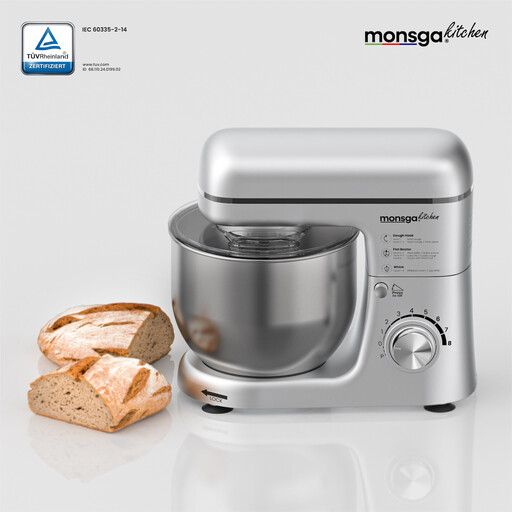
Why It Stands Out: This model combines a powerful motor with a spacious bowl and a relatively quiet design, making it an excellent all-rounder for most home bakers.
Pros:
Who Is It For? For the regular home baker looking for a reliable and versatile dough kneader and mixer with bowl for a wide range of recipes, without the premium price tag.

Why It Stands Out: The Kenwood Chef Baker distinguishes itself with smart features like an integrated scale and an extra mixing bowl, focusing on precision and ease of use.
Pros:
Who Is It For? For the passionate home cook who bakes frequently and enjoys variety. If you value precision, efficiency, and the ability to expand your machine's capabilities in the future, this is a compelling option.
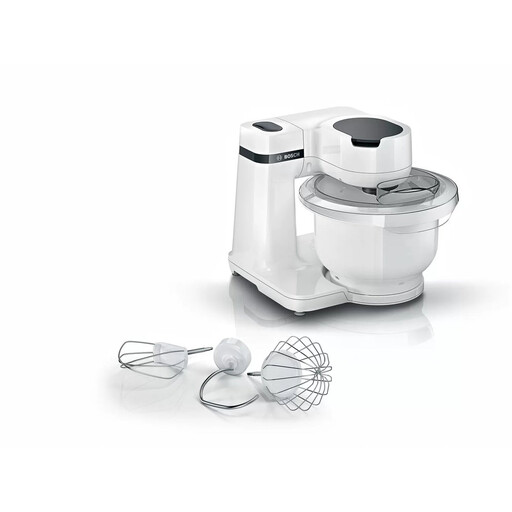
Why It Stands Out: This Bosch model is a compact yet capable stand mixer, ideal for those with limited space who still want to experience the benefits of a stand mixer.
Pros:
Who Is It For? Ideal for the novice baker, students, or anyone with a smaller kitchen. It's a reliable choice for making cakes, cookies, and lighter types of bread.
The world of stand mixers is vast. Are you specifically looking for a machine that excels at kneading heavy bread dough? Then check out our selection of bread mixers for more specialised options.
The terms are often used interchangeably. A stand mixer (or mixer with bowl) is specifically designed for mixing, whipping, and kneading. The term 'kitchen machine' can sometimes also refer to a food processor, which is meant for chopping, slicing, and grating. The models in this article are all stand mixers.
This depends on your usage. For light tasks like whipping cream or mixing cake batter, 700-900W is sufficient. For regularly kneading bread or pizza dough, a motor of 1000W or more is recommended to prevent overheating and ensure a good kneading result.
A planetary mixer has a mixing arm that rotates on its own axis while simultaneously making a circular orbit around the bowl. This ensures the whisk or dough hook reaches all parts of the bowl, resulting in a faster and more homogeneous mixture without the need for manual scraping.
