
Vandaag of morgen in huis

Kwaliteit gegarandeerd
Download de app
Categorieën

A water bottle that leaks in your bag, lets your cold drink turn lukewarm within an hour, or imparts a strange aftertaste. These are common frustrations in the search for a quality reusable bottle. A stainless steel insulated water bottle is often the solution, but the market is vast. This guide will help you make an informed decision based on key features, ensuring you find a bottle that perfectly suits your needs.
Before we dive into specific models, it's helpful to understand the most important specifications. These criteria will help you compare bottles objectively.
Material and Safety: Most high-quality insulated bottles are made from 18/8 stainless steel. This material is food-grade, durable, and won't retain or impart flavours. An essential certification to look for is BPA-free. This guarantees that no harmful chemicals from the plastic components (often found in the lid) will leach into your drink.
Insulation Technology: The effectiveness of the insulation is determined by its construction. A double-wall water bottle with a vacuum between the two walls is the industry standard. This design minimises temperature transfer. Manufacturers often provide an estimate of how long a bottle keeps drinks cold or hot (e.g., 24 hours cold, 12 hours hot). These performance claims depend on external temperatures and how frequently the bottle is opened.
Lid and Leak-Proofing: A leak-proof water bottle is a fundamental requirement. The seal, typically made of silicone, is crucial for this. There are various types of lids, each with its own advantages:
Capacity and Size: The required capacity depends on your lifestyle. A 500-750 ml bottle is often sufficient for the office or a short workout. For a long day or an intense gym session, a large water bottle of 1 litre or more may be more practical. Also, check the diameter if you plan to place the bottle in your car's cup holder or on a piece of fitness equipment.
Maintenance: A wide mouth makes it easier to fill with ice cubes and to clean with a bottle brush. Check if any parts, such as the lid, are dishwasher-safe. The bottle itself is usually best washed by hand to protect the exterior coating and insulation.
Based on the criteria above, we have selected several stainless steel insulated water bottles that stand out for their unique features and functionality.
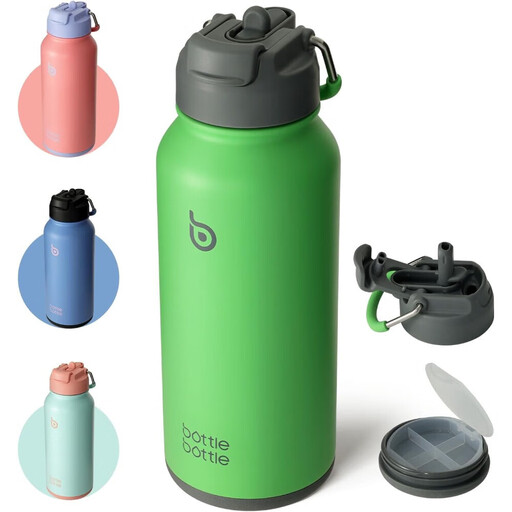
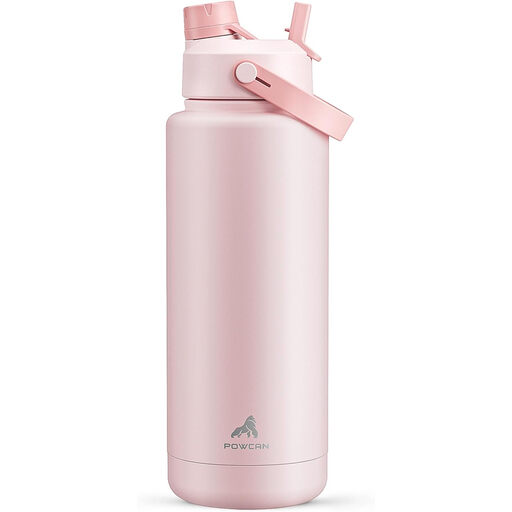
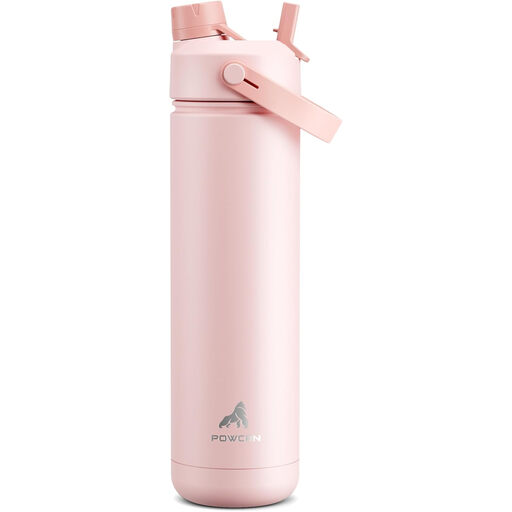
Choosing a water bottle is a personal decision that depends on specific preferences for colour, lid type, or size. If the models above don't fully meet your requirements, countless other options are available.
Explore the full range in our Water Bottles category for more stainless steel insulated water bottles.
1. What is the best way to clean a stainless steel water bottle? For daily cleaning, rinsing with warm water and a little dish soap is sufficient. Use a bottle brush to properly clean the interior. For a deep clean, you can fill the bottle with a solution of water and a tablespoon of baking soda or vinegar, let it sit overnight, and then rinse thoroughly. Always check the manufacturer's instructions; some lids may be dishwasher-safe, but the bottle itself usually is not.
2. Can I put carbonated drinks in a stainless steel insulated water bottle? It is generally not recommended. The pressure build-up from carbonation can damage the seal and lead to leaks. In extreme cases, the pressure can make the bottle difficult to open or even cause the lid to pop off. Use an insulated bottle for water, tea, coffee, or other non-carbonated beverages.
3. What is the difference between a stainless steel water bottle and a thermos? In practice, the terms are often used interchangeably. A stainless steel insulated water bottle is essentially a type of thermos specifically designed for carrying drinks. Both use double-wall vacuum insulation to maintain temperature. The term 'thermos' is sometimes used more broadly for both beverages and soups, while 'insulated water bottle' typically refers to a model with a drinking lid.