
当日/次日达

品质保障

开启新人专享福利: 全场免邮 | 低至 2 折 | 免费试用 30 天 JoyPlus 会员
下载 Joybuy
A good stainless steel frying pan is an investment in your kitchen. It lasts for years, is incredibly durable, and is perfect for searing at high temperatures. But the search can be frustrating. The market is flooded with pans that promise the world, only to warp on your induction hob after a few months or have their "durable" coating start to peel.
As a Joybuy Product Recommendation Officer, I cut through the noise to help you make the right choices. Let's avoid the most common pitfalls so you can buy a pan you can truly rely on.
Before you open your wallet, watch out for these common marketing traps that lead to buyer's remorse:
PFAS-free frying pan sounds great, but not all alternative coatings are created equal. Some ceramic or titanium layers wear down within months, causing everything to stick and forcing you to buy a new pan anyway. A durable frying pan is about more than just the absence of certain chemicals.To find a pan that lives up to its promises, focus on these three objective features.
This is the most critical component, especially for an induction frying pan. A good stainless steel pan has a 'tri-ply' or 'sandwich base'. This means a layer of aluminium (or sometimes copper) is sandwiched between two layers of stainless steel.
A pan with a thick, solid sandwich base will resist warping and deliver predictable cooking results without hot spots.
The choice depends on what you plan to cook.
ceramic frying pan is a popular PFAS-free option. Pay close attention to the quality and durability of the coating. Brands like Tefal and WMF have developed coatings they claim are more scratch-resistant and last longer.The most common sizes are the 24 cm frying pan (ideal for 1-2 people) and the 28 cm frying pan (suitable for a small family). A larger pan gives you more space, allowing ingredients to fry rather than steam. Also, check the handle: a riveted handle is typically sturdier and more durable than a screwed-on one. A handle that stays cool during cooking is a practical bonus.
Based on these objective criteria, we have selected several pans that suit different user profiles.
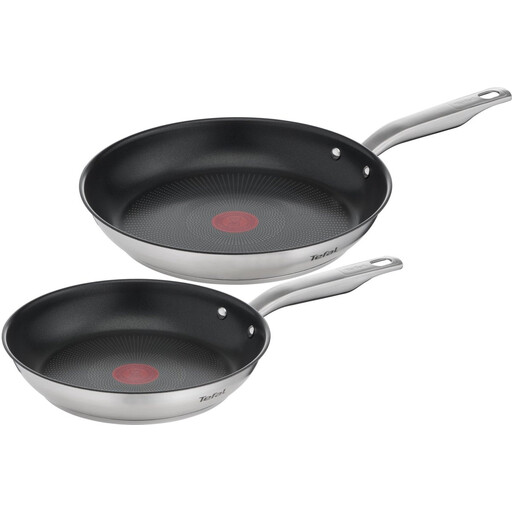
Why This Fits Their Persona: A complete stainless steel frying pan set from a trusted brand at an accessible price point. Ideal for those seeking a solid foundation with the two most common sizes without breaking the bank.
The robust base is suitable for all heat sources, including induction, which minimises the risk of warping. The pan features a PFAS-free coating that Tefal claims is reinforced with titanium particles for a longer lifespan.
Two pans (24 and 28 cm) in one purchase. Tefal's Thermo-Signal indicator shows when the pan has reached the ideal cooking temperature.
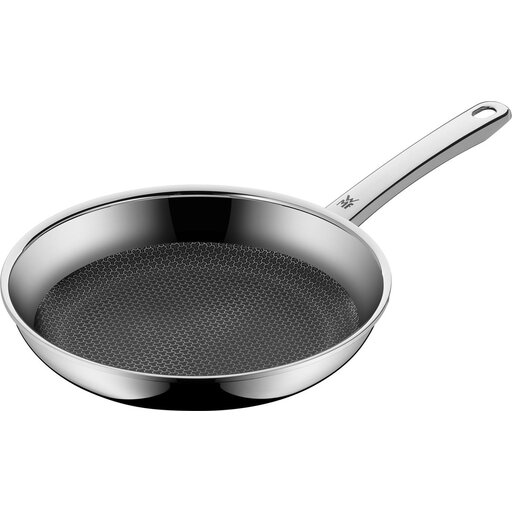
Why This Fits Their Persona: For those investing in a durable frying pan with superior cooking performance. This WMF frying pan is perfect for searing meat and creating a crispy crust, with the convenience of a protected non-stick layer.
The 3-layer base (TransTherm) ensures a stable, flat surface that won't warp. The unique stainless steel honeycomb structure protects the non-stick coating from scratches by metal utensils, significantly extending its lifespan.
Combines the heat resistance of stainless steel with the convenience of a non-stick coating. The pan is heat-resistant up to 260°C and suitable for all heat sources.
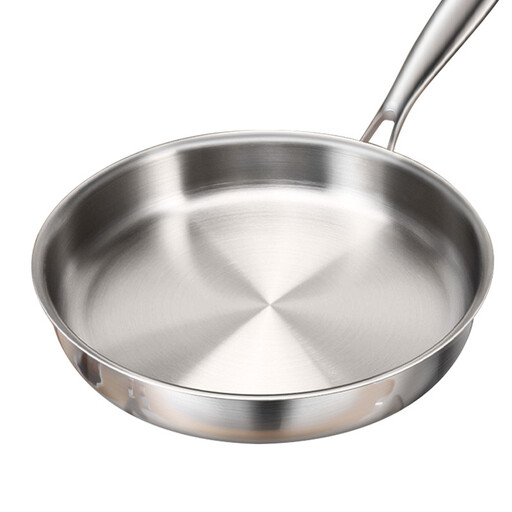
Why This Fits Their Persona: Ideal for the health-conscious cook who wants to fry on a pure surface in a stainless steel pan without a coating. Perfect for those who have mastered, or want to learn, the technique of cooking with stainless steel for maximum control and durability.
No coating that can wear out or get damaged. The pan is made entirely of durable 304 stainless steel with a tri-ply base that ensures stable, even heat distribution and will not warp.
Extremely durable, scratch-resistant, and suitable for very high temperatures. A pan for life with proper use. Suitable for all heat sources.
We have compiled a complete, up-to-date list of products that fully meet these strict selection criteria and safety regulations.
1. How do I prevent food from sticking in a stainless steel pan without a coating? The secret lies in the right temperature and the use of fat. First, preheat the pan over medium-high heat. Do the 'water drop test': if a drop of water sizzles and evaporates, it's too cold. If the drop shatters into many tiny beads, it's too hot. If the drop glides across the pan like a ball bearing, the temperature is perfect. Only then should you add oil or butter, let it heat up, and then place your ingredients in the pan.
2. Is a stainless steel pan really better for induction? Yes, provided the pan has a good magnetic base. The tri-ply construction with a thick, flat bottom ensures optimal contact with the induction hob. This leads to very fast and efficient heat transfer, saving energy and giving you more control over the temperature than with pans that are not completely flat.
3. What is the difference between a stainless steel pan and a ceramic frying pan? A stainless steel pan refers to the base material of the pan itself. It can come with or without a coating. A ceramic frying pan refers specifically to the type of non-stick coating. Often, the base of such a pan is aluminium, but there are also stainless steel pans with a ceramic coating. The main difference is the surface: pure stainless steel for durability and high heat, or a ceramic layer for non-stick convenience.
