
Vandaag of morgen in huis

Kwaliteit gegarandeerd
Download de app
Categorieën

A solar-powered outdoor light seems like a simple choice: no complex wiring and no impact on your energy bill. However, the wrong purchase can lead to disappointment—a light that fails after a cloudy day, is too dim for your driveway, or breaks down after a single winter. Selecting the right model depends on measurable specifications, not just marketing promises.
This guide will help you make an informed decision based on key product parameters. We'll cover the most important specifications and highlight several models suited for different scenarios.
Before making a choice, it's crucial to understand which specifications truly matter. These parameters determine whether a light is suitable for your needs, whether for security or creating ambiance.
Based on the criteria above, we have selected three models with distinct features, suitable for a variety of applications.
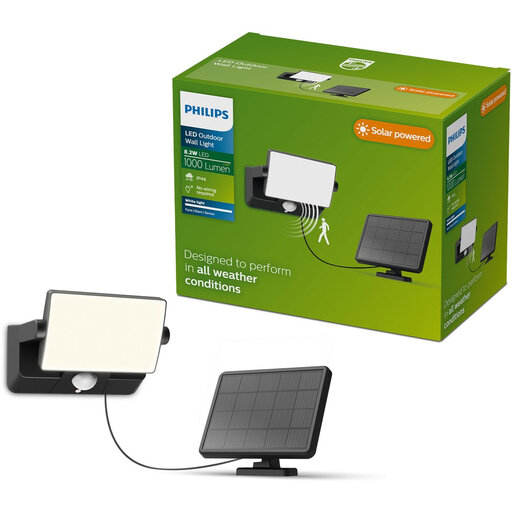
Why this product? The Philips Fyns is a practical all-rounder. With 1000 lumens, this lamp provides ample light for most functional applications, such as illuminating a path, shed, or entryway. The combination of a motion sensor and a dusk-to-dawn sensor ensures efficient energy use.
Advantages
Who is this for? This model is an excellent choice for homeowners seeking a reliable security light for their property, without the harshness of cool white light. It is suitable for mounting in locations that offer some shelter from direct rain.
View the Philips Fyns Solar Wall Light
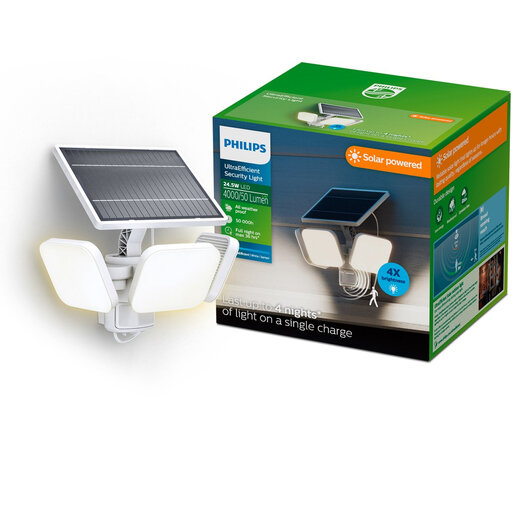
Why this product? When maximum visibility and security are the priority, the Philips Zyren delivers an exceptionally high light output of 4000 lumens. According to Philips, its PIR sensor offers a wide detection range (up to 16 metres sideways), and a fully charged battery can last for up to four nights. The IP65 rating makes it suitable for the most exposed locations.
Advantages
Who is this for? Ideal for illuminating large areas such as a long driveway, a car park, or the side of a commercial building. Its high brightness and wide detection range make this an excellent choice for those seeking maximum security.
View the Philips UltraEfficient Zyren Wall Light
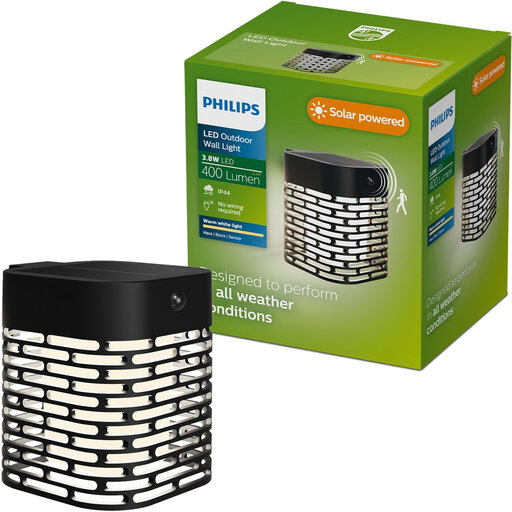
Why this product? The Philips Hara is designed with ambiance in mind. Its 400-lumen output and very warm 2700K colour temperature create an inviting atmosphere, making it perfect for cosy evenings on the patio or balcony. Despite its focus on ambiance, the light is equipped with motion and dusk-to-dawn sensors for efficient operation.
Advantages
Who is this for? This solar-powered LED outdoor light is the right choice for those who want a functional lamp that primarily serves as ambient lighting. It's perfect for illuminating a seating area, fence, or balcony without a harsh, cold glare.
View the Philips Hara Solar Wall Light
The right solar-powered garden lighting depends heavily on your specific needs and location. The models above offer a great starting point, but you may be looking for a different design, brightness level, or a model without a motion sensor. For a broader overview of lighting with automatic features, feel free to explore our range.
View all Sensor Lights here.
1. Do solar-powered outdoor lights work in winter? Yes, but performance may be reduced. Modern solar panels are more efficient and can generate power even on cloudy days, although less than in direct sunlight. The runtime per night may be shorter in winter. Lights with a motion sensor are particularly efficient during winter, as they only activate when needed.
2. How long does a solar-powered LED outdoor light last? The lifespan is determined by two main components: the LED module and the battery. The LED itself typically has a very long lifespan, often specified by Philips at 25,000 to 50,000 operating hours. The rechargeable battery is the component that will lose capacity over time. Most batteries in high-quality lights last for several years before performance noticeably declines.
3. Where is the best place to install a solar-powered outdoor light? For optimal performance, install the light in a location where the solar panel can receive as much direct sunlight as possible throughout the day. A south-facing position is ideal. Avoid placing it in the shade of trees, buildings, or other large objects. Also, ensure the panel is kept free of dirt and leaves.