
Vandaag of morgen in huis

Kwaliteit gegarandeerd

Welkomstaanbiedingen ontgrendelen: GRATIS bezorging | Tot 80% korting | Gratis 30 dagen JoyPlus-proefperiode
Download de app
A solar-powered outdoor light with a motion sensor seems like the perfect solution: no wiring hassle, zero extra electricity costs, and light exactly when you need it. Yet, a quick purchase often leads to disappointment. A lamp that fails after a few rain showers or a sensor that has a mind of its own is a waste of money.
As a Joybuy Product Recommendation Officer, I see a lot of products come and go. I'm here to help you cut through the marketing jargon and focus on what truly matters. Let's avoid the most common pitfalls so you can make a purchase you'll enjoy for years to come.
Before you make a choice, it's crucial to recognise two common issues that severely impact the usability of a solar outdoor light.
To avoid buyer's remorse, it's wise to focus on a few key technical specifications. These determine whether a solar lamp with a sensor truly delivers on its promise.
Lumen indicates the amount of light a lamp emits. But as mentioned, this number alone is not enough. A good LED outdoor solar light has an efficient balance between its light output and the battery's capacity (expressed in mAh).
The IP rating indicates how well a product is protected against dust and water. For durable garden lighting in our climate, this is a critical factor.
solar-powered outdoor wall light that hangs under an overhang or carport. The lamp is protected against rain but not against water jets from all directions.By paying attention to these specifications, you'll choose a power-free outdoor light that will function reliably not just now, but for years to come.
To help you get started, we've highlighted a few popular choices that suit different needs and situations.
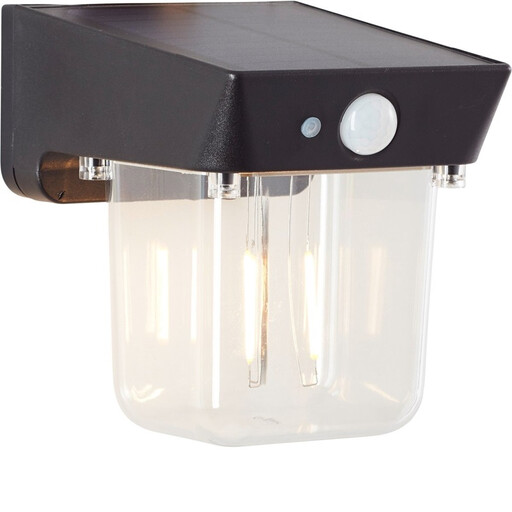
Why This Fits Their Persona: Ideal for those seeking a functional, affordable solution for a balcony, shed door, or next to the front door. A no-frills light that works when needed without a major investment.
The light output of 180 lumens is modest and well-balanced with its battery, ensuring reliable performance. The IP44 rating is honest and suitable for the sheltered locations it's designed for.
Compact size and very simple installation. Provides warm white light (2700K) for a pleasant ambiance.
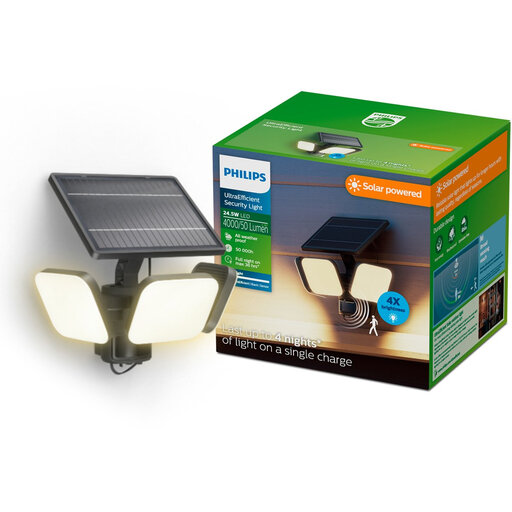
Why This Fits Their Persona: Perfect for those who want to powerfully illuminate a dark driveway, backyard, or alley. The focus here is purely on security and visibility, with a lamp that performs under tough conditions.
This lamp combines a very high light output (4000 lumens) with an efficient battery that, according to Philips, can provide light for up to 4 nights on a full charge. The IP65 rating guarantees it can withstand harsh climates.
Very wide detection range (up to 16 metres) and an adjustable head to aim the light exactly where it's needed.
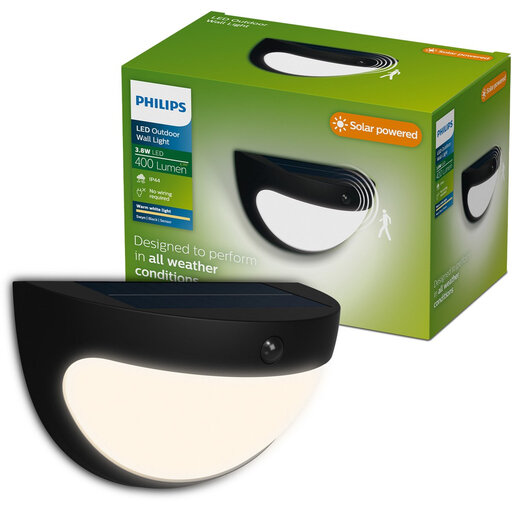
Why This Fits Their Persona: For those seeking a good balance between ambiance and functionality. This lamp provides a warm white light (2700K) for cosy evenings on the patio, while also offering the security of a motion sensor.
With 400 lumens, this lamp offers a solid light output that is well-matched to its battery capacity. The IP44 rating makes it suitable for most exterior walls, especially under a small overhang.
Offers two light modes ('Auto' and 'On') for flexible use. The sleek, black design complements many different styles.
We have compiled a complete, up-to-date list of products that fully meet these strict selection criteria and safety regulations.
Yes, they do work in the winter, but their performance is often reduced. Due to shorter days and the lower angle of the sun, the solar panels receive less energy. The lights will shine for a shorter duration or less brightly. Models with a larger, more efficient solar panel and a higher-capacity battery generally perform better during the darker months.
Most solar outdoor lighting requires about 6 to 8 hours of direct sunlight to fully charge the battery. Placement is therefore essential. A south-facing location is ideal. Although the panels also charge on cloudy days, the energy yield is significantly lower.
The lifespan depends on two components. The LED light itself often lasts a very long time; manufacturers sometimes claim up to 25,000 operating hours. The limiting factor is usually the rechargeable battery. Depending on its quality and usage, it may need replacement after 2 to 4 years. On some models, the battery is easy to replace, which significantly extends the lamp's lifespan.
