
Vandaag of morgen in huis

Kwaliteit gegarandeerd

Welkomstaanbiedingen ontgrendelen: GRATIS bezorging | Tot 80% korting | Gratis 30 dagen JoyPlus-proefperiode
Download de app
A shopping trolley seems like a simple purchase, until a wheel breaks off on a busy pavement or the frame buckles under the weight of a few cartons of milk. Many models look great in the store but prove to be impractical or downright unreliable in practice. Before you make a choice, it's wise to look beyond the marketing and focus on the details that truly matter.
Many buyers fall into the same traps:
A good shopping trolley makes life easier, not harder. Let's explore how to avoid a bad purchase.
To find a model that suits your daily use, it's important to evaluate three core elements: the frame, the wheels, and the extra features.
The material and construction of the frame determine its lifespan and ease of use. A lightweight shopping cart, often made of aluminium, is ideal if you also need to lift the trolley itself, for instance, onto a bus or into a car. Steel is heavier but typically offers a higher load capacity for those who regularly transport heavy items.
Pay attention not only to the bag's volume (in litres) but especially to the maximum load capacity (in kg) of the frame. A large bag on a weak frame is a recipe for disaster. A good foldable shopping trolley collapses into a flat package that fits easily in a closet, shed, or car boot.
The wheels are arguably the most important component. Standard wheels (usually two) are fine for flat surfaces like in the supermarket. However, do you live in an apartment building or a house with stairs? Then a stair-climbing shopping trolley is a great solution. These models have a special system with three wheels on each side, allowing the trolley to roll smoothly up and down the steps.
Also, consider the wheel material. Soft materials like PU or rubber are quieter and absorb shocks better than hard PVC, which makes a huge difference, especially on cobblestones and pavement tiles.
Some trolleys offer clever extras that enhance usability. For example, a shopping trolley with a cooler compartment is very handy for keeping frozen foods and chilled items cold on the way home. Other models are multifunctional and can be converted into a foldable hand truck, allowing you to easily move moving boxes or crates as well. Think about how you plan to use the trolley to determine which features are valuable to you.
To help you get started, we've highlighted a few popular models that suit different user profiles.
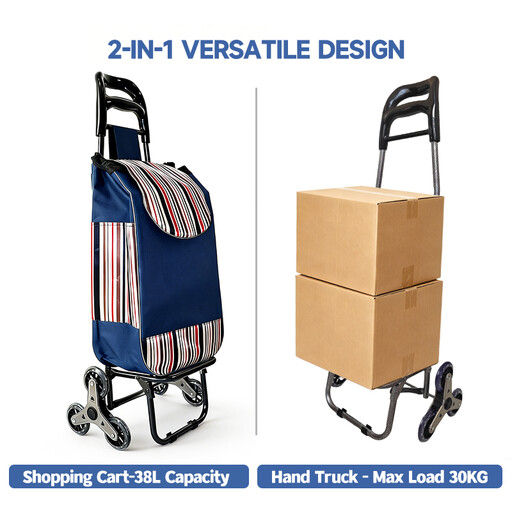
Why This Fits Their Persona: Ideal for those living in an apartment or multi-story building. Transporting heavy groceries over curbs and stairs becomes significantly lighter and easier.
The six-wheel stair-climbing feature directly addresses the pitfall of impractical wheels. You no longer need to lift the trolley over obstacles.
Specifically designed for stairs and uneven terrain. The compact, foldable design makes storage simple.
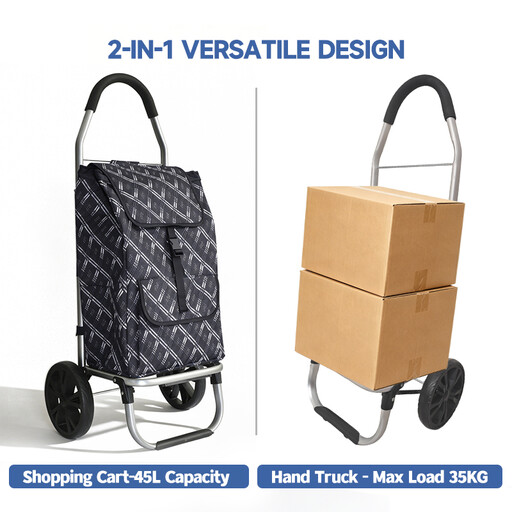
Why This Fits Their Persona: This elderly-friendly grocery cart is focused on maximum ease of use. Its light weight and smooth wheels reduce the physical effort required for weekly grocery shopping.
The frame is made of an aluminum alloy, which avoids the pitfall of a heavy and cumbersome frame. This makes the trolley easy to maneuver and lift.
Lightweight yet with a sturdy load capacity. The foldable design ensures the trolley takes up minimal space.
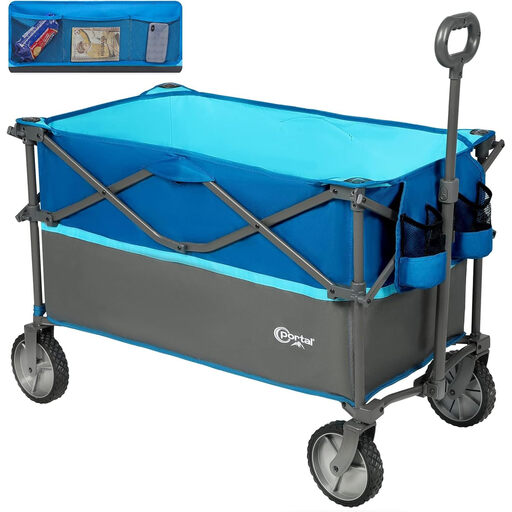
Why This Fits Their Persona: This is a folding wagon, perfect for those who transport more than just groceries. Think camping gear, garden waste, or items for a day at the beach or park.
With a steel frame and a load capacity of 120 kg, this wagon bypasses the trap of a misleading capacity. It is built for heavy and bulky transport.
Very high load capacity (120 kg) and large volume (228 litres). No assembly required and folds compactly for storage in a car or garage.
We have compiled a complete, up-to-date list of products that meet these selection criteria and applicable regulations.
The load capacity varies greatly by model. A lightweight foldable shopping trolley can often carry around 25-30 kg, which is more than enough for most grocery trips. Heavier models or a foldable hand truck can handle 60 kg or more. Always check the manufacturer's specifications for the maximum load capacity to prevent overloading and damage.
Yes, for the right situation, it is a very useful feature. If you regularly have to go up or down stairs with your groceries, the three-wheeled mechanism makes a huge difference. It essentially 'climbs' over the steps, so you don't have to lift the trolley. For those who live in a single-story home and primarily walk on flat terrain, it offers less benefit, and a model with two wheels will suffice.
Most foldable models have a simple mechanism. Often, you can fold up the base of the trolley, causing the frame to become flat. Some handles are retractable. Once folded, most trolleys are compact enough to be stored in a utility closet, under a bed, behind a door, or in the boot of a car.
