
Vandaag of morgen in huis

Kwaliteit gegarandeerd

Welkomstaanbiedingen ontgrendelen: GRATIS bezorging | Tot 80% korting | Gratis 30 dagen JoyPlus-proefperiode
Download de app
By: Joybuy Product Recommendation Officer
Tripping over a mountain of shoes the moment you open the front door. Sound familiar? A cluttered entryway is a common problem, but thankfully, the solution is simple: a good shoe rack. However, finding the right solution for your home can be a challenge. The choices are endless, from simple racks to multifunctional benches.
This article is designed to be a practical guide. We'll help you filter through the options and make a choice that fits your space, your shoe collection, and your interior style. We will look at objective specifications and practical usability so you can make an informed decision.
Before you make a choice, it's helpful to consider a few key points. This will help you find a model that truly works for your situation.
Not all shoe racks are created equal. The most common types are:
How many pairs of shoes do you need to store? Count them and be realistic. Nothing is more frustrating than a new rack that's already too small. Next, measure the available space in your hallway, bedroom, or closet. Pay attention not only to the width and depth but also to the height, especially if you're considering a stackable shoe rack. A well-planned shoe rack for the hallway can make a world of difference without getting in the way.
The material determines not only the aesthetic but also the durability. A metal shoe rack is often sturdy and easy to clean. Wooden racks or a shoe bench made of wood and steel provide a warmer, more homely feel. Pay attention to the construction and the maximum weight capacity per shelf to prevent the rack from sagging or wobbling.
Based on functionality, material, and design, we have selected some popular choices for you.
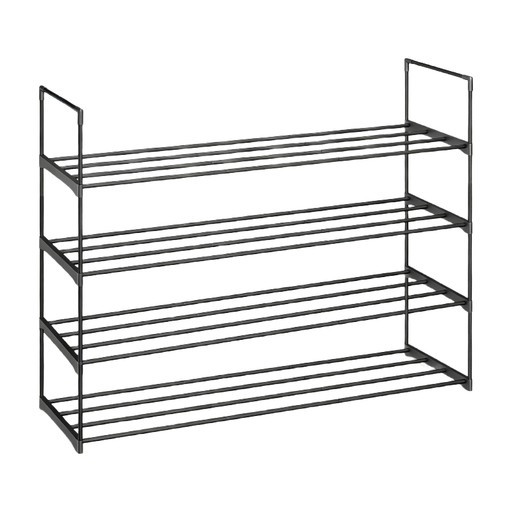
Why It Stands Out: This rack is designed for those who have a lot of shoes and need flexibility. With space for 20 to 24 pairs of shoes, it offers a serious solution for shoe storage. Its key feature is the stackable design, allowing you to expand storage space vertically.
Key Features:
Who Is It For? Families with many shoes, collectors, or anyone looking for a scalable storage solution for a closet, utility room, or spacious hallway.
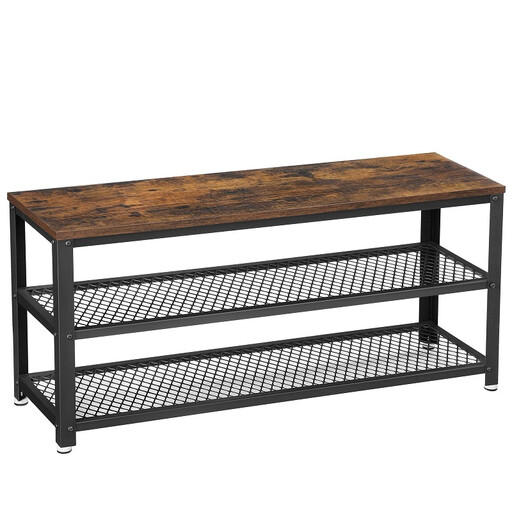
Why It Stands Out: This shoe bench is more than just a storage unit; it's a piece of furniture. The combination of vintage brown wood and a black steel frame gives it an industrial yet warm look. It not only provides space for shoes but also a place to sit.
Key Features:
Who Is It For? Anyone looking for a functional and aesthetic solution for their entryway. Ideal for those who like to sit down to put on their shoes and want to create a tidy, welcoming entrance.

Why It Stands Out: This hanging shoe organizer is the ultimate solution for those struggling with a lack of floor space. You simply hang it over a door, turning unused vertical space into an efficient 24-pocket shoe organizer.
Key Features:
Who Is It For? Residents of small spaces, students, or anyone looking for a discreet storage solution to keep shoes out of sight in a bedroom or hallway closet.
If the perfect solution for you isn't here, or if you're specifically interested in space-saving options, there are many other ways to organize your shoes neatly.
Check out our wider assortment and discover more hanging shoe organizers and other smart storage solutions.
This depends entirely on the model. A compact shoe bench often has room for 6 to 10 pairs. A standard shoe rack for the hallway with 3 or 4 tiers can hold 12 to 24 pairs. A hanging shoe organizer often has pockets for 12 pairs (24 shoes). Always check the product specifications for the exact capacity.
In a small hallway, it's smart to utilize vertical or unused space. A narrow, tall shoe rack or a stackable shoe rack is a great option. A hanging shoe organizer on the inside of a utility closet door or another door is also an excellent, space-saving choice. A shoe bench can also work if it's not too deep and serves a dual purpose as a seat.
Stability is crucial, especially with a fully loaded rack. Choose a model with a sturdy base or adjustable feet. For a metal shoe rack, look for a design with a low center of gravity. Distribute the weight evenly, placing the heaviest shoes on the bottom shelves. During assembly, ensure all screws are tightened securely according to the manufacturer's instructions.
