Vandaag of morgen in huis

Kwaliteit gegarandeerd
Download de app
A wobbly shoe rack, a model that doesn't quite fit in the hallway, or shelves sagging under the weight of your boots. Choosing the wrong shoe storage solution is a common frustration. The goal is simple: a tidy home and shoes you can find easily. But getting there can be a challenge.
This guide will help you make an informed decision. We focus on the facts: material, dimensions, and type. This way, you'll find a shoe organizer that suits your collection, space, and needs.
Before you make a choice, it's helpful to consider a few criteria. This will help you find a model that is functional for your specific situation.
The available space largely determines which type of rack is suitable.
The material affects durability, stability, and appearance.
The most important step is to measure your space before you order. Measure the width, depth, and height of the spot where the rack will go.
Also, think about capacity. How many pairs of shoes do you want to store? Keep different types of shoes in mind. Tall boots or hiking shoes need more vertical space than flat sandals. Check the distance between the shelves to avoid disappointment.
Below is a selection of three different types of shoe racks, based on their specifications and potential applications.
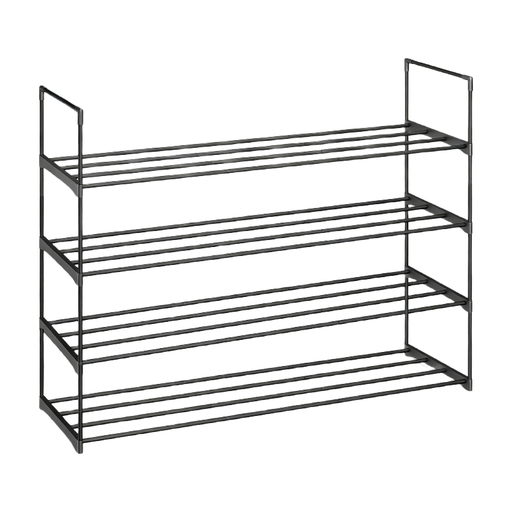
Why This Product This model from Sekey is a practical all-rounder. It is made of reinforced metal tubes with a rust-resistant coating. The four tiers offer significant storage capacity. A key feature is its stackable design, allowing you to expand storage space vertically in the future.
Advantages
Who Is This For? This rack is a great option for families or individuals with a larger shoe collection. Its stackable feature also makes it a sustainable choice for those who anticipate needing more storage space in the future.
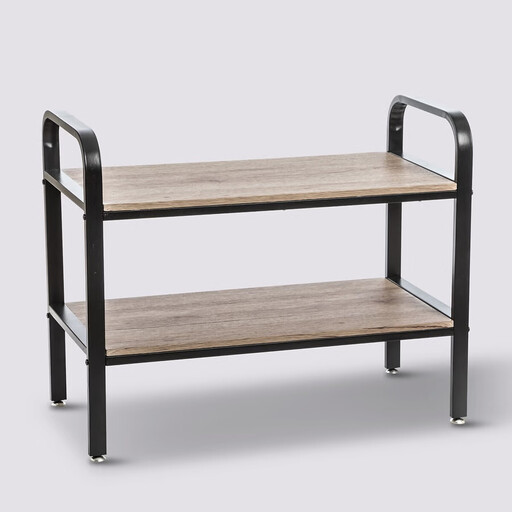
Why This Product The Jano is a compact and stylish rack that combines the robustness of metal with the aesthetic of wood (MDF). With space for six pairs of shoes, it's a modest yet functional solution. The adjustable feet are a practical detail for homes with slightly uneven floors.
Advantages
Who Is This For? This model is ideal for one or two-person households with a limited shoe collection. It fits well in interiors where a purely metal rack is less desired and, due to its size, is a good candidate for a narrow shoe rack.
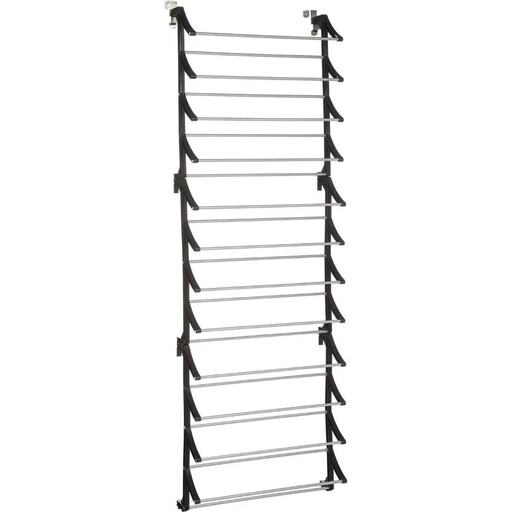
Why This Product This over-the-door shoe rack from 5five is designed to make optimal use of vertical space. With a capacity for an impressive 36 pairs of shoes, it is a highly efficient shoe organizer. The hooks are adjustable and fit doors with a thickness between 3 and 5 cm.
Advantages
Who Is This For? This is the solution for people who need a large shoe rack but have limited floor space. It is perfect for use in a walk-in closet, storage room, or on the inside of a bedroom door.
The products above offer solutions for specific needs, from large capacity to compact design. If you are looking for different dimensions, materials, or styles, you can explore more options. A wide range is available to suit various interiors and storage requirements.
Check out our full range of metal shoe racks for more alternatives.
1. How do I prevent my shoe rack from wobbling? Stability is a common concern. Choose a model with a low center of gravity or adjustable feet to compensate for uneven floors. Also, ensure you do not exceed the maximum load capacity per shelf and place the heaviest shoes on the bottom shelves.
2. How much space should I leave between shelves? This depends on your shoe collection. For sneakers and flat shoes, 15-20 cm is often sufficient. For ankle boots or high heels, you'll quickly need 25-30 cm. Measure your tallest pair of shoes to make sure they will fit. Some modular racks allow you to adjust the distance between the shelves yourself.
3. Can I use a shoe rack for other items? Absolutely. A sturdy metal shoe rack can also serve perfectly as a storage rack in the bathroom for towels and toiletries, or in the storage room for small boxes and tools. Always check the maximum load capacity per shelf before using it for other purposes.