
Vandaag of morgen in huis

Kwaliteit gegarandeerd

Welkomstaanbiedingen ontgrendelen: GRATIS bezorging | Tot 80% korting | Gratis 30 dagen JoyPlus-proefperiode
Download de app
Dreaming of brewing espresso at home that's just as rich and flavourful as the one from your favourite coffee shop? You're not alone. For many coffee lovers, getting a semi-automatic espresso machine is a natural next step. But the market is flooded with models, specifications, and marketing jargon. So, how do you know which machine is truly right for you?
As a Joybuy Product Recommendation Officer, my job is to help you make a clear choice. In this article, I'll filter the information for you and provide practical, spec-based advice. We'll look at what really matters, so you can soon be happily brewing the perfect espresso, cappuccino, or latte.
Before we dive into specific models, here are a few key factors to guide your choice. These are the features that separate a great cup of coffee from a mediocre one.
A great espresso requires stable pressure and temperature during the brewing process. Many machines advertise a high pump pressure of 15 or 20 bar. While a powerful pump is important, the actual extraction is often performed at around 9 bars. What's more important is that the pressure remains consistent. A pressure gauge on the machine can help you monitor this. Additionally, a stable water temperature is crucial for consistent flavour.
A stainless steel espresso machine is not just a beautiful addition to your kitchen; the material also offers functional advantages. Stainless steel is durable, easy to clean, and helps to maintain a stable temperature inside the machine. A heavier, more solid machine often indicates better build quality, which improves its lifespan. This type of home espresso machine is an investment you can enjoy for years to come.
Are you a fan of milk-based drinks? Then an espresso machine with a steam wand is essential. It allows you to froth milk for a creamy cappuccino or latte art. Some models offer more control over the steam power than others. Also, consider the grind. An espresso machine with a bean grinder offers convenience, while a separate grinder gives you more control and flexibility over the grind size. A good barista coffee machine for home use gives you the control you're looking for.
Based on specifications and functionality, we've highlighted a few interesting models for you.

Why It Stands Out This machine combines a compact footprint with serious specifications. The built-in pressure gauge gives you direct feedback on the 20-bar extraction pressure, which the manufacturer claims ensures a rich crema. The 1350W fast heating system means you won't have to wait long for your coffee. The brushed stainless steel housing gives it a solid and premium look.
Advantages
cappuccino machine accessible.Who Is This Machine For? Ideal for the beginner home barista looking for an affordable, compact, and capable machine. Perfect for smaller kitchens, apartments, or if you want a no-fuss appliance that still offers the opportunity to experiment.
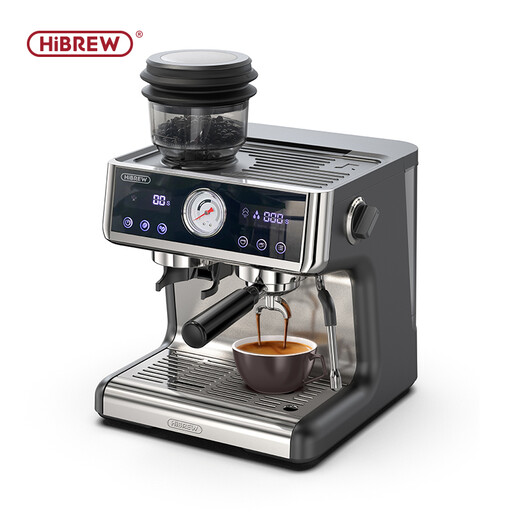
Why It Stands Out The HiBREW H7A is an all-in-one solution. Its most striking feature is the dual boiler system. This allows you to brew espresso and froth milk simultaneously, saving you a lot of time. The integrated espresso machine with a bean grinder featuring 30 grind settings gives you complete control from bean to cup. The LCD touchscreen makes setting the temperature and volume simple.
Advantages
barista coffee machine.Who Is This Machine For? For the serious home barista who wants to combine convenience and control. If you want to replicate the workflow of a coffee shop and are looking for an all-in-one appliance, this is a very comprehensive choice.
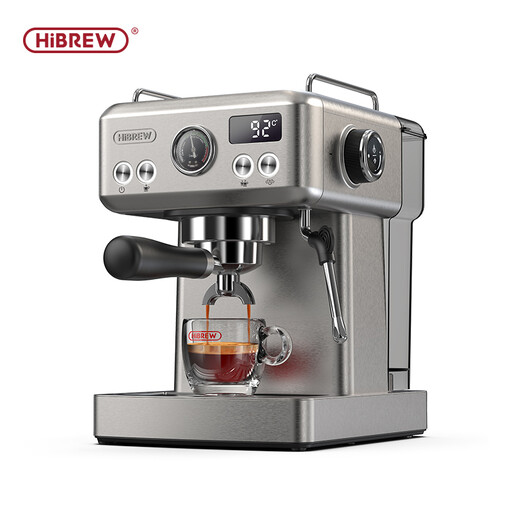
Why It Stands Out The HiBREW H10A is aimed at the purist. Its use of a 58mm portafilter is a key feature; this is the same size found in many professional commercial machines. A larger portafilter ensures a more even extraction and a fuller flavour. The machine also allows you to adjust the temperature, which is essential for those who experiment with different types of coffee beans.
Advantages
home espresso machine.Who Is This Machine For? For the advanced user or the ambitious beginner who truly wants to master the art of espresso making. If you value control over variables like temperature and a professional-sized portafilter, this is an excellent option.
A semi-automatic espresso machine gives you a lot of control, but perhaps you want to take it a step further in your coffee journey. For the ultimate enthusiast who wants to control the entire process from bean to cup, roasting your own coffee beans can be a fascinating hobby.
Curious about the possibilities? Check out our range of coffee roasting machines here and discover a new dimension of coffee.
A semi-automatic espresso machine puts you in control. You grind the beans yourself (or use pre-ground coffee), fill and tamp the portafilter, and you start and stop the extraction yourself. A fully automatic machine does all of this at the touch of a button. A semi-automatic offers more room for technique and personalisation, which many coffee lovers find to be an enjoyable ritual.
While many machines advertise 15 or 20 bars, the ideal pressure for brewing espresso is about 9 bars at the group head. A higher pump pressure (like 20 bar) ensures the machine can deliver this 9 bar pressure stably, even if the grind is very fine. So don't just focus blindly on the highest number, but on the stability that a powerful pump can offer.
That depends on your preference. An integrated grinder, like in the HiBREW H7A, is very convenient and saves space. A separate grinder often gives you more flexibility to upgrade and makes cleaning both appliances easier. For those seeking convenience and an all-in-one solution, a built-in grinder is ideal. For the purist who wants maximum control, a separate grinder is often the preferred choice.
