Caked-on grime on bathroom tiles, green algae on the patio, or stubborn stains on the garage floor. Sometimes, a standard mop or cloth just isn't enough. For those jobs that require serious scrubbing, a good scrub brush is indispensable. But which one should you choose? A manual brush with a long handle, a compact hand brush, or a modern electric version?
As a Joybuy Product Recommendation Officer, I'm here to help you make the right choice. In this article, we'll explore different types of scrub brushes, provide practical buying tips, and highlight some of our top picks for 2026. This will help you find the perfect tool for your specific cleaning task.
Buyer's Guide: What to Look For in a Scrub Brush
Before you make a decision, it's helpful to consider a few key features. This will help you find the brush that best suits your needs.
1. Manual or Electric?
The first choice is between muscle power and electric assistance.
- A manual scrub brush, often a long-handled scrub brush, is a robust and reliable choice. It's ideal for large surfaces like a patio or tile floor, allowing you to control the pressure and speed yourself.
- An electric scrub brush does the heavy lifting for you. Its rotating head performs the scrubbing action, which is a game-changer for cleaning grout, corners in the bathroom, or for anyone looking to reduce physical strain. This electric cleaning brush saves time and effort.
2. Ergonomics: The Handle and Grip
Cleaning shouldn't cause back pain. A brush with an adjustable, long handle allows you to stand upright, which is essential when cleaning floors or a patio. For detail work, like cleaning a countertop or a shower wall, a shorter hand brush with a comfortable, non-slip grip can offer more control.
3. Bristle Type and Attachments
Not every brush is suitable for every surface.
- Hard, stiff bristles are perfect for rough, durable surfaces like concrete, paving stones, and most tile floors. A good deck brush or floor scrubber will have this type of bristle.
- Specialised attachments, such as a grout brush, have a narrow, pointed shape to get deep between tiles. Many electric models come with a set of these attachments for various tasks.
Top Product Recommendations
Based on product specifications and applications, we have selected three different types of scrub brushes that excel in their respective categories.
1. emmama 2-in-1 Floor Scrub Brush with Long Handle
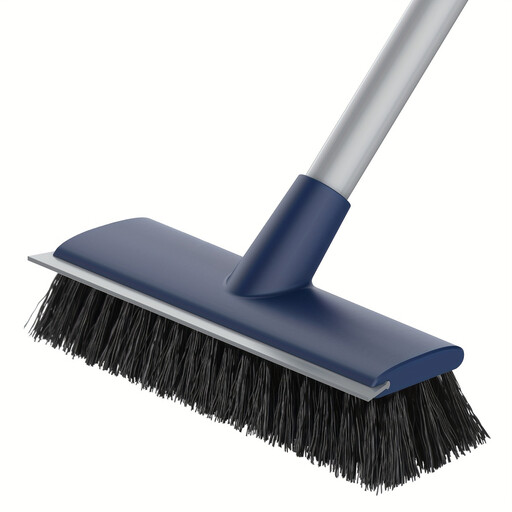
- Why it stands out: This brush combines two functions in one. After scrubbing with the stiff bristles, you can flip it over and use the built-in squeegee to wipe away water and dirt immediately. The brush head is set at a 45-degree angle, promoting a more natural working posture.
- Pros:
- 2-in-1 design: Scrubber and squeegee in one.
- Adjustable handle: The metal handle is adjustable from 49 cm to 124 cm.
- Ergonomic angle: The 45-degree angle helps reduce back and knee strain.
- Stiff bristles: Effective for removing stubborn dirt on hard floors.
- Who is it for?: Ideal for those seeking an efficient, all-in-one solution for deep cleaning large areas like the bathroom, garage, or patio.
2. Electric Cleaning Brush with 8 Attachments
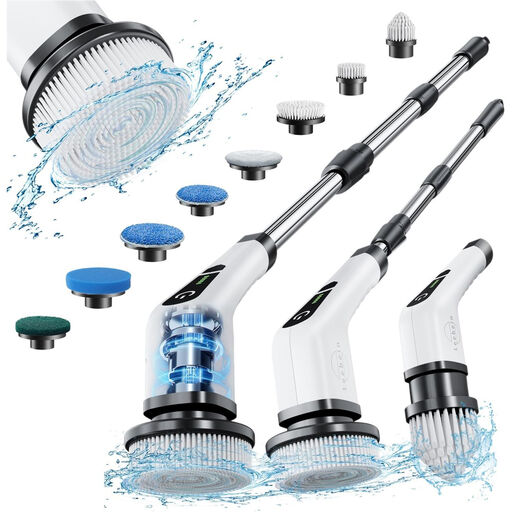
- Why it stands out: This electric scrub brush is a versatile powerhouse. With eight different attachments, it's suitable for almost any cleaning job, from scrubbing tile floors to polishing your car. Its cordless functionality and long, adjustable handle make it extremely flexible to use.
- Pros:
- Cordless and rechargeable: Up to 90 minutes of runtime after about 3 hours of charging via USB-C.
- 8 attachments: Includes brushes for floors, grout, corners, and even polishing.
- Adjustable length: The handle can be adjusted from 30 cm to 137 cm.
- Waterproof (IPX7): The brush can be rinsed under the tap. Note: not intended for use underwater.
- Two speeds: Choose between 300 and 400 RPM for the right amount of power.
- Who is it for?: Perfect for anyone who wants to save time and effort on various cleaning tasks. An excellent choice for a thorough bathroom cleaning, tackling kitchen surfaces, and for people who need an ergonomic cleaning tool.
3. 36cm Blue Hand Brush for Heavy-Duty Scrubbing
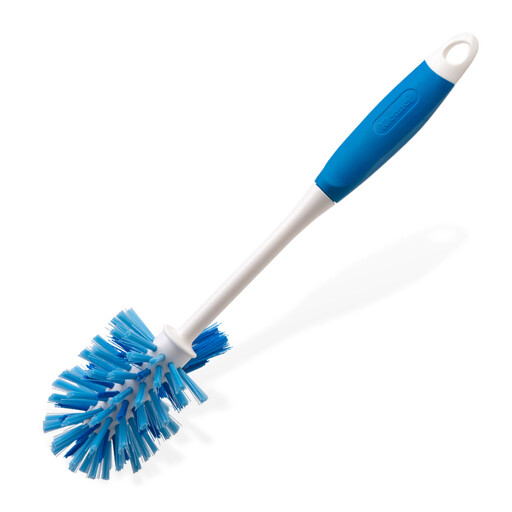
- Why it stands out: Sometimes, you just need pure, focused power. This compact hand brush is designed for heavy-duty scrubbing. The combination of a comfortable, non-slip handle and very dense, stiff bristles makes it ideal for tackling the most stubborn stains.
- Pros:
- Comfortable grip: The soft TPR rubber handle ensures control, even when wet.
- Powerful bristles: Dense, 29 mm long bristles for effective cleaning.
- Robust construction: Made of durable, moisture-resistant plastic.
- Compact size: The 36 cm length provides good leverage for manual scrubbing.
- Who is it for?: For anyone looking for a powerful, manual brush for targeted cleaning jobs. Think scrubbing stairs, small patio sections, workbenches, or stubborn stains on the floor.
Haven't Found What You're Looking For?
If the perfect brush for your job isn't listed here, or if you're curious about other cleaning tools, many more options are available that might better suit your specific needs.
View our full range of scrub brushes and cleaning sets
Frequently Asked Questions
What's the best way to clean grout between tiles?
For cleaning grout, a brush with a narrow profile and stiff bristles is most effective. A special grout brush is designed for this purpose. An electric scrub brush often comes with a cone-shaped attachment that is perfect for getting deep into the grout lines without damaging the surrounding tiles.
Can I safely use an electric scrub brush in the shower?
Yes, you can, provided the device has an appropriate waterproof rating. A model with an IPX7 rating, like the electric brush mentioned above, is resistant to submersion and can therefore be safely used and rinsed in the shower or under a tap. Always check the manufacturer's specifications and never fully submerge the device while it is charging.
Which scrub brush is suitable for a wooden deck?
Be cautious with wooden surfaces. A deck brush with extremely hard metal or very stiff plastic bristles can damage soft wood. Opt for a brush with firm but slightly more flexible synthetic bristles. It is always advisable to test on a small, inconspicuous area first to see if the brush causes any scratches.


