
Vandaag of morgen in huis

Kwaliteit gegarandeerd

Welkomstaanbiedingen ontgrendelen: GRATIS bezorging | Tot 80% korting | Gratis 30 dagen JoyPlus-proefperiode
Download de app
Separating waste is common practice in many households. But finding a great recycling bin that is practical, hygienic, and stylish can be a real challenge. Many models look good at first glance but prove to be impractical in daily use. Before you make a choice, it's wise to be aware of a few common pitfalls.
These are the three problems we often see with poorly designed recycling bins:
A good recycling bin should make waste separation easier, not harder. Let's look at the specifications that truly matter.
To avoid a bad purchase, it's essential to evaluate three core aspects: capacity, material, and the extra features that determine its ease of use.
The right capacity depends on the size of your household and how often you take out the rubbish.
Also, consider the shape. Do you have a narrow space in your kitchen? A slimline bin is a smart solution to make the most of the available room.
The choice of material affects both the appearance and the maintenance required.
Some features might seem like a luxury, but they significantly enhance daily convenience.
Based on these criteria, we have selected a few models that suit different types of households.
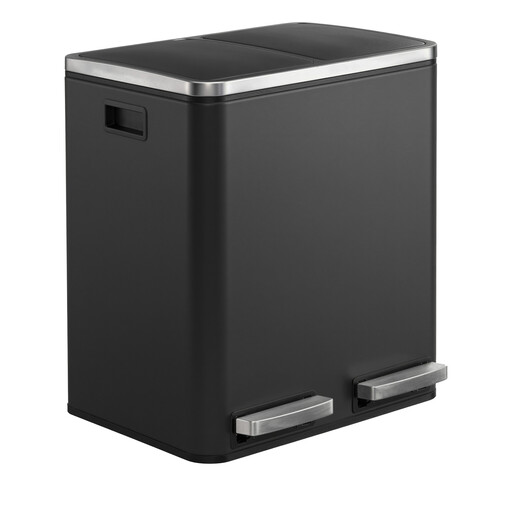
Why This Fits Their Persona: Ideal for one or two-person households in an apartment or studio. Its compact size (30 litres total) takes up minimal floor space, while the two compartments make separating general waste and recycling simple.
The two separate pedals are sturdy and designed for hygienic, hands-free use. The lid features a soft-close mechanism, ensuring it closes silently and avoiding the pitfall of a loud, flimsy pedal.
Compact and space-saving design. Two removable inner buckets of 15 litres each make emptying and cleaning easy. The steel body is simple to keep clean.
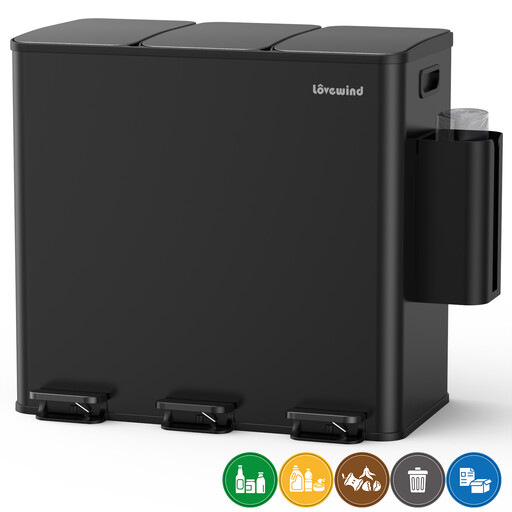
Why This Fits Their Persona: Perfect for families that produce a lot of waste and want to separate the three main streams (e.g., organic, plastics, general) in one central bin. The total capacity of 60 litres is more than enough.
This model tackles the 'impractical compartments' pitfall. The three 20-litre buckets are large enough for standard bin liners. The stainless steel body has a fingerprint-resistant finish, which saves a lot of cleaning effort.
A complete solution for waste separation. Each compartment has its own pedal and a soft-close lid. The included magnetic labels help to clearly mark the waste streams.
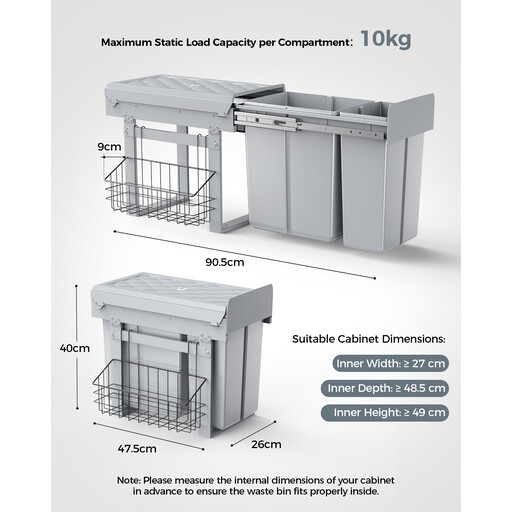
Why This Fits Their Persona: For those who want a tidy kitchen without a freestanding bin in sight. This built-in bin system is fully integrated into a kitchen cabinet, creating a sleek and minimalist result.
By definition, this system is never in the way. It completely solves the problem of an awkwardly placed bin. The 10 + 20 litre layout is practical for separating, for example, organic waste and general waste directly under the countertop.
Completely out of sight and space-saving. The pull-out rail system provides smooth access to both buckets. Suitable for most standard kitchen cabinets from 30 cm wide.
We have compiled a complete, up-to-date list of products that meet these strict selection criteria and local regulations.
As a rule of thumb, you can use the following guidelines:
More important than the total capacity is the distribution across the compartments. Check which waste streams (e.g., plastics, organic, paper, general) your local council collects separately and match the compartment sizes accordingly.
The organic waste compartment, in particular, can cause odours. Empty this section every few days, especially in the summer. Use biodegradable bags. It's best to clean the inner buckets regularly with soapy water and a splash of vinegar or some baking soda. Some bins also have space for an odour filter in the lid.
Neither is inherently 'better'; it depends on your preference. Stainless steel often looks more luxurious and is very robust. A model with a fingerprint-proof coating is recommended for easier maintenance. Plastic is lighter, doesn't dent, and is often a more sustainable choice if made from recycled material. The decision is a trade-off between design (stainless steel) and practical convenience (plastic).
