
Vandaag of morgen in huis

Kwaliteit gegarandeerd

Welkomstaanbiedingen ontgrendelen: GRATIS bezorging | Tot 80% korting | Gratis 30 dagen JoyPlus-proefperiode
Download de app
In most modern communities, separating waste is the standard. A good recycling bin is therefore not a luxury, but a necessity. However, the market offers a plethora of options, and not every bin is worth the money. Many models look practical at first glance but prove to be cumbersome or break down quickly in practice.
Before you make a decision, it's helpful to know the most common pitfalls. This will help you avoid frustration and an unnecessary expense.
pedal bin for recycling is hygienic, but the mechanism is often its weakest point. Budget-friendly models use plastic parts that can break or fail after a few months of intensive use.To find a model that suits your household and kitchen, it's wise to focus on a few key specifications. These determine how practical the bin will be in daily use.
The first question is how many waste streams you want to separate.
kitchen bin with 2 compartments is ideal for separating general waste and recyclables (like plastic, metal, and cartons).The required capacity depends on the size of your household and how often your local council collects waste. A general guideline:
The material determines not only the appearance but also the durability and maintenance.
stainless steel bin with 3 compartments looks sleek and is hygienic. Specifically look for a fingerprint-proof coating. This will save you a lot of cleaning effort.recycling bin is lightweight, doesn't dent, and is often more budget-friendly. High-quality plastic is durable and easy to clean.The details make all the difference in user-friendliness.
Based on these criteria, we have selected a few models that are well-suited for different households.
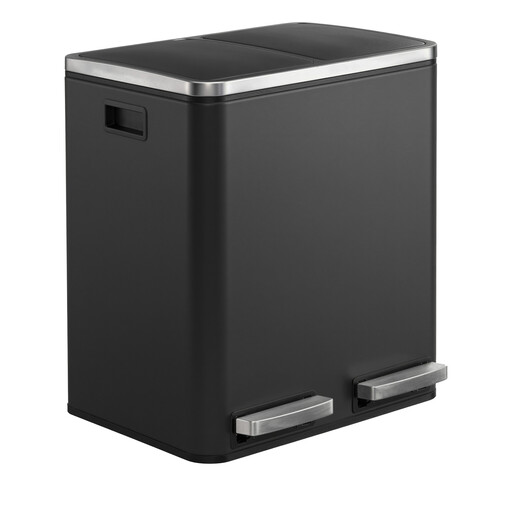
Why This Fits Their Persona: Perfect for one or two-person households or kitchens with limited space. The two 15-litre compartments are ideal for basic separation of general waste and recyclables without a large footprint.
The separate pedals for each compartment are robust, and the inner buckets are easy to remove, making emptying a hassle-free task.
Quiet soft-close lids and a sleek, modern black steel design that fits into many kitchen decors.
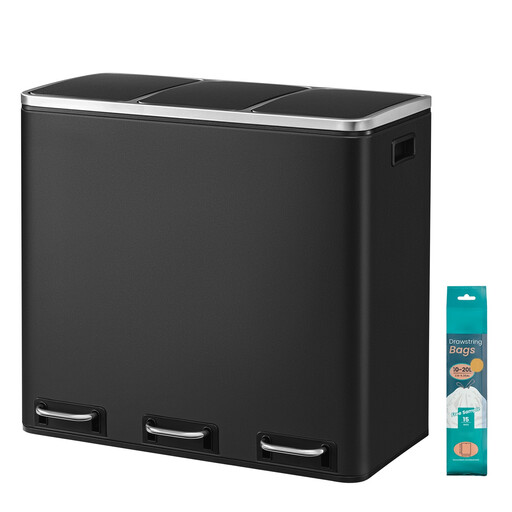
Why This Fits Their Persona: With a total capacity of 54 litres spread across three compartments, this model is ideal for families looking to separate general waste, recyclables, and organic waste or paper. The capacity is generous enough to avoid daily emptying.
The steel construction is robust, and the three separate pedals and lids ensure hygienic and clear separation without the risk of cross-contamination.
Efficient separation in a single `recycling bin`. Each compartment has its own pedal and a silent soft-close lid.
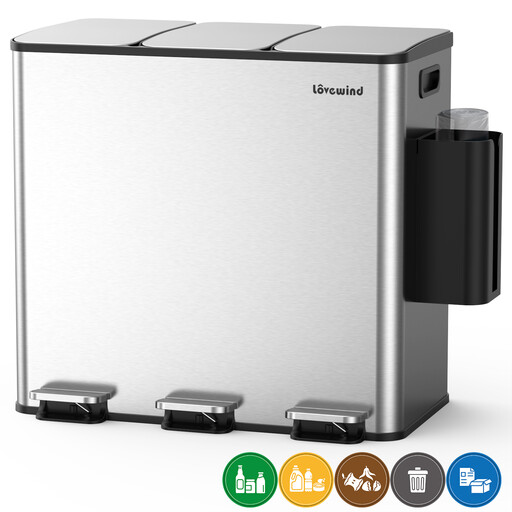
Why This Fits Their Persona: This `stainless steel bin with 3 compartments` combines a large 60-litre capacity with a premium look. It's ideal for those who don't want to sacrifice functionality for design in a modern kitchen.
The stainless steel features a fingerprint-resistant coating, avoiding the common pitfall of constant smudges. According to the manufacturer, the pedal mechanism is reinforced and tested for long-term use.
Large capacity (3x20L), a 90° stay-open feature, and convenient magnetic labels to mark the waste streams.
We have a curated selection of bins that meet the practical demands of modern households.
A good rule of thumb is to plan for about 10-15 litres of capacity per person in the household, distributed across the different waste streams. For a family of four, a total volume of 40 to 60 litres is a practical starting point. This ensures you don't have to empty the bins every day.
Choose a model with well-fitting lids. This is the first step in controlling odours. Empty the organic waste compartment (fruit, vegetable, and garden waste) regularly, preferably every other day. Clean the inner buckets weekly with soapy water and let them dry thoroughly. Some bins also offer space for a carbon filter in the lid, which can also help.
Not necessarily. Stainless steel is durable, hygienic, and has a sleek appearance, but it's important to choose a version with a fingerprint-proof coating to avoid constant cleaning. High-quality plastic can be an excellent alternative: it's lighter, won't rust, is less prone to denting, and is often easier to keep clean. The final choice depends on your personal preference, budget, and kitchen style.
