
Vandaag of morgen in huis

Kwaliteit gegarandeerd

Welkomstaanbiedingen ontgrendelen: GRATIS bezorging | Tot 80% korting | Gratis 30 dagen JoyPlus-proefperiode
Download de app
Welcoming a puppy brings immense joy, but also a new responsibility: choosing the right nutrition. The market for puppy food is vast, and labels can be confusing. An incorrect choice can lead to digestive issues or suboptimal growth. This article provides a practical guide to understanding the specifications of puppy kibble and making an informed choice that suits your young dog's needs.
Before you choose a bag of food, it's helpful to know which elements are crucial for a growing puppy. The following criteria will help you evaluate the product information on the packaging.
Puppies have a higher protein requirement than adult dogs for building muscles and tissues. Check the ingredient list for the protein source. A high-quality animal protein (such as chicken, lamb, or fish) listed as the first ingredient indicates a food with high biological value. The crude protein percentage gives an indication of the total amount, which is typically higher for puppies.
The nutritional needs differ significantly between a Chihuahua and a Great Dane.
Grain-free puppy food is a popular choice, especially for dogs with sensitive digestion or potential allergies. In these foods, grains like wheat, corn, and soy are replaced with alternative carbohydrate sources such as sweet potato, peas, or lentils. While not every puppy needs to eat grain-free, it can be a consideration if you notice your dog reacts sensitively to traditional kibble.
Fats are an important source of energy. Look for the presence of omega-3 and omega-6 fatty acids, often derived from fish oil or flaxseed. In particular, DHA (docosahexaenoic acid), an omega-3 fatty acid, is important for the development of a puppy's brain and vision.
Based on the criteria above, we have made a selection of products with clear and verifiable specifications. These recommendations are based on the product information as provided by the manufacturer.
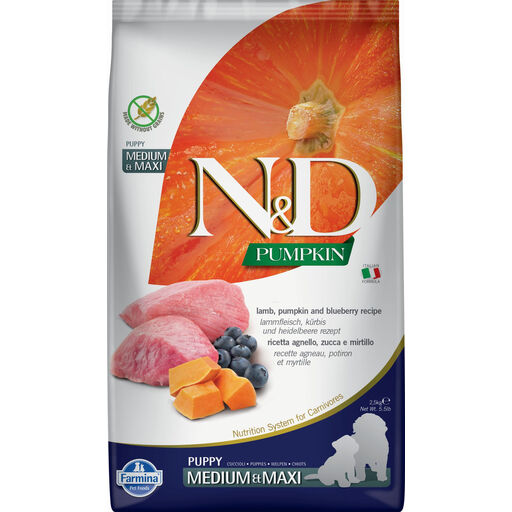
Why this product: This food from Farmina is specifically developed for puppies of medium and large breeds. The formula is based on a high content of animal protein and is completely grain-free, making it an interesting option for owners looking for a premium puppy food.
Benefits (based on product specifications):
Who is this for: Owners of medium to large breed puppies who are seeking a food with a very high percentage of animal protein and a grain-free composition.
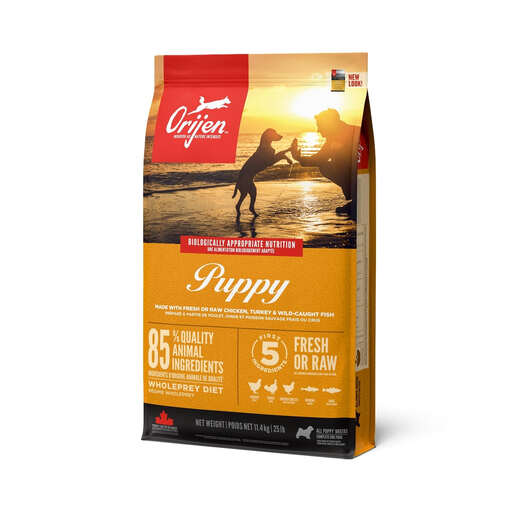
Why this product: Orijen is known for its "Biologically Appropriate" philosophy, where the food mimics a dog's natural prey. This dog food for puppies contains a wide variety of animal ingredients in WholePrey ratios (meat, organs, and cartilage).
Benefits (based on product specifications):
Who is this for: Owners looking for a food with an exceptionally high and diverse meat content. The large 11.4 kg bag makes it an economical choice for owners of large breeds or multiple puppies.

Why this product: Eukanuba offers scientifically formulated nutrition that focuses on specific functional benefits. This variant for medium breed puppies concentrates on growth, learning ability, and dental health.
Benefits (based on product specifications):
Who is this for: Owners of medium breed puppies who are looking for a food that provides not only basic nutrients but also specific support for brain and dental development.
Every puppy is unique and has individual needs. The products above are examples of different approaches to puppy nutrition. If this selection doesn't fully match what you're looking for, perhaps due to a different budget, breed size, or specific dietary requirements, a broader range is available.
Explore our full selection and compare the specifications of various brands for yourself.
The correct portion size depends on your puppy's weight, age, breed, and activity level. Always consult the feeding guide on the packaging as a starting point. Divide the daily amount into several meals (3-4 for young puppies, 2 for older puppies). Monitor your dog's body condition and adjust the amount if necessary.
The transition depends on your dog's expected adult size. A general guideline is:
Not necessarily. Grain-free food is an excellent option for puppies with a diagnosed grain intolerance or allergy. For most puppies, however, high-quality grains are a perfectly good source of energy and fibre. The quality of the protein source and the overall balance of the food are generally more important factors than the presence or absence of grains.
