
Vandaag of morgen in huis

Kwaliteit gegarandeerd

Welkomstaanbiedingen ontgrendelen: GRATIS bezorging | Tot 80% korting | Gratis 30 dagen JoyPlus-proefperiode
Download de app
A proper pruning session keeps your garden healthy and tidy. But with the wrong tools, it quickly becomes a frustrating chore. A dull shear that crushes branches, a battery that dies after ten minutes, or a model completely unsuitable for your shrubs. As a Joybuy Product Recommendation Officer, I see where many people go wrong. Let's cut through the marketing jargon and look at what really matters.
Before you invest in new pruning tools, it's important to recognise the most common pitfalls:
pruning shear as the solution for everything. In practice, this leads to damaged plants and broken tools. A fine garden shear is perfect for roses but useless for a thick, old branch.cordless electric pruner is often based on cutting thin, soft twigs. As soon as you tackle thicker branches, the battery can drain much faster than expected.To avoid a bad buy, focus on a few objective specifications. These determine whether the tool is suitable for your garden and how long it will last.
This is perhaps the most important choice. It determines how the branch is cut and directly affects the health of your plants.
Always check the maximum cutting diameter specified by the manufacturer. Trying to cut a branch thicker than recommended will not only damage your tool but is also dangerous.
telescopic lopper offers extra reach for higher or deeper branches.pruning saw is indispensable for maintaining trees and large shrubs.The quality of the blade determines its sharpness and durability. Blades made of SK5 carbon steel are known for their ability to stay sharp for a long time and provide a clean cut. A non-stick coating (like Teflon) is a useful addition. It reduces friction and prevents plant sap and resin from sticking to the blades, making cleaning easier.
Based on these objective criteria, we have selected a few products that suit different types of gardeners.
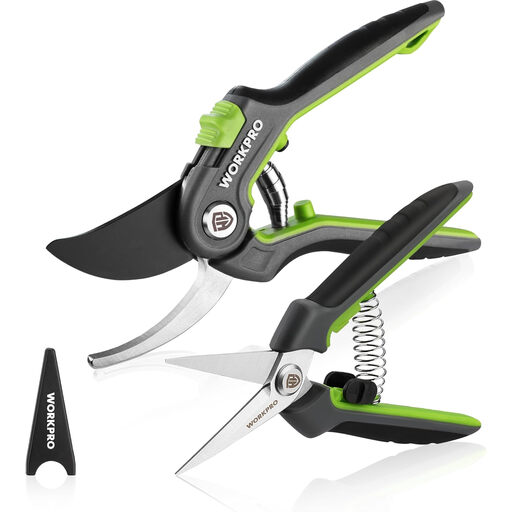
Why it's a match: This set provides an excellent start. You get a robust bypass pruner for general pruning and a smaller, precision shear for harvesting flowers or herbs. Ideal for anyone looking for a complete basic kit without a large investment.
By offering two different shears, this set bypasses the "one-size-fits-all" trap. The bypass pruner is made of SK5 steel, which avoids the pitfall of inferior, quickly dulling blades.
Two specialised tools for the price of one. The bypass pruner has a cutting capacity of up to 19 mm for fresh wood, while the harvesting shear is perfect for precision work.
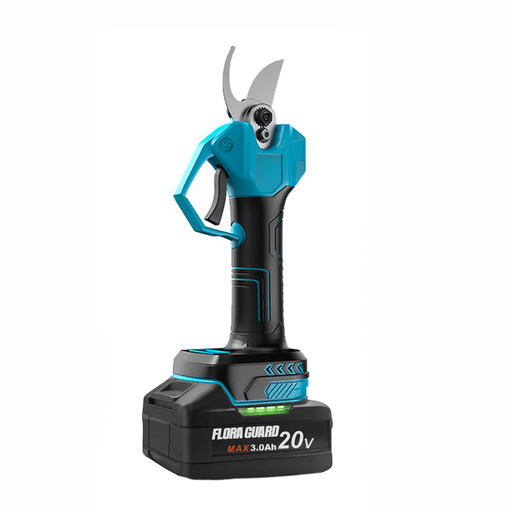
Why it's a match: For those with a larger garden or who simply want to get the job done faster and with less effort. This electric pruner effortlessly tackles thicker branches, significantly reducing the strain on your hands and wrists.
This model comes with two 3000mAh batteries. This directly addresses the pitfall of unrealistic battery claims, as you always have a fully charged battery on hand for extended jobs.
Powerful and effortless pruning of branches up to 35 mm thick. The included dual batteries ensure you can work without interruption, even on larger projects.
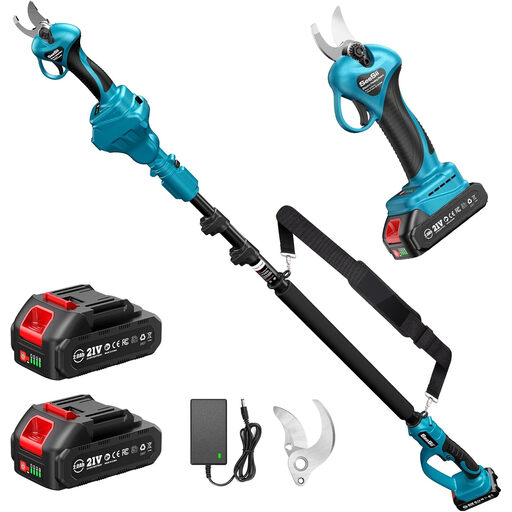
Why it's a match: For safely and efficiently pruning high branches in trees or large shrubs. The telescopic pole allows you to work from the ground, avoiding the risk of an unstable ladder.
This is the ultimate example of a specialised tool. It's not a "one-size-fits-all" product, but a specific solution for a difficult and potentially dangerous job: pruning at height.
A working reach of up to 4.5 meters (including the user) thanks to the 2.4-meter long telescopic pole. The electric power makes cutting through branches up to 33 mm at height effortless.
Didn't find what you were looking for? We've compiled a complete, up-to-date list of products that meet these objective selection criteria.
A bypass pruner has two blades that glide past each other, just like a regular pair of scissors. This provides a clean cut and is ideal for living branches and stems. An anvil pruner has a single blade that closes onto a flat surface. This is more powerful and better suited for removing hard, dead wood, but it can slightly crush living branches.
This depends on usage and the quality of the steel. A good rule of thumb is to check your tools at the beginning of the pruning season. If you notice you need to apply more force or that the cuts are no longer smooth, it's time to sharpen them. Clean the blades after each use to maintain their sharpness.
For gardeners with a lot of pruning to do, larger gardens, or reduced hand strength, a cordless pruner is an excellent investment. It significantly reduces physical effort and speeds up the work. For a small garden with only light pruning tasks, a good manual bypass pruner is often sufficient.
