
Vandaag of morgen in huis

Kwaliteit gegarandeerd
Download de app
Categorieën

The wrong pruning shears can lead to frustration: a dull blade that crushes branches instead of cutting them, a handle that causes blisters, or a model that rusts after just one season. Choosing the right tool isn't about grabbing the most expensive model, but about matching its specifications to the job at hand. This guide will help you make an informed decision based on key product parameters, ensuring you find the perfect tool for your garden.
Before making a choice, it's helpful to understand the key features of pruning shears. These criteria determine how the tool performs and whether it's suitable for your specific pruning work.
There are two main types:
For most gardening tasks, such as pruning roses, shrubs, and young trees, bypass pruners are the standard choice.
Below is a selection of pruning tools, each with specific features for different gardening tasks. The selection is based on product specifications and intended use.
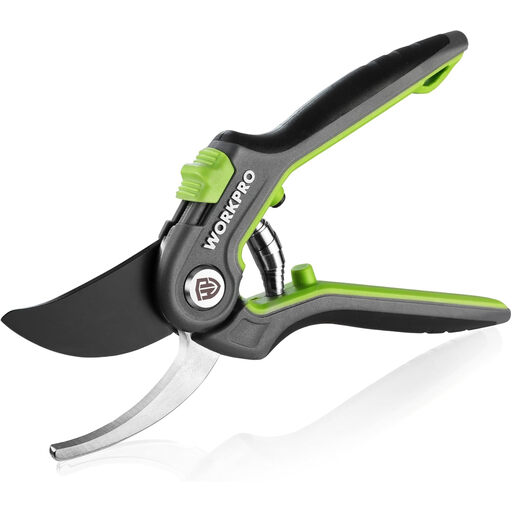
Why we chose it: This is a classic bypass pruner for general garden maintenance. The blade is made of SK5 steel with a black coating to prevent rust. The design focuses on ease of use, with a spring that automatically opens the shears and a safety lock.
Pros
Who is this for? This model is a solid choice for hobby gardeners looking for a reliable pruning tool for the regular maintenance of flowers, shrubs, and young plants.
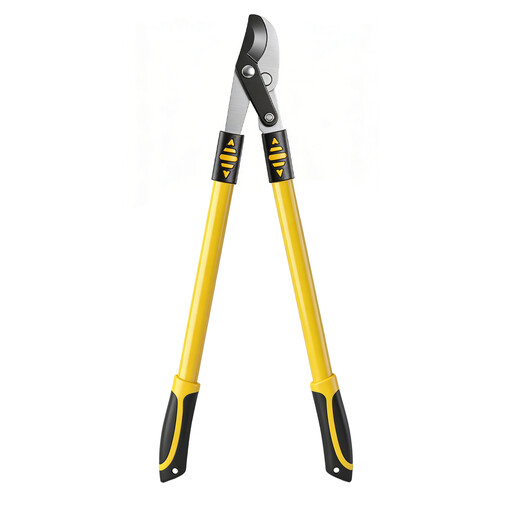
Why we chose it: When standard pruners aren't enough, these loppers provide the necessary leverage and power. With a length of 26 inches (approx. 66 cm) and a robust construction, this tool is designed for heavier-duty tasks. The SK5 steel blade is hardened and precision-ground.
Pros
Who is this for? Ideal for garden owners with mature shrubs and trees who need to regularly prune thicker branches. A great addition for anyone needing more power than hand pruners can offer.
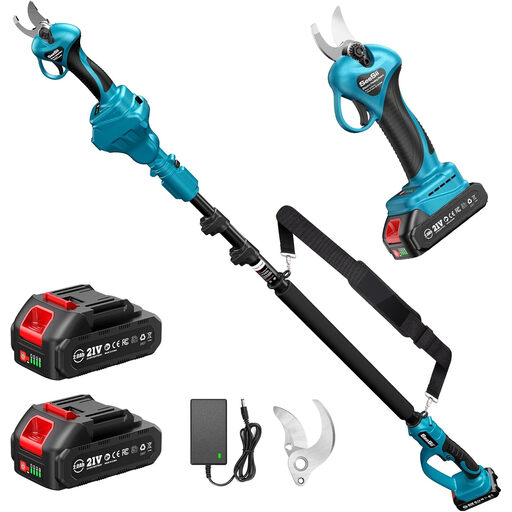
Why we chose it: This cordless electric pruner combines power with reach. It's a 2-in-1 system: a powerful handheld shear and a telescopic pruner for pruning trees at height. The 600W brushless motor drives the SK5 steel blades for effortlessly cutting through thick branches.
Pros
Who is this for? This is a professional-grade pruner for the serious garden enthusiast, orchard owner, or professional who needs to work efficiently and safely at height or has large volumes of pruning work.
These three products represent different solutions for specific pruning tasks. However, your garden may require a different type of tool, such as hedge shears, a pruning saw, or an anvil pruner for dead wood. For a broader overview of available options, you can browse our full range.
️ Discover more in the Garden & Outdoor Tools
1. What is the difference between a bypass and an anvil pruner? A bypass pruner has two blades that glide past each other, similar to a pair of scissors. This provides a clean cut and is best for live, green wood. An anvil pruner has a single blade that presses against a flat surface (the anvil). This is more powerful and better suited for hard, dead wood, but it can crush live branches.
2. How do I maintain my pruning shears? Clean the blades after each use to remove sap and debris. Dry the shears thoroughly to prevent rust. Periodically sharpen the blades with a suitable sharpening stone to maintain their edge. A drop of oil on the pivot point will keep the shears moving smoothly.
3. When is an electric pruner a good choice? A cordless electric pruner is worth considering if you have large volumes of pruning, have difficulty applying force with manual shears, or regularly prune branches that are near the maximum capacity of hand shears. It saves time and significantly reduces the strain on your hands and wrists.
Written by: Joybuy Product Recommendation Officer