Buying a pressure washer seems simple until you look at the specifications: operating pressure in bar, power in Watts, and water flow rate in litres per hour. The choice between a corded model or a cordless pressure washer adds another layer of complexity. The wrong choice can leave you with a machine that's too weak for your dirty patio or too powerful for your car's paintwork. This guide will help you make an informed decision based on key parameters, ensuring you find the right tool for the job.
What to Consider When Buying a Pressure Washer?
To choose the right pressure washer, it's important to understand a few key specifications. These determine the machine's performance and suitability for your specific cleaning tasks.
Operating Pressure (bar) and Water Flow Rate (L/h)
The operating pressure, expressed in bar, indicates the force of the water jet. The water flow rate, measured in litres per hour (L/h), determines how much water the unit moves per hour. The combination of these two factors defines the cleaning power.
- Light-duty cleaning (up to 120 bar): Suitable for washing cars, garden furniture, and bicycles. A lower pressure prevents damage to delicate surfaces.
- Medium-duty cleaning (120-160 bar): Ideal for patios, driveways, and fences with normal levels of dirt. This is a great all-around choice for most households.
- Heavy-duty cleaning (from 160 bar): Necessary for removing stubborn dirt, moss, and grime from robust surfaces like concrete and masonry.
Type: Corded Electric or Cordless?
The choice between a corded electric pressure washer and a cordless pressure washer depends on your needs for power and mobility.
- Corded Electric Pressure Washer: Generally offers higher and more consistent pressure and water flow. You are not limited by battery runtime. The disadvantage is the restricted freedom of movement due to the power cord.
- Cordless Pressure Washer: Offers maximum freedom. You are not tied to a power outlet, which is convenient for jobs far out in the garden or in locations without electricity. However, the battery life and maximum pressure are often more limited than with corded models.
Accessories
The included accessories determine the versatility of the machine. Common examples include:
- Dirt Blaster: A rotating pencil jet for very stubborn dirt.
- Surface Cleaner: An attachment with a shroud that prevents splashing and cleans large areas evenly.
- Foam Cannon (Foam Lance): For applying detergent, often used when using a
pressure washer for cars.
Our Top Pressure Washer Picks for 2026
Below is a selection of models with different specifications, suitable for various applications. These recommendations are based on product parameters.
1. 1500W Cordless Pressure Washer
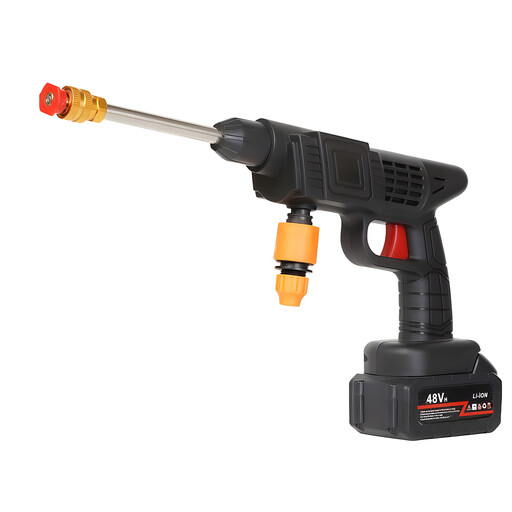
- Why we chose this product: This model combines mobility with ease of use. The rechargeable lithium battery eliminates the need for a power source, while the ergonomic pistol grip design provides comfort during operation. The threaded connection for the water hose ensures a secure and leak-proof fit.
- Key Features:
- Power: 300W
- Peak Pressure: 30 bar
- Battery Capacity: 15000 mAh with a runtime of approximately 40 minutes.
- Safety: Intelligent charging protection automatically stops charging when the battery is full.
- Who is this for: Users looking for a lightweight, portable solution for various jobs like cleaning the car, garden furniture, or small patios, without the restriction of a cord.
2. Gisam Cordless Pressure Washer with Dual Battery
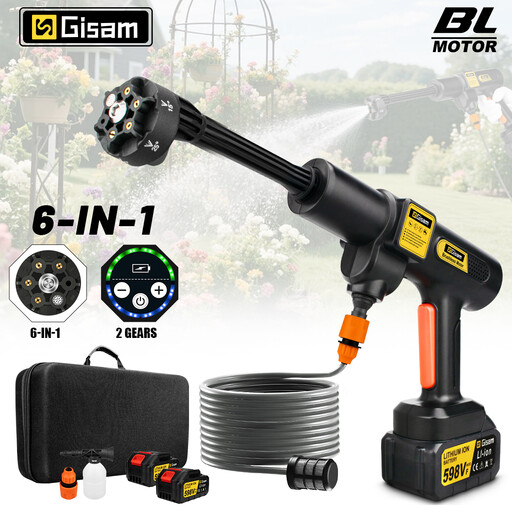
- Why we chose this product: This model stands out by including two 3000mA batteries, which significantly extends the total runtime. The adjustable water pressure and the 6-in-1 multi-function nozzle make the device highly versatile, from powerful cleaning to gently watering plants.
- Key Features:
- Pressure: Adjustable from 25 to 65 bar (Max 507 PSI).
- Battery: 2 x 3000mA batteries for extended operating time (up to 45 minutes per battery in low-pressure mode).
- Versatility: 6-in-1 nozzle and a 180° rotating nozzle for hard-to-reach areas.
- Water Source: Can draw water from various sources like a bucket or river, thanks to the included filter.
- Who is this for: Ideal for users who want the flexibility of a cordless model but need longer runtime and more setting options for both cleaning and gardening tasks.
3. 2200W Electric Pressure Washer 180 Bar
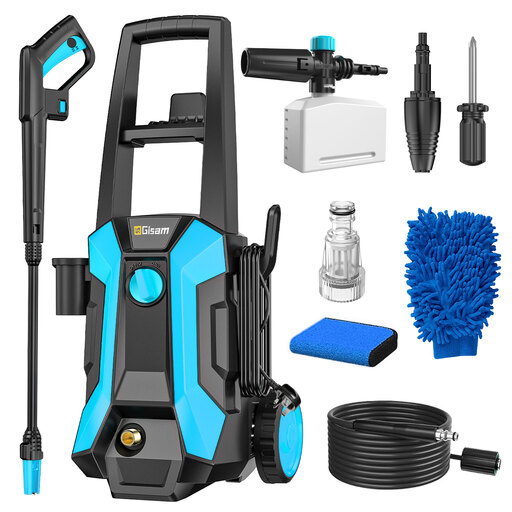
- Why we chose this product: This is a
powerful pressure washer designed for more demanding tasks. The 2200W motor delivers a high pressure of 180 bar and a substantial water flow rate of 480 L/h. The integrated reel for the 8-metre hose simplifies storage and prevents kinks.
- Key Features:
- Power: 2200W
- Pressure: 180 bar
- Water Flow Rate: 480 L/h
- Ease of Use: Integrated hose reel and an 8-metre hose for a large working radius.
- Accessories: Includes a foam sprayer, rotating nozzle, and a high-pressure spray gun.
- Who is this for: Homeowners looking for a powerful, reliable solution for intensive cleaning tasks, such as cleaning large, heavily soiled driveways, patios, and fencing.
Didn't Find What You're Looking For?
A clean outdoor space starts with the right tools. But proper maintenance indoors is just as essential. For the optimal performance of your household appliances, like your washing machine, having the right parts and accessories is crucial. Consider items like water hoses, filters, or descalers that can extend their lifespan.
Explore our range of washing machine accessories to maintain your equipment.
Frequently Asked Questions about Pressure Washers
1. How much bar do I need for my patio? For a standard patio with green algae or general grime, a pressure between 130 and 160 bar is usually sufficient. For very stubborn dirt on non-sensitive stone like concrete, a higher pressure may be desirable. For best results, use a surface cleaner attachment for an even finish without splashing.
2. Can I use any pressure washer to wash my car? No, excessive pressure can damage your car's paintwork, rubber seals, and other delicate components. Use a pressure washer with adjustable pressure or a model with a maximum pressure of around 120 bar. Always maintain a safe distance (at least 30 cm) and use a wide fan spray—never the pencil jet or dirt blaster.
3. What's the difference between a pressure washer and a high-pressure sprayer? These terms are often used interchangeably and, in practice, refer to the same device. "Pressure washer" is the more formal name for the machine that pumps water at high pressure. "High-pressure sprayer" is a more colloquial term that can refer to the entire unit or sometimes specifically to the spray gun itself.
Written by the Joybuy Product Recommendation Officer