
Vandaag of morgen in huis

Kwaliteit gegarandeerd

Welkomstaanbiedingen ontgrendelen: GRATIS bezorging | Tot 80% korting | Gratis 30 dagen JoyPlus-proefperiode
Download de app
A dead phone battery when you're on the go; it's a familiar problem. A good power bank, or portable charger, is no longer a luxury but a necessity. However, the market is flooded with models that promise the world. Unfortunately, vague specifications and marketing jargon often lead to a disappointing purchase.
As a Joybuy Product Recommendation Officer, I'll help you cut through the noise. We'll focus on the facts so you can choose a power bank that actually does what it's supposed to do. Let's start with the most common pitfalls.
To avoid a bad buy, focus on a few key specifications. These determine whether a power bank is right for your needs.
Consider what you need the portable charger for.
Speed is determined by power output, measured in Watts (W). For modern smartphones, including most iPhones and Samsung models, a power bank with USB-C and support for Power Delivery (PD) is recommended.
Think about how you want to use the power bank.
Below are some popular choices, tailored to different user profiles.
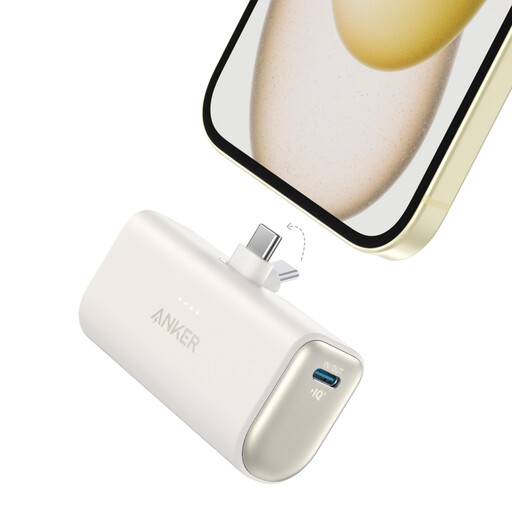
Why it's a good fit: This is an extremely compact power bank that fits easily in your pocket or a small bag. Perfect for a quick top-up on the train or between appointments.
The built-in, foldable USB-C connector solves the 'forgotten cable' problem. The 22.5W specification is clear and provides true fast charging for most modern phones.
Extremely compact size and no loose cables needed, thanks to the integrated USB-C plug.
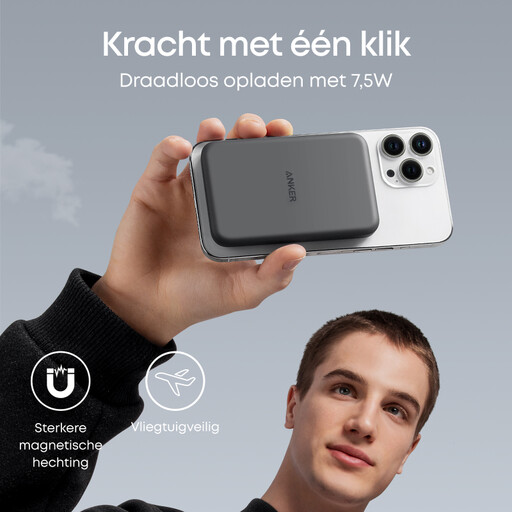
Why it's a good fit: For users of a recent iPhone (12-series or newer), this MagSafe power bank offers ultimate convenience. You just snap it magnetically onto the back of your phone for hassle-free wireless charging.
This model is specifically designed for one purpose: wireless charging via MagSafe. The 5000mAh capacity is realistic for a quick top-up and doesn't pretend to be more than that, so you know exactly what you're getting.
Seamless magnetic attachment and wireless charging for compatible iPhones. No cables required.
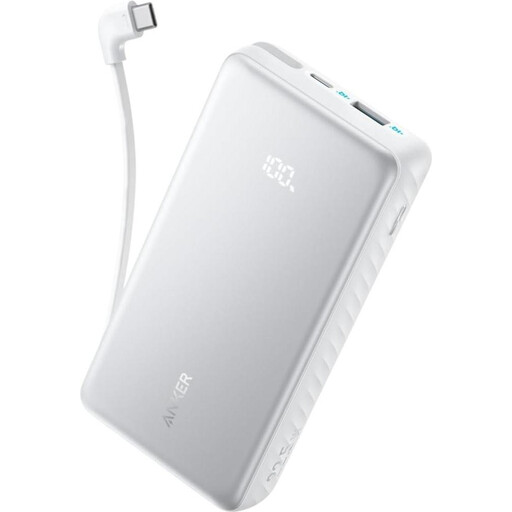
Why it's a good fit: With 20,000mAh, you have enough power for a whole weekend or to charge multiple devices. Ideal for travellers, students, or professionals who rely on their devices all day.
The large capacity is clearly specified, so you know you can expect multiple charges. The combination of USB-C and USB-A ports offers flexibility for different cables and devices.
High capacity for charging a phone multiple times or powering several devices. Supports PD fast charging via USB-C.
We've compiled a complete, up-to-date list of products that meet these strict selection criteria and current safety standards.
This depends on your phone's battery capacity. Due to energy loss during transfer, a 10,000mAh power bank delivers about 6,500 to 7,000mAh in practice. So, you can fully charge an average smartphone with a 4,000mAh battery about 1.5 times.
Generally, no. Charging with a cable is more efficient and therefore faster. A wireless power bank primarily offers convenience. For comparison, a good wireless charger reaches 7.5W to 15W, while a power bank with USB-C and PD technology can easily deliver 20W or more via a cable. It's a choice between convenience and maximum speed.
Yes, power banks are allowed on planes, but only in your carry-on luggage. There is an international limit of 100 Watt-hours (Wh) per battery. Most power banks, even 20,000mAh models (approximately 74Wh), fall well below this limit. To be safe, always check your airline's specific rules before you travel.
